
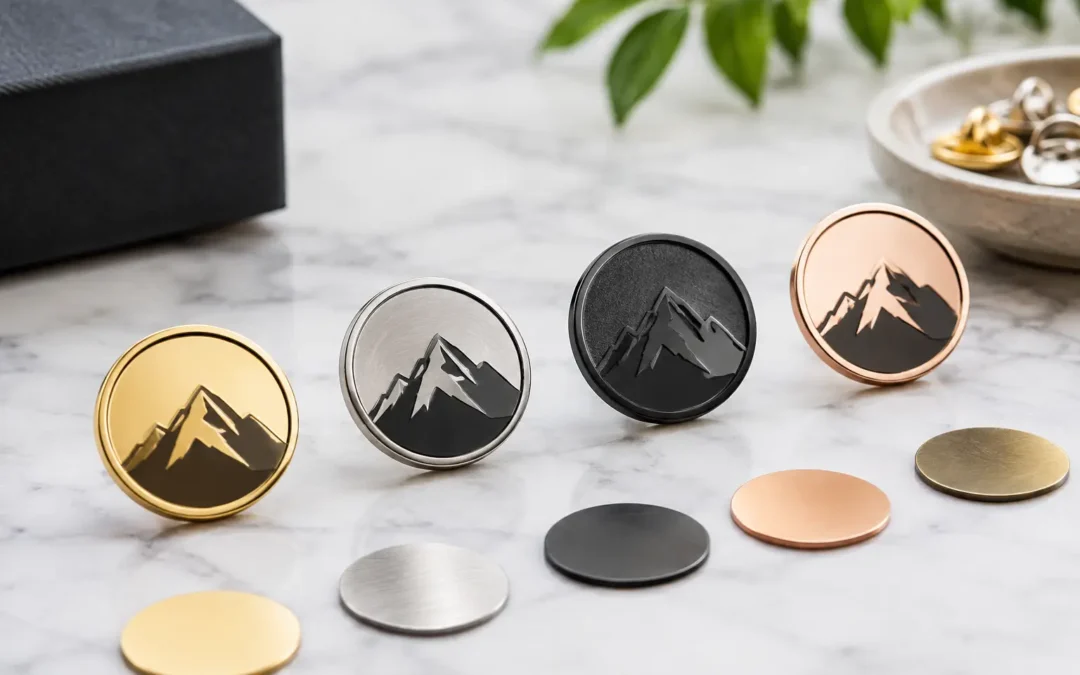
A lapel pin can carry a logo, commemorate a milestone or bring a team together, but the finish is what gives it presence. When you customise metal pin finishes, you decide whether your design feels polished and formal, bold and colourful, vintage, premium or built for everyday wear. That choice affects more than appearance. It shapes how clearly your artwork reads, how your colours stand out and how well the pin suits its purpose.
For Australian businesses, clubs, schools and event organisers ordering pins in bulk, the best finish is rarely just the shiniest option. It is the one that supports your design, audience and budget. Here is how to make a confident choice before production begins.
Why the finish matters on a custom lapel pin
The metal finish is the visible surface treatment around and within your pin design. It can be bright and reflective, dark and antique, smooth and contemporary, or textured with a more traditional feel. A simple logo can look completely different in shiny gold compared with antique silver.
Finish selection also influences contrast. Light-coloured enamel often stands out beautifully against black nickel or antique copper, while darker outlines can be softened with bright silver plating. If your pin has fine text, small icons or detailed linework, the plating colour and finish need to make those details easy to see at a glance.
For a corporate recognition program, a bright polished finish can communicate achievement and quality. For a heritage club, charity campaign or commemorative event, an antique finish may add the right sense of character. There is no universal best option – the right result depends on the story your pin needs to tell.
How to customise metal pin finishes for your design
Start with the artwork rather than the finish. Look at the main colours, the amount of detail and the overall style of the logo or illustration. A bold, simple design gives you more freedom, while intricate artwork generally needs stronger contrast and carefully defined metal lines.
Choose a plating colour that supports your brand
Gold, silver, antique gold, antique silver, copper, antique copper, black nickel and black metal are common choices for custom lapel pins. Each creates a different impression.
Bright gold is popular for awards, executive gifts, anniversary pins and premium membership badges. It works particularly well with navy, red, black and deep green enamel. Bright silver offers a clean, versatile look that suits corporate logos, schools, healthcare organisations and sporting groups. It pairs easily with most colour palettes and gives a crisp result on contemporary artwork.
Black nickel or black metal creates a strong outline and can make bright colours appear more vibrant. It is a smart choice for modern branding, music events, automotive groups and designs with a darker edge. Antique finishes are deliberately darker in recessed areas, which brings out raised detail and gives the pin a more established, collectable appearance.
Copper and antique copper are warmer options, often chosen for community groups, artisan-style brands, commemorative merchandise and designs with earthy colours. They can look impressive, but they are not always ideal for very small lettering. If readability is critical, a higher-contrast silver or black finish may be the better call.
Match the finish to the pin style
A die-struck enamel pin uses raised metal borders to separate coloured enamel areas. This makes the metal finish highly visible, so plating choice has a major impact on the final look. Hard enamel gives a smooth, level surface and a refined finish, while soft enamel leaves the metal lines raised above the colour for added texture and definition.
Printed pins are useful when your artwork includes gradients, photos, fine lines or complex colour blends that enamel cannot reproduce cleanly. A clear epoxy coating can be added to protect the printed surface and provide a glossy, smooth feel. The metal edge can still be customised with a plating choice that frames the artwork neatly.
For an embossed or die-struck pin without colour, the finish and texture do most of the visual work. Polished raised sections against recessed antique areas create clear contrast. This approach is particularly effective for formal logos, service awards and heritage emblems.
Consider gloss, texture and protective coatings
A polished metal surface catches light and looks sharp in presentation packs, at conferences and on formal uniforms. It is often the first choice for pins intended as gifts or recognition pieces. The trade-off is that polished finishes can show fingerprints or light surface marks more readily than an antique or textured option.
Antique plating adds shadow to recessed sections, making it a practical choice for detailed artwork. It can disguise minor handling marks well and gives depth without needing several enamel colours. However, because it is intentionally muted, it may not suit a bright, minimal corporate identity.
An epoxy coating is most often used over printed designs. It protects the artwork from scuffs and moisture while creating a clear domed finish. It can be ideal for promotional pins that will be handled frequently, handed out at events or worn by volunteers over a long campaign. For enamel pins, epoxy is optional and usually chosen when extra surface protection is more important than preserving the traditional enamel texture.
Get the balance right between detail, size and finish
Small pins need simple, well-spaced artwork. A highly detailed design may look excellent on a screen but lose clarity when reduced to a 20 mm or 25 mm pin. Fine lettering, closely packed lines and tiny gaps can fill in during manufacturing, especially when paired with a low-contrast finish.
If your design contains small text, consider increasing the pin size, simplifying the message or choosing a printed style. A black nickel border around pale enamel can also improve legibility. For a compact logo pin, it is often better to prioritise a strong silhouette and recognisable brand colours over fitting in every design element.
Large pins give you more room for textured metal, 3D sculpting and multiple finish effects. A 3D metal pin can make a mascot, building, vehicle or product shape feel more tactile and memorable. These pins work well for premium fundraising, milestone celebrations and collector-style merchandise, though they may cost more than a flat enamel design due to the extra tooling and production detail.
Think about where and how the pin will be used
A finish should suit the real-world setting, not just the digital proof. Pins for staff uniforms, conferences and boardroom events often benefit from clean polished plating and secure butterfly clutches. School and community fundraising pins may need bright colours, durable coatings and an affordable format for larger quantities.
Sporting clubs can lean into team colours with bold soft enamel and dark outlines, while association membership pins may call for a quieter antique silver or gold design. For a charity event, an accessible printed pin may be the most practical way to reproduce a detailed campaign logo in volume without stretching the budget.
Attachment choice matters too. Butterfly clutches are common and cost-effective, while magnets are useful where you want to avoid piercing clothing. Brooch pins suit larger badges, and presentation gift boxes can lift a recognition pin from promotional item to a keepsake.
Use a digital proof to test the finish before production
Do not rely on a written description of gold, silver or antique plating alone. A free digital proof lets you see the proposed layout, colour placement, metal borders and finish direction before manufacturing starts. It is the time to check spelling, confirm Pantone colour matches where required and ask whether lines or lettering need to be adjusted.
Be clear about your priorities when requesting a quote. Let your supplier know whether the pin is for a premium award, a volunteer campaign, retail merchandise, a reunion or a high-volume event giveaway. Share the deadline, approximate quantity and intended attachment. These details help narrow down the finish that delivers the best visual result at the right price point.
At Lapel Pins Australia, hands-on guidance and a free digital proof make it easier to turn an idea into a pin that looks right in the real world, not just on a computer screen.
A small badge can make a big impact when every detail has a job to do. Choose a finish that gives your colours contrast, your logo clarity and your audience something worth wearing.