
A sticker can travel a long way on a water bottle, laptop or shop window. A custom badge can turn a uniform, lanyard or blazer into an instant statement of membership. When weighing up custom badges vs stickers, the best choice is not simply about price. It comes down to where your branding needs to appear, how long it needs to last, and the kind of reaction you want it to create.
For Australian businesses, schools, clubs and event organisers, both products earn their place. Stickers offer broad reach and easy distribution. Badges feel more considered, collectable and permanent. The right item can make a modest marketing budget work harder.
Custom badges vs stickers: the key difference
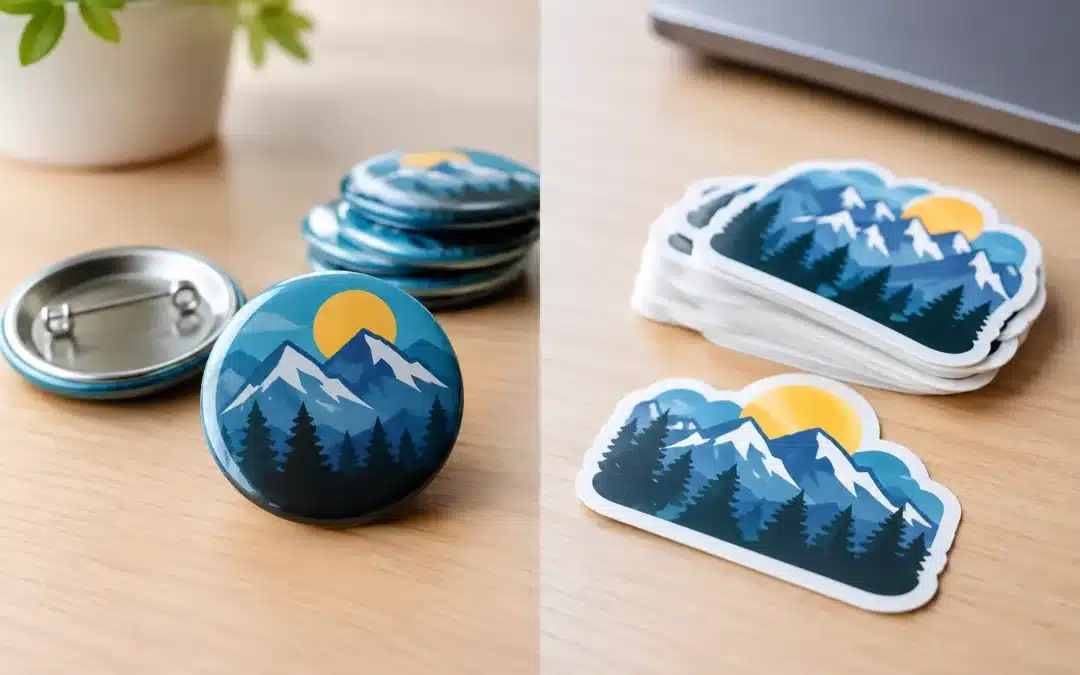
Custom stickers are printed adhesive labels. They are designed to be applied to a surface, whether that is a product package, folder, hard hat, giveaway bag, vehicle window or drink bottle. They are lightweight, cost-effective and ideal when you need large quantities for a promotion, campaign or event.
Custom badges, including enamel lapel pins, printed pins, acrylic badges and PVC styles, are wearable branded items. They attach to clothing, hats, bags or lanyards using a butterfly clutch, magnet or another fitting. Rather than sitting in the background, they become part of what someone wears.
That distinction matters. A sticker promotes your message where it is placed. A badge promotes your message wherever its wearer goes. If you are recognising a volunteer, welcoming a new member or giving staff a polished event look, a badge generally carries more perceived value.
When stickers are the smarter promotional choice
Stickers are hard to beat when volume and flexibility are the priority. A café may add them to takeaway packaging, a tradie business may include them in a customer pack, and a festival can hand them out by the hundreds. They suit campaigns where you want people to see a logo repeatedly without needing a formal presentation.
They also work well for designs with fine detail, gradients, photographs or changing information. If your artwork includes a QR code, a short-term event date or a social campaign message, printed stickers can be a practical option. You can refresh the design for the next campaign without asking recipients to replace a wearable item.
For younger audiences, stickers can encourage participation. School students may decorate laptops, stationery cases and drink bottles. Sporting clubs can include them in registration packs. Charities can add them to fundraising orders as a simple thank-you.
The trade-off is durability and perceived worth. Even quality stickers can be scratched, peeled away or discarded. Their success also relies on the recipient choosing to apply them somewhere visible. A stack of stickers left in a drawer will not build much brand recognition.
When custom badges make a bigger impact
Badges excel when the item needs to feel official, memorable or worth keeping. A polished enamel pin on a staff uniform creates a more professional impression than an adhesive label. A membership badge gives people a visible connection to their club or association. An achievement pin can make a milestone feel genuinely recognised.
They are particularly effective for conferences, corporate functions, school leadership programs, sporting presentations, service awards and fundraising merchandise. In these settings, the badge does more than carry a logo. It marks belonging, participation or achievement.
A well-made pin also has a long life. Metal enamel badges resist everyday handling and retain their shape and colour far better than most temporary promotional items. Recipients may keep them on a jacket, cap, backpack or pin board for years. That ongoing visibility can deliver stronger value than a low-cost item with a short lifespan.
There is also a collectable quality to badges. Limited-edition event pins, annual club designs and character-based charity badges can encourage people to purchase, trade or proudly display them. Stickers can be collectable too, but badges usually feel more special because of their material, finish and attachment.
Compare cost by purpose, not unit price
Stickers normally have the lower unit cost, especially for a simple design ordered in high volume. If your goal is to place branding into as many hands as possible for the smallest outlay, they are a sensible choice. This is why they remain popular for mail-outs, product packaging and high-footfall events.
Badges cost more per piece because they involve custom moulding, metalwork, printing, enamel filling or specialised materials. Yet the better comparison is value per meaningful interaction. A badge presented to a staff member or loyal supporter is more likely to be worn, retained and noticed. It can also support a higher retail price for fundraising or merchandise programs.
Order quantity matters as well. Both products become more cost-effective at volume, but your required finish may influence the final badge price. A simple printed badge with an epoxy coating suits many branded promotions. A die-struck enamel pin offers a premium look for corporate recognition or formal events. Acrylic and PVC badges can provide a colourful, lighter-weight alternative for schools, youth groups and creative campaigns.
Before deciding, consider whether you need thousands of quick handouts or a smaller number of keepsake items. Buying the cheapest option is not always the most affordable outcome if it does not suit the job.
Visibility: broad exposure or personal endorsement?
Stickers provide passive visibility. Your logo is seen when someone opens a laptop, uses a branded product or walks past a window. This can be excellent for local awareness, particularly when the sticker is large, colourful and placed well.
Badges provide personal visibility. When a person chooses to wear your badge, they are effectively endorsing your organisation in public. That can be powerful for clubs, charities and community organisations that rely on pride and connection. A supporter wearing a badge becomes a moving reminder of your cause.
For corporate teams, the effect is more immediate. Matching name badges or branded lapel pins bring a group together at exhibitions, open days and conferences. They make it easier for visitors to identify staff, while helping your people look prepared and approachable.
Design considerations that affect the result
The best product starts with the right artwork. Stickers give you plenty of room for detailed illustrations, layered graphics and small text, provided the finished size is large enough to read. Their shape can be cut to follow your logo or character design, which helps them stand out.
Badges benefit from bold, simplified artwork. Strong outlines, clear sections of colour and legible lettering produce the cleanest result. Fine lines and tiny text may need to be adjusted during production, particularly on smaller enamel pins. That is why a free digital proof is valuable before manufacturing begins. It lets you check the shape, Pantone colour match, layout and attachment before your order is approved.
Think about where the item will be used, too. A badge worn on a formal uniform may suit polished metal and hard enamel. A bright PVC badge may be a better fit for a junior sports day. A weather-resistant sticker might be right for outdoor equipment, while an indoor window decal can prioritise visual impact over heavy-duty performance.
Should you use badges and stickers together?
Often, the strongest answer is both. Use stickers to spread the campaign message widely, then reserve badges for people who participate, donate, volunteer or achieve something. This gives you an affordable entry point and a more valuable item for the people most connected to your organisation.
For example, a charity fun run could place stickers in every participant pack while giving a custom badge to fundraisers who reach a target. A school can use stickers for open-day giveaways and badges for student leaders. A business at a trade show can offer stickers freely, while staff wear branded lapel pins that lift the presentation of the stand.
This approach also gives your design more life. Keep the core logo consistent across both products, then tailor the artwork to each format. The sticker may carry the campaign message and QR code, while the badge features a clean logo or commemorative icon that people will want to keep.
Make the choice around the moment that matters
Choose stickers when you need flexible, high-volume promotion with a lower upfront cost. Choose custom badges when you want durable branding, stronger perceived value and a visible sense of belonging. If your project needs to recognise people rather than simply reach them, a badge is usually the better investment.
For help matching the right badge style, size, finish and attachment to your event or organisation, Lapel Pins Australia can provide practical guidance and a free digital proof before production. A small badge can carry a big message when it is designed for the people who will wear it.