
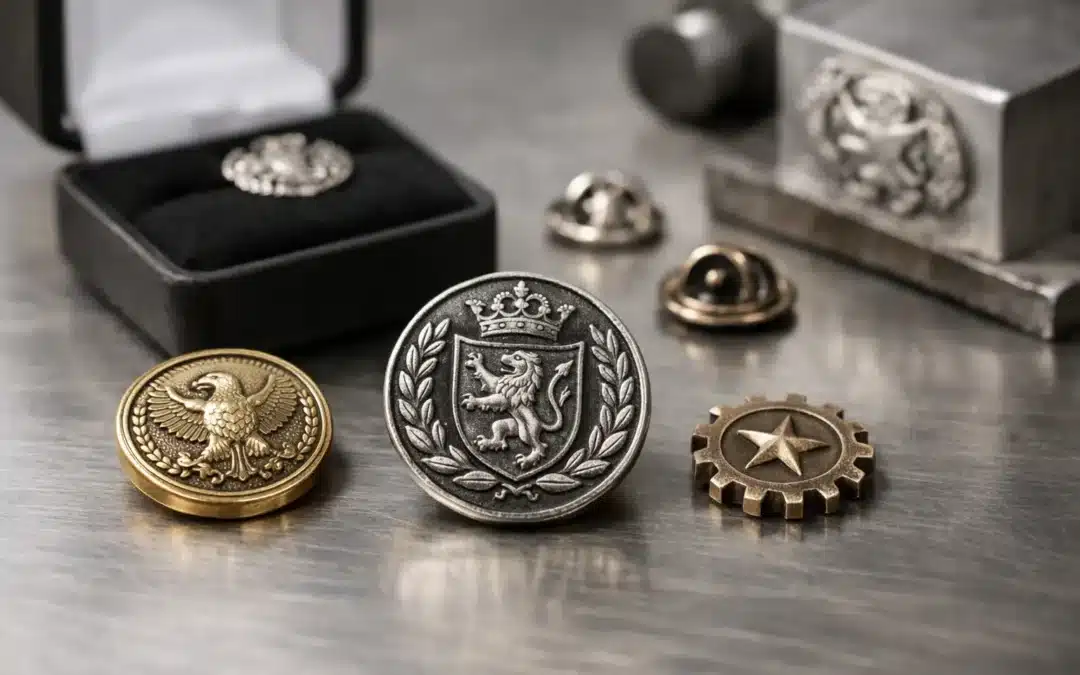
A pin can carry far more than a logo. It may mark a decade of service, identify club members, promote a fundraiser or give an event its own recognisable keepsake. If you are comparing custom pin styles, understanding the die struck pin meaning helps you choose a finish that looks considered, wears well and suits the message behind your design.
A die struck pin is made by stamping a custom-made steel die into metal. That pressure creates raised and recessed areas in the pin face, giving the artwork genuine texture and definition rather than a flat printed appearance. The result is a classic metal pin with crisp detail, weight and a premium feel.
For businesses, schools, associations and sporting clubs, it is a strong choice when the design needs to look official, lasting or collectible. Small badge, big impact.
What does die struck pin mean?
The phrase refers to the manufacturing method. Your artwork is converted into a hardened die, much like a mould with the design engraved into it. A sheet of metal, commonly iron, brass or copper, is pressed with that die under high pressure. The stamped design creates the lines, borders, lettering and recessed fields that form the pin.
Those raised and recessed areas are what set a die struck pin apart. A polished metal finish catches the light on the raised sections, while recessed areas can be finished with an antique effect for contrast. This gives logos, crests and emblem-style artwork a clean, dimensional look.
A die struck pin is sometimes described as a stamped metal pin. Both descriptions point to the same core process: the artwork is physically formed into the metal rather than simply placed on top of it.
How a die struck custom pin is made
The production process starts with your design, but not every detail from a screen or printed brochure can be reproduced at pin size. Fine lines may need to be strengthened, tiny text may need to be simplified, and closely spaced elements may need more breathing room. That is where a free digital proof is valuable – it shows how the artwork will translate into a practical, polished pin before production begins.
Once the design is approved, the custom die is made and used to stamp the metal. The pin is then cut to its final shape, edges are finished, and the preferred plating is applied. Common options include gold, silver, black nickel, copper and antique finishes.
A butterfly clutch is a popular attachment for lapel wear, while a safety pin, magnet or premium backing may better suit a particular audience or use. A corporate recognition pin worn on a blazer, for example, may call for a different attachment from a fundraiser pin sold at a community event.
Die struck pins versus enamel pins
Die struck and enamel pins are closely related, which is why the terms can cause confusion. Both can begin with a stamped metal base. The difference is what happens to the recessed sections of the design.
A traditional die struck pin leaves those recessed areas as metal and relies on plating, polish and texture for its visual effect. It is ideal for a subtle, formal or heritage-style result. Think anniversary badges, committee insignia, military-inspired designs, member pins and achievement awards.
An enamel pin uses coloured enamel in the recessed areas. Soft enamel leaves the metal outlines raised, creating texture you can feel. Hard enamel is polished smooth across the surface for a sleek, jewellery-like finish. If matching a multi-colour brand palette is the priority, enamel can be the better option.
It depends on what must stand out. A die struck metal-only design can look sophisticated and durable with one or two strong visual elements. A logo that depends on several Pantone colours, detailed illustrations or colour-coded information will usually benefit from enamel or a printed pin instead.
When a die struck pin is the right choice
A die struck finish performs best when the design has confident shapes, clear outlines and readable lettering. It gives simple artwork more presence than a flat print because the physical relief adds shadow and shine.
It is particularly well suited to membership and recognition. Clubs can create a pin members are proud to wear. Schools can acknowledge leadership, academic achievement or alumni connection. Businesses can recognise staff milestones with a badge that feels more substantial than a standard promotional giveaway. Charities and community groups can use a commemorative metal pin to make supporters feel part of a shared cause.
It also works well for logos with shields, crests, monograms, animals, badges and circular seals. These designs naturally suit raised borders and recessed background areas.
There are trade-offs. Very small text, gradients, photographic images and complex colour transitions do not suit a metal-only die struck pin as well. If your pin needs to reproduce a detailed mascot illustration or several brand colours exactly, a printed epoxy-coated pin may deliver a clearer result. Choosing the right production method early avoids compromise later.
Choosing plating, finish and shape
The metal finish changes the character of a die struck pin. Bright gold feels formal and celebratory. Silver is clean and versatile for corporate branding. Antique gold, silver or copper adds depth to the recessed areas and suits heritage, commemorative or rustic designs. Black nickel can give contemporary logos a sharp, high-contrast appearance.
Shape matters just as much. A standard circle, square or rectangle is efficient and timeless, especially for crests and text-led designs. A custom shape follows the outline of your logo or icon and can create more immediate visual impact. For example, a surf club may use its board or wave motif, while a trade business may use a simplified version of its mark.
Size should be considered with the amount of detail. A small lapel pin is discreet and practical, but it cannot carry the same fine artwork as a larger commemorative badge. If the design includes lettering, ask for guidance on a size that keeps it legible. Enlarging a pin by a few millimetres can make a meaningful difference to line quality and readability.
Getting artwork ready for a better result
You do not need to supply production-ready pin artwork to start. A clear logo file, existing artwork or even a well-explained concept is enough to begin a conversation. The key is being clear about where the pins will be used, how many are required, and the feeling you want the finished item to convey.
For the strongest die struck result, keep the central idea simple. Avoid placing too many tiny elements into a small space. Use clear contrast between raised metal and recessed areas. Where colour is not essential, let the metal finish do the work.
It is also worth considering the full presentation. A single recognition pin may deserve an individual gift box. Pins for a conference, open day or large fundraising campaign may need to be packed for easy distribution instead. These practical details affect perceived value, budget and how smoothly the pins reach their recipients.
A durable choice for work, clubs and events
Because the design is stamped into metal, a die struck pin has an enduring quality that works well for items people keep. It does not rely on a paper-like surface image, and the raised structure gives it a tangible, crafted finish. With the right plating and attachment, it can remain presentable through regular wear.
That does not mean it is automatically the best choice for every order. The best custom pin is the one that matches your artwork, budget, deadline and purpose. A promotional campaign may benefit from bold full colour. A formal service award may call for understated antique metal. A sports club may want both – a detailed metal member pin and colourful merchandise for supporters.
With more than 20 years of custom merchandise experience, Lapel Pins Australia can help turn an idea, logo or rough concept into a pin style that fits the occasion. Start with the message you want the badge to carry, then let the material, finish and shape give that message the presence it deserves.