
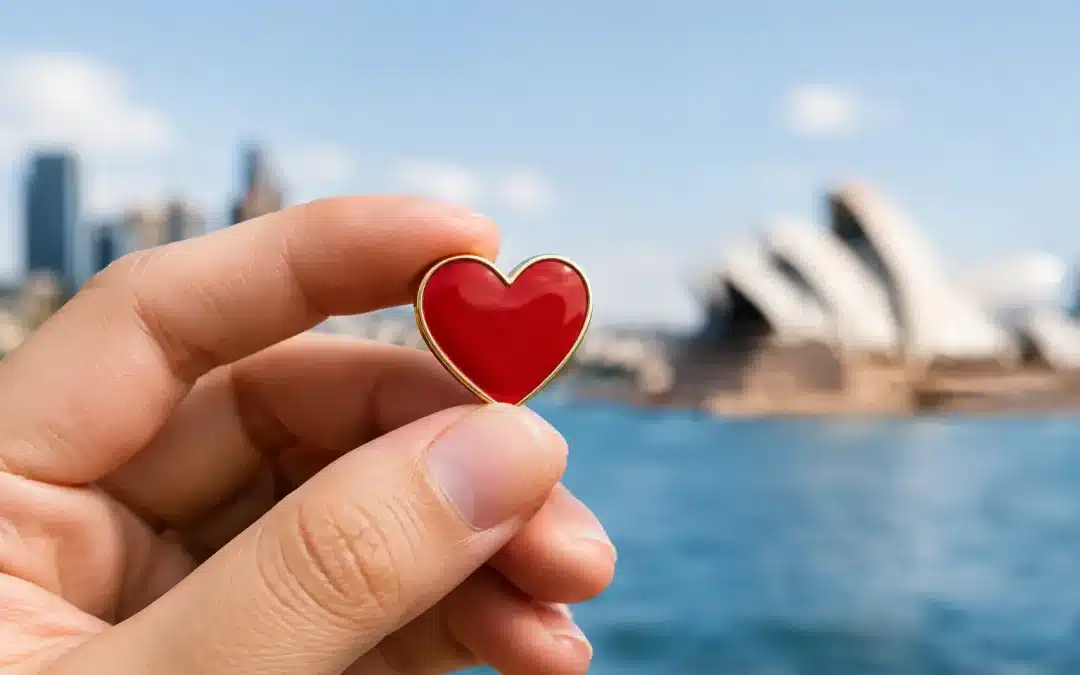
A charity pin has only a few seconds to earn attention. It needs to be clear from a few steps away, feel worth wearing, and make supporters comfortable starting a conversation about the cause. The best pins for charity campaigns do all three – turning a small badge into visible support, a fundraising tool and a lasting reminder of why the campaign matters.
For Australian charities, schools, clubs and community groups, custom pins are practical because they work across many campaign settings. Sell them at an event, include them in a donor pack, hand them to volunteers or use them to identify a fundraising team. The right style depends on your artwork, budget, audience and how long you want the pin to be kept and worn.
What makes a charity pin effective?
A good charity pin is not necessarily the most detailed or expensive option. It is the one that makes the campaign recognisable at a glance. A ribbon for an awareness drive, a logo for a local rescue group or a simple icon for a school fundraiser can all work brilliantly when the design is clean and the finish suits the purpose.
Start with one strong visual idea. Small pins have limited space, so fine text, tiny logos and complicated illustrations can become hard to read. A short campaign name, a meaningful symbol and two or three clear colours will usually have more impact than trying to fit every message onto the badge.
Wearability matters too. If supporters like the look and feel of the pin, they are more likely to put it on a lanyard, jacket, uniform, cap or bag and keep it there. That ongoing visibility can continue well beyond a one-day fundraiser.
Best pins for charity campaigns by goal
Die-struck enamel pins for lasting supporter appeal
Die-struck enamel pins are often the best choice when your campaign needs a premium, durable item. Raised metal lines separate the coloured enamel areas, giving the design definition and a polished finish. They suit charity logos, awareness ribbons, anniversary campaigns and donor recognition pins particularly well.
Hard enamel creates a smooth, refined surface that feels substantial and is ideal for a more formal corporate fundraiser or a campaign designed to run year after year. Soft enamel has textured recessed colour areas and can offer strong visual contrast at a more accessible price point. Both are durable options for supporters who will wear their pin regularly.
The trade-off is detail. Enamel pins look their best with bold shapes and clearly separated colours. If your artwork relies on gradients, photographic images or very fine lettering, a printed option may reproduce it more accurately.
Printed pins for detailed artwork and tight deadlines
Printed pins are a smart option for colourful campaign branding, detailed illustrations and designs with shading. Artwork is printed directly onto the badge, usually with a clear epoxy coating that adds shine and helps protect the surface. This finish is particularly useful for logos with gradients, event mascots, sponsor artwork and multi-colour awareness designs.
For a walk, fun run, school event or annual appeal, printed pins can provide a bright, professional result without simplifying the design too heavily. They are also a practical choice when a campaign has a fixed launch date and you need a straightforward production solution.
Keep the size sensible. Even with print, a badge that is too small will make fine details difficult to see. A larger pin can give artwork room to breathe, but it may increase the unit price. The best balance is generally a design that remains clear at the size people will actually wear.
Acrylic pins for colourful community campaigns
Acrylic pins are lightweight, vibrant and budget-conscious. They are a strong fit for school fundraisers, youth groups, volunteer drives, local events and campaigns where colour and personality are central to the message. Custom shapes can make a simple design more memorable, whether that is a paw print, heart, star, mascot or campaign icon.
Because acrylic is lightweight, it is easy to wear on a shirt or lanyard and can be a good option when ordering a larger quantity. It does not have the traditional metal feel of enamel, so it may not be the right choice for a high-value donor gift. For broad participation and cheerful event branding, however, it is hard to overlook.
PVC pins for bold shapes and outdoor use
PVC pins have a soft, flexible rubber-like finish and work well for chunky, playful designs. They are popular for family events, sporting fundraisers, animal charities and campaigns aimed at children or younger supporters. Their raised, moulded look gives simple icons plenty of personality.
PVC is also forgiving for designs that need a little more depth or an unusual outline. Think of a bright ribbon, a football, a native animal or a stylised logo. Fine details and small text are less suitable, so keep the message short and make the shape do the talking.
3D pins for recognition and special fundraising milestones
A 3D pin creates dimension through sculpted metal detail. It is best reserved for recognition pieces, major donor programs, committee gifts, patron badges or a significant fundraising milestone. A 3D finish can make an emblem or symbolic image feel more collectable and prestigious.
This style is not usually the lowest-cost choice for a mass giveaway. It earns its place when the recipient relationship matters as much as the campaign visibility. For example, a charity might use standard enamel pins for public sales and a limited 3D version for key sponsors or long-serving volunteers.
Choose the attachment before finalising the design
The attachment is a small decision with a big effect on how the pin is used. A standard butterfly clutch is a reliable, familiar choice for lapels, uniforms and bags. A magnet attachment avoids piercing fabric, which can be useful for workplace wear, name-badge-style campaigns and supporters who do not want to put a hole in a shirt or jacket.
Magnets are convenient, but they are not ideal for every situation. They can be less secure during active events and should be considered carefully where children are involved. If volunteers will be moving around a busy fun run, market stall or sporting day, a secure pin attachment may be the better option.
For presentation to sponsors, speakers or major donors, add a presentation card or gift box. It raises the perceived value and gives you space to include a short message about the impact their support makes. That extra context can turn a pin into a genuine thank-you gift.
Design charity pins people want to wear
Campaign pins work hardest when they look like a badge of belonging, not an advertisement. Use your brand colours, but do not let them overpower the central symbol. High contrast is usually more important than exact colour complexity, especially if the pin will be seen from a distance.
If you need close Pantone colour matching, specify it early in the process. This is especially valuable for established charity brands and corporate partnership campaigns, where colour consistency supports trust and recognition. A free digital proof is your chance to check spelling, layout, colours, border lines and attachment position before production begins.
Consider the pin’s shape as part of the message. Round and shield shapes suit traditional crests and logos. A custom silhouette can create instant recognition for an awareness icon or mascot. A simple shape is often more affordable and easier to manufacture, while a custom outline can add campaign appeal. It depends on whether your priority is maximum quantity or maximum collectability.
Avoid putting too much copy on the badge. A website address, event date or long slogan may be useful on a backing card, poster or social post, but it can clutter a small pin. Let the pin carry the visual identity, then use the packaging and campaign materials for the fuller story.
Plan quantities and budget for a stronger result
Charity organisers often focus on the per-unit cost, but the value of a pin also comes from how it is distributed. A low-cost pin that sits in a box after the event is not as effective as a well-designed item supporters proudly wear for months.
Bulk ordering generally gives you better value per pin, so estimate numbers across the whole campaign rather than ordering only for the first event. Include volunteers, staff, sponsors, donors, merchandise sales and future events in the calculation. Ordering a modest buffer can be sensible when attendance or sales are difficult to predict.
There is also a choice between giving pins away and selling them. Free pins can encourage participation, especially for volunteers and event registrants. Selling pins can add a direct fundraising stream, particularly when the design feels limited-edition or tied to a recognised awareness month. Some campaigns do both: a standard pin for public fundraising and a premium version for larger donations.
Allow enough lead time for artwork approval and production. Fast turnaround is valuable, but a rushed design decision can be expensive to correct. Send clear artwork, confirm quantities early and review the digital proof carefully. If you are coordinating several campaign items, such as keyrings, patches, scarves or fridge magnets, matching colours and imagery can make the entire fundraiser feel more organised.
Make every pin part of the campaign story
The strongest charity pins do more than display a logo. They give people a simple way to show they care, recognise the people doing the work and keep the cause visible in everyday places. Whether you choose enamel, print, acrylic, PVC or a premium 3D finish, the right combination of clear artwork, suitable materials and dependable production can make a small badge carry a very big message.
For help turning your campaign idea into a pin people will be proud to wear, Lapel Pins Australia can provide practical guidance, a free digital proof and custom options suited to your quantity, budget and deadline.