
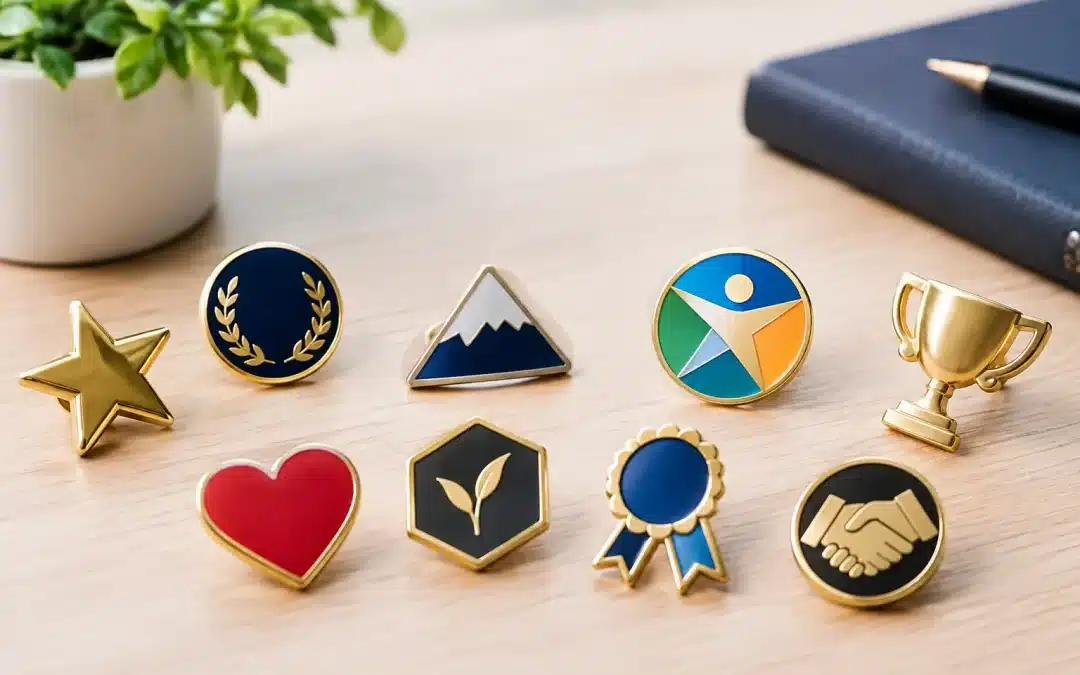
A five-year service certificate can end up in a drawer. A well-designed recognition pin is different: it is visible on a lanyard, uniform, jacket or name badge every day. The best top staff recognition pin ideas turn a genuine achievement into something people are pleased to wear, while reinforcing the standards and culture your organisation values.
For Australian businesses, schools, clubs and community organisations, pins offer a polished way to recognise people without making every milestone feel like a major awards night. They are compact, cost-effective in bulk and easy to tailor to your branding. The key is choosing an idea that feels earned, clear and consistent.
Start with the achievement, not the pin style
Before selecting colours, shapes or finishes, decide exactly what the pin represents. Recognition works best when employees can explain its meaning in a sentence. “This is my ten-year service pin” or “I earned this for leading our safety programme” has more impact than a generic badge with no story behind it.
A recognition programme can acknowledge years of service, outstanding customer care, training completion, safety performance, mentoring, attendance or team values. Avoid trying to put every possible achievement onto one pin. A specific purpose gives the design more status and makes the award easier for managers to present with confidence.
It also helps to set fair criteria from the beginning. If one branch awards a pin for a monthly target while another treats it as an annual honour, the item can quickly lose its value. Clear rules protect the meaning behind the badge.
12 top staff recognition pin ideas
1. Years of service pins
Service pins remain one of the strongest choices because the achievement is simple and universal. Create a series for one, five, 10, 15 and 20 years, using the same core logo with a prominent numeral. The progression should look intentional, not like the same pin printed in a different colour.
For major milestones, consider an antique gold finish, a 3D logo or a presentation gift box. Smaller milestones can use durable enamel pins in your brand colours. This creates a sense of progression while keeping the programme affordable.
2. Values champion pins
If your organisation has defined values such as care, integrity, teamwork or initiative, turn them into a recognition series. A “Values Champion” pin works particularly well when colleagues nominate one another and leaders explain the reason for the award.
Keep the wording brief. An icon can add meaning without cluttering the design: joined hands for teamwork, a compass for integrity or a light bulb for initiative. The aim is a badge that looks professional from a distance and has a clear message up close.
3. Safety milestone pins
Safety recognition must be handled carefully. Rewarding a “zero incidents” result can unintentionally discourage reporting if staff feel a record is more important than speaking up. A better option is to recognise positive safety behaviours, completed training, hazard reporting or leadership in a safety campaign.
Pins for safety representatives, first aid officers and workplace health and safety champions also help people identify who has an important role. Use high-contrast colours and straightforward wording so the pin is practical as well as prestigious.
4. Customer service star pins
For retail, hospitality, health, property and service teams, a customer service pin makes excellent feedback visible. It might recognise a staff member who receives repeated positive reviews, resolves a difficult issue calmly or consistently supports customers beyond expectations.
A star-shaped pin is an obvious choice, but it is not the only one. Your logo in a premium metal finish with “Customer Care” or “Service Star” can feel more aligned with a corporate uniform. It depends on whether your workplace style is formal, playful or somewhere in between.
5. Training and qualification pins
Completion pins give employees a lasting marker of professional development. They can recognise internal leadership programmes, apprenticeships, technical accreditation, induction completion or specialist training.
This idea is especially useful where people deal directly with customers or the public. A discreet “Certified”, “Qualified” or role-specific pin can build confidence while acknowledging the work staff have put into developing their skills. Check that the wording matches any formal qualification requirements before production.
6. Mentor and trainer pins
Great mentors often do vital work behind the scenes. A mentor pin recognises experienced team members who train new starters, guide apprentices or share technical knowledge. It tells others that this contribution matters just as much as individual sales or output.
Consider a separate trainer pin for staff authorised to deliver internal programmes. A coordinated set can make your training structure easier to understand, particularly across larger teams, sites or volunteer groups.
7. Employee of the month pins
This familiar format works when it feels timely and credible. Rather than creating a completely new pin every month, use one attractive “Employee Recognition” or “Team Star” design and present it with a dated certificate or card. The recipient can wear it during their recognition period, then keep it as a memento.
For organisations that want a more permanent award, add a small year marker to the pin design. Keep the criteria visible to the whole team so the result feels encouraging rather than mysterious.
8. Project completion pins
Large projects ask a lot of people. A custom pin presented at practical completion, a product launch, a relocation or a major system rollout gives the team a shared marker of what they achieved together.
These pins can include the project name, year and a small graphic linked to the work. They are ideal for construction crews, corporate project teams, event staff and committees. Because they are tied to a particular moment, they often become valued keepsakes rather than another piece of promotional merchandise.
9. Sales and performance achievement pins
A sales achievement pin can recognise a target reached, a major account won or consistent performance across a quarter. The best designs celebrate success without turning the workplace into a leaderboard. For example, a “Million Dollar Club” pin may suit a sales business, while a “Performance Excellence” pin may work better across mixed roles.
Set targets that staff can influence directly. If results rely heavily on territory, stock supply or seasonal demand, consider recognising improvement, collaboration and quality as well as final numbers.
10. Attendance and reliability pins
Reliable attendance is valuable, particularly in operations, education, transport and customer-facing teams. However, attendance awards need sensitivity. Staff may need leave for illness, caring responsibilities or circumstances outside their control.
Instead of rewarding only perfect attendance, recognise dependable contribution over time, shift flexibility or consistent readiness. A pin titled “Reliability Award” or “Team Commitment” can feel more respectful and better aligned with an inclusive workplace.
11. Volunteer and community pins
For charities, associations, schools and clubs, volunteer pins create belonging. They can distinguish committee members, life members, event volunteers, coaches, fundraising supporters or long-serving helpers.
A yearly colour change can help identify event teams at a glance, while a higher-detail commemorative pin can honour major service milestones. Add your organisation name and year where relevant so the badge holds meaning long after the event finishes.
12. Peer-nominated appreciation pins
Some of the most meaningful recognition comes from colleagues. A peer-nominated pin can be presented quarterly to someone who helped a teammate, solved a problem or showed exceptional generosity. The nomination process gives quieter contributors a chance to be seen.
Use a broad title such as “Making a Difference” rather than a narrowly competitive one. Ask nominators to provide a short example, then share that story when the pin is presented. The explanation is what turns a small badge into a memorable moment.
Choosing the right custom pin format
The material and finish should match how often the pin will be worn and the level of the achievement. Die-struck metal pins with enamel colour are a popular choice for long-service and formal awards because they feel substantial and stand up to regular use. Printed pins with an epoxy coating suit detailed logos, photos or small text, while acrylic or PVC options can bring a more colourful, casual look to youth programmes, events and school recognition.
For senior milestones and presentation awards, consider 3D detail, polished plating or an individual gift box. For busy uniforms, a magnetic attachment may be preferable to a sharp pin, although it may not be suitable for every garment or work environment. A standard butterfly clutch is practical for most lapel and lanyard uses.
Size matters too. A pin that is too small can lose fine details, while an oversized design may not sit comfortably on a uniform. In many cases, a compact badge with a bold icon, clean type and close Pantone colour matching will make the strongest impression.
Make recognition feel personal
The pin is only one part of the experience. Present it promptly, name the specific contribution and have a manager or leader thank the recipient in person where possible. For a team award, explain what the group achieved together. Those few words give the item its emotional value.
Lapel Pins Australia can provide a free digital proof before production, helping you check that numbers, names, colours and fine details are right before your bulk order is made. This is particularly useful for pin series, where consistency across multiple milestones matters.
A staff recognition pin does not need to be extravagant to be meaningful. Give it a clear purpose, make it well, and present it with genuine appreciation. People remember being noticed – and a small badge can keep that feeling visible long after the applause.