
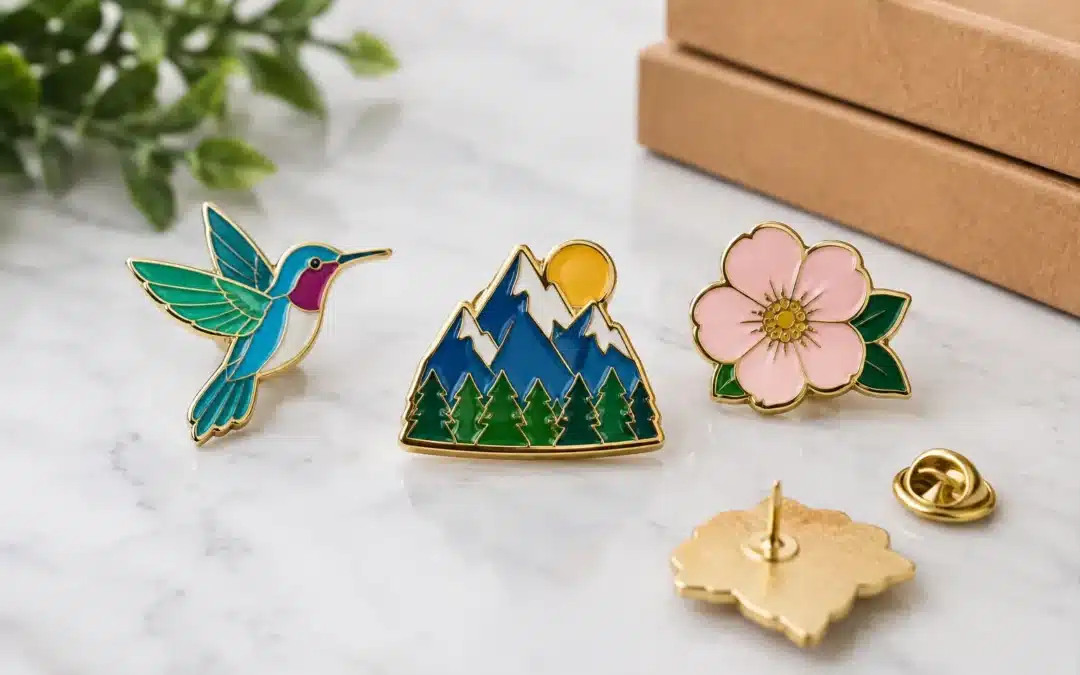
A die struck enamel pin review should answer one practical question before anything else: will the finished pin look polished enough to represent your organisation? For most businesses, clubs, schools and event teams, the answer is yes – provided the design suits the process and the supplier guides the artwork properly.
Die struck enamel pins have a solid metal feel, crisp raised detail and long-lasting colour. They are a popular choice when a logo, membership emblem, anniversary mark or campaign design needs more presence than a printed badge. Small badge, big impact!
What a Die Struck Enamel Pin Actually Looks Like
A die struck pin begins with a custom metal mould. Your artwork is pressed into the metal, creating raised outlines and recessed areas. Enamel colour is then applied to those recessed sections, while the raised metal lines remain visible to separate the colours and define the design.
That metal framework is the feature many buyers notice first. It gives the pin dimension and makes even a small design feel considered. Gold, silver, antique finishes and black nickel can each change the character of the same artwork. A gold finish often suits awards, formal recognition and heritage-style emblems, while black nickel can give a modern logo stronger contrast.
The term can cover two closely related looks. Soft enamel pins have slightly recessed colour areas, so you can feel the raised metal edges. Hard enamel pins are polished to a flatter, smoother surface. Both start with die-struck metal, but the final finish affects the look, cost and level of refinement. If you are after texture and distinct metal outlines, soft enamel is usually the right fit. If you want a sleek, jewellery-like finish, hard enamel is worth considering.
Die Struck Enamel Pin Review: Where They Perform Best
For bulk custom orders, die struck enamel pins are strongest where durability and perceived value matter. They are commonly used for staff recognition, service milestones, club membership, school leadership badges, charity campaigns, conferences and commemorative events. They also work well as retail merchandise, particularly when the artwork has a clear icon, mascot or bold local identity.
A printed pin may be better for photographic images, fine gradients or artwork with many tiny colour changes. Die struck enamel is better when the design relies on clean shapes, solid Pantone-matched colours and visible outlines. Think of a sporting club crest, a corporate logo, a volunteer badge or a simple campaign symbol. These designs translate clearly into metal and enamel.
The trade-off is detail. Extremely small text, delicate linework and crowded illustrations can become difficult to read at lapel-pin size. This does not mean the design cannot be made, but it may need adjustment. Enlarging the pin, simplifying the artwork or changing small text to a stronger shape can produce a far better result than trying to force every detail into a 25 mm badge.
Colour and finish make the difference
Close Pantone colour matching is especially useful for established brands, schools and teams with set visual guidelines. Enamel colours appear bold and opaque, although the final appearance can be influenced by the surrounding metal finish. Bright colours against shiny silver can feel clean and contemporary. Dark blue, burgundy or green against antique gold can create a more traditional presentation.
Keep colour areas reasonably generous. A broad red field or a simple two-colour logo will generally look sharper than a design divided into many tiny segments. Raised metal lines need enough width to hold their shape, especially on pins that will be handled often.
Plating is not simply a decorative decision. It sets the background for the enamel and can improve legibility. If your design includes black enamel, shiny gold or silver outlines may offer the contrast it needs. If the artwork is mostly pale colours, black nickel may make those shades stand out. A free digital proof is the best point to compare these options before production begins.
Size should follow the artwork, not guesswork
Many custom lapel pins sit comfortably around 20 mm to 35 mm, but there is no universal best size. A compact 20 mm pin can be ideal for a simple logo on a jacket lapel. A detailed commemorative crest may need 30 mm or 40 mm to keep its features clear.
Size also affects the way people perceive value. Larger pins provide more room for artwork and feel more substantial, but they cost more in material and may be less suited to everyday uniform wear. A smaller pin is budget-friendly for large staff or event quantities, provided the artwork is uncomplicated. The practical approach is to choose the smallest size that still lets the design read clearly from a normal conversational distance.
Attachments, Packaging and Everyday Wear
A pin that looks excellent but twists on a shirt has missed part of the brief. Standard butterfly clutches are a dependable choice for many promotional and event pins. They are easy to use, economical and appropriate for lightweight designs. Rubber clutches offer a softer grip and can suit casual use.
For heavier, larger or premium pins, consider a more secure attachment. A pin-and-clutch arrangement with two posts helps stop the badge rotating, which is particularly useful for horizontal logos and irregular shapes. Magnetic backs avoid puncturing fabric, making them useful for some corporate uniforms, although they are not suitable for every setting and should be kept away from medical devices affected by magnets.
Presentation also matters when the pin is part of an award, gift pack or fundraising product. A simple backing card can carry a message, event date or sponsor branding. A presentation box gives recognition pins a more formal finish. These details can turn a small item into a keepsake, not just a handout.
What to Check Before Approving Your Order
The best-looking pins are rarely the result of sending a logo and hoping for the best. They come from checking a few key decisions before the mould is made. Confirm the final pin size, metal finish, enamel colours, attachment type and whether the artwork will use one or two posts. Review spelling, dates and small text closely on the digital proof, as these details become part of the mould.
It is also worth being realistic about quantity. Custom die-struck production involves set-up, so unit pricing generally becomes more attractive at higher volumes. If your organisation runs an annual awards programme, hosts recurring events or needs pins for several branches, ordering enough for the planned period can offer better value than placing repeated small orders.
Allow suitable lead time as well. Custom manufacturing is not the same as buying generic badges off the shelf. Artwork approval, mould creation, colour filling, plating, quality checks and freight all need to be factored into your event deadline. Starting early gives you more flexibility to refine the proof instead of approving under pressure.
Are Die Struck Enamel Pins Worth It?
For organisations that want a durable, professional branded item, they are often worth the investment. The metal construction gives them a quality that paper stickers, temporary name labels and many low-cost giveaways cannot match. People are more likely to keep a well-designed enamel pin, wear it repeatedly or add it to a collection.
They are not automatically the best choice for every design. If your artwork is a full-colour illustration with gradients, a printed epoxy-coated pin may reproduce it more faithfully. If you need a lightweight, colourful novelty item for a family event, PVC may be more suitable. The right option depends on the artwork, budget, intended use and the impression you want to make.
For a logo or emblem with clean lines, however, die struck enamel offers an excellent balance of visual impact, durability and bulk-order value. Lapel Pins Australia can provide hands-on advice and a free digital proof, so you can see how your design will translate before production is underway.
Choose the finish that supports your message, give the artwork enough room to breathe, and treat the proof as your final quality check. A well-made custom pin can stay on jackets, lanyards and noticeboards long after the event has finished.