
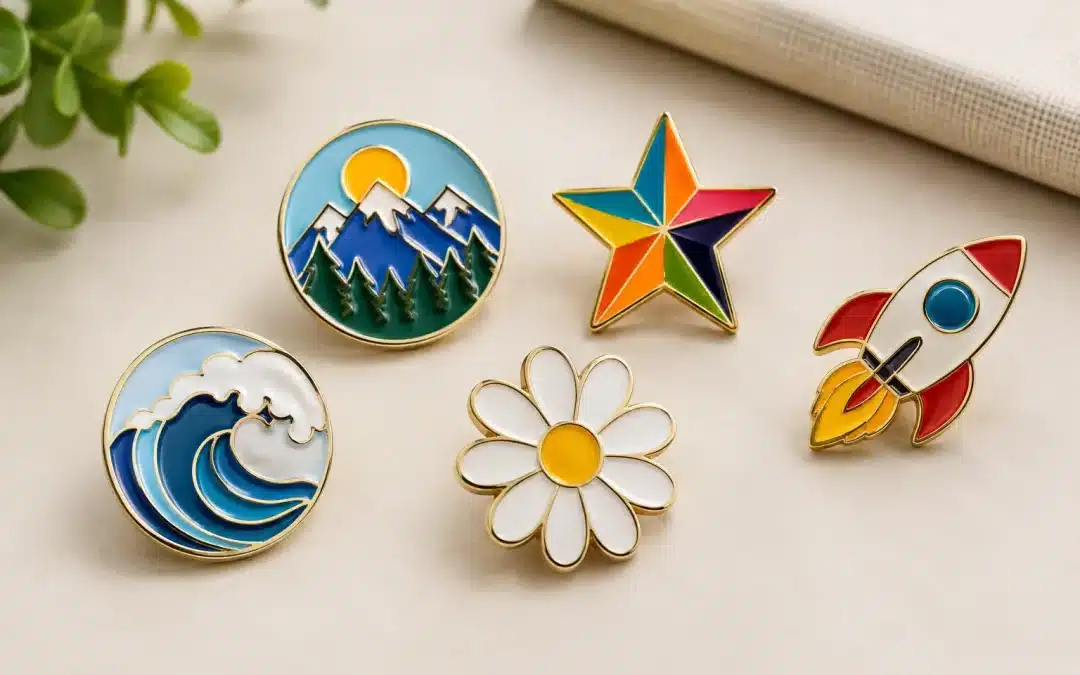
A round pin can look professional. A custom-shaped pin can make someone stop, look twice and remember who gave it to them. For clubs, schools, businesses and event organisers, choosing custom pin shapes is one of the biggest decisions in the design process because the outline does as much branding work as the artwork inside it.
The right shape gives your logo presence, supports the message and stays practical to manufacture in volume. The wrong one can make a strong design feel cramped, expensive or difficult to read at lapel-pin size. A little planning upfront helps deliver a badge people are proud to wear, collect or keep.
Start with what the pin needs to achieve
Before choosing a shape, be clear on the pin’s role. Is it a staff recognition badge, a club membership pin, a fundraiser item, a conference giveaway or a commemorative piece for an anniversary? The purpose often points you towards the best outline.
Corporate lapel pins usually benefit from a clean shape that works with a logo and looks smart on a jacket, uniform or lanyard. A school house pin might use a shield, while a sporting club may choose a ball, mascot silhouette or jersey-inspired shape. For charity campaigns and public events, a recognisable object such as a ribbon, heart, paw print or local landmark can create instant connection.
There is no need to force every design into a novelty shape. If your branding relies on a detailed logo, a circle, square, rectangle or shield may present it far more clearly. Custom is not always complicated. It means selecting the shape that gives your design the strongest result.
Choosing custom pin shapes for your design
Your artwork should lead the decision, not the other way around. Start by looking at the dominant element in your logo or campaign design. A horizontal wordmark generally suits a rectangle, while a stacked logo can work beautifully in a circle, square or vertical badge. A crest naturally fits a shield or custom outline that follows its outer edge.
If your design includes a character, product or icon, consider a fully custom silhouette. A café could use a coffee cup pin. A construction business may use a hard-hat outline. A community event with a native animal mascot could turn that character into a collectible pin. These shapes feel more personal and can lift the perceived value of a promotional item.
However, leave room for the important details. At small sizes, fine lines, tiny text and narrow gaps can disappear or fill in during production. A shape with too many sharp points, deep cut-ins or thin sections may need simplifying to stay strong and visually balanced. The best custom pins often use a bold outer outline with clean internal detail.
A free digital proof is valuable at this stage. It lets you see whether the shape frames the artwork properly, whether text is readable and where details may need adjusting before production begins.
Keep size and viewing distance in mind
Most lapel pins are viewed from arm’s length, not under a magnifying glass. That is why one strong logo, a short name or a clear symbol performs better than a crowded layout.
For a small pin, usually around 20 mm to 30 mm, choose an uncomplicated silhouette and avoid lengthy wording. If you need multiple logos, names, dates or intricate illustration, moving up in size may be the better choice. A 35 mm or 40 mm pin provides more room, but it may feel less subtle when worn on a lapel.
Think about where recipients will use it, too. A neat 25 mm corporate pin suits office uniforms and formal events. A larger custom-shaped pin can make more sense for fundraising, retail sales, festival merchandise or collector sets where visibility is the priority.
Match the shape to the pin material and finish
Shape and material work together. The same outline can look quite different as die-struck metal, printed enamel, acrylic or PVC. Selecting the production style early helps avoid a concept that looks great on screen but is not the most cost-effective or durable choice for the intended use.
Die-struck enamel pins are an excellent option for clean logos, bold colours and metal edging that defines the shape. They suit circles, shields, custom silhouettes and shapes with strong compartments between colours. The raised metal lines add a premium feel and make branding stand out.
Printed and epoxy-coated pins are useful when the design includes gradients, photographic detail, fine lines or complex colour artwork. Because the image is printed, they allow more detail inside a straightforward outline. An epoxy coating adds a smooth protective finish, making it a practical choice for event badges and promotional campaigns.
Acrylic pins are lightweight and flexible for bright, graphic artwork. They can be cut to many outlines and work well for schools, youth events, retail promotions and short-run designs where a modern look matters. PVC pins suit bold, tactile designs and can create a soft, dimensional finish, particularly for mascots, playful graphics and outdoor-themed promotions.
For prestige awards, commemorative pieces or designs with sculpted elements, a 3D pin may be worth considering. This approach can bring depth to a building, emblem, vehicle or figurine, but it is best reserved for artwork that benefits from relief rather than flat colour blocks.
Balance originality with budget
A distinctive shape can make a small badge a big impact item, but complexity can influence cost. Custom moulds, larger dimensions, multiple colours, 3D details and special finishes all affect the final quote. That does not mean you need to settle for a plain pin. It means putting budget into the elements that your audience will actually notice.
If you are ordering pins for a national conference, staff programme or club season, a clean custom outline with two or three strong colours may give you the best return. It looks purposeful, is easy to reproduce consistently and can stay within a practical bulk-order budget.
For a limited-edition anniversary pin or a high-value sponsor gift, you may decide that intricate shaping, antique plating, glitter, translucent enamel or a presentation gift box is worthwhile. The key is matching the finish to the occasion. A premium feature has more impact when it feels intentional rather than added simply because it is available.
Quantities matter as well. Custom pin manufacturing is usually most cost-effective in bulk, so it can be smart to order enough for current needs plus future presentations, new members or event attendees. If your artwork is likely to change soon, avoid over-ordering a dated design.
Choose an outline that works in the real world
A pin might look perfect in a digital proof, but it also needs to sit securely on clothing and stand up to regular handling. Wider or taller shapes may need two pin posts to prevent them from twisting. Larger pins and magnets may also benefit from a more considered attachment choice, especially if recipients will wear them on thicker fabrics, uniforms or bags.
For formal wear, a butterfly clutch is a familiar and practical option. A magnet attachment avoids piercing fabric and is popular for name badges and corporate use, although it may not be suitable for every wearer or workplace. Safety pins, rubber clutches and other fittings can be selected based on how the pin will be used.
Avoid very thin protrusions in your shape, such as fine antennae, long narrow stems or sharp points. They can be more vulnerable to bending or catching. Your supplier can advise where to thicken an area, round a corner or adjust the outline without losing the character of the original design.
Make your pin recognisable at a glance
The strongest pin shapes communicate before anyone reads the text. A surf club badge can hint at the coast. A school pin can reflect its colours and crest. A business can use a distinctive product shape, icon or logo contour that makes the badge identifiable even from a distance.
That instant recognition is especially useful when pins are being handed out at busy events, worn by volunteers or used as part of a larger promotional campaign. The shape creates a visual shortcut to your organisation, while colour, finish and artwork add the detail.
Lapel Pins Australia helps customers turn early ideas, supplied logos and rough concepts into practical pin designs with a free digital proof before production. Whether you need hundreds of polished corporate badges or a memorable custom-shaped pin for a community fundraiser, clear artwork and the right production advice make the process far easier.
Choose a shape that feels true to your organisation, reads clearly at size and suits the people who will wear it. When the outline, colour and purpose all work together, your pin becomes more than branded merchandise – it becomes a small keepsake with lasting value.