
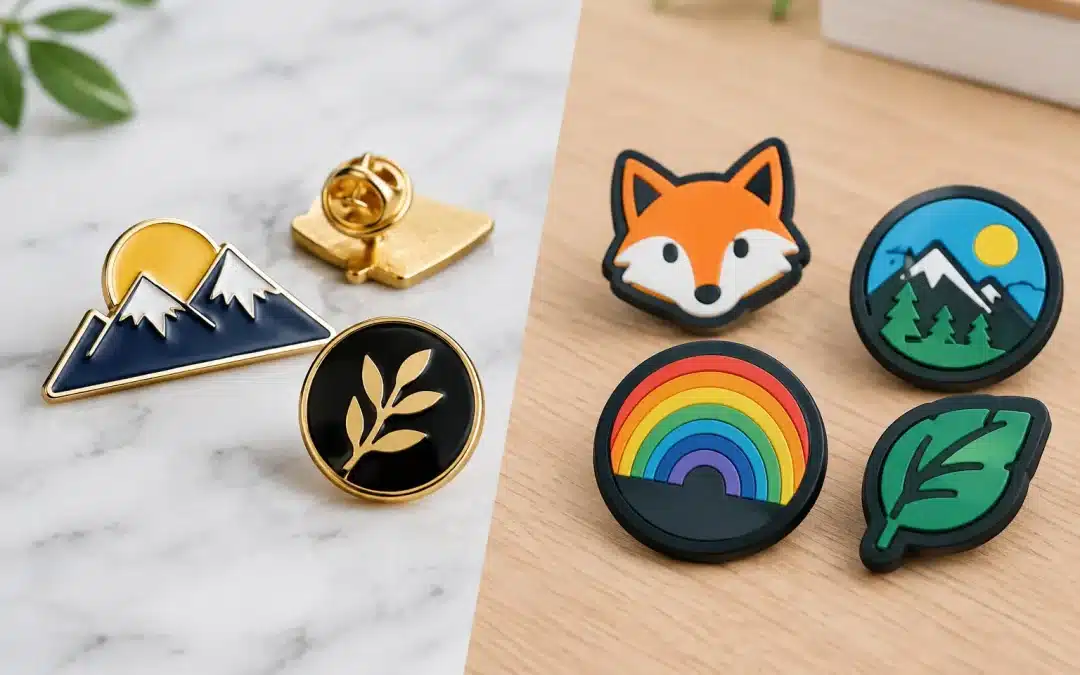
A badge can be the smallest item on the table and still become the thing people wear home, pin to a lanyard or keep for years. When choosing metal pins versus PVC badges, the right option comes down to the impression you want to make, how the item will be used and the detail in your design. Both can carry a logo brilliantly. They simply do it in very different ways.
For corporate recognition, formal events and collectable designs, metal often gives the stronger premium feel. For colourful mascots, children’s campaigns and practical outdoor use, PVC can be a smart, flexible choice. Here is how to select a badge that works for your brand, budget and audience.
Metal Pins Versus PVC Badges: The Key Difference
Metal pins are made from a metal base, usually formed to your custom shape, then finished with enamel, printed artwork, plating or an epoxy coating where required. They have weight, a crisp edge and a polished presentation that feels substantial in the hand. Think staff service awards, conference pins, membership pins, charity fundraising items and commemorative event badges.
PVC badges are moulded from soft, flexible polyvinyl chloride. Colour is built into raised and recessed sections of the mould, producing a tactile, rubber-like badge with bold colour blocks and a slightly three-dimensional look. They are popular for sporting clubs, school groups, outdoor promotions, character designs and brands wanting a more casual, playful finish.
Neither material is automatically better. A refined law firm anniversary pin and a junior footy club mascot badge have different jobs to do. Matching the product to the occasion is where the best result starts.
When Metal Pins Make the Better Choice
Metal lapel pins create an immediate sense of quality. Their shine, defined outlines and solid feel make them well suited to occasions where recognition matters. A staff member receiving a five-year service pin, for example, is likely to value a polished metal keepsake more than a soft promotional giveaway.
A premium finish for formal use
Die-struck and enamel metal pins can be plated in gold, silver, antique finishes, black nickel and other options that complement your artwork. Raised metal lines separate enamel colours cleanly, making logos and emblem-style designs appear neat and intentional. This is particularly useful where your organisation has a heritage crest, an anniversary mark or a simple corporate logo that needs to look sharp on a blazer, shirt or uniform.
Metal also supports a wide range of finishes. Soft enamel provides textured colour with raised metal borders, while hard enamel offers a smoother, more polished face. Printed pins are useful for detailed logos, gradients and fine artwork that cannot be separated into enamel sections. An epoxy coating can add protection and a glossy surface to printed designs.
Strong for fine lines and small details
If your design includes small lettering, delicate line work or an intricate badge shape, metal is usually easier to control. There are still practical limits – tiny text needs adequate size to remain readable – but metal can reproduce crisp borders and precise outlines that may become too soft in PVC.
This makes metal a strong option for associations, councils, corporate brands, emergency services recognition, commemorative merchandise and professional membership programs. It is also the natural fit when the badge needs to look at home beside a name badge, tie clip or formal uniform.
Built as a keepsake
Quality metal pins are durable and designed for repeat wear. The material resists normal handling well, and plating can retain its presentation for years when cared for properly. That lasting quality can improve perceived value, especially when pins are sold as merchandise or used as an award.
Metal is not always the lowest-cost route, however. Complex custom shapes, multiple enamel colours, 3D sculpting and specialty plating may increase production costs. For a simple bulk campaign where maximum quantity is the priority, PVC may offer better value.
Where PVC Badges Stand Out
PVC badges bring colour, texture and personality. They are soft to touch, lightweight and far less formal than metal, which is exactly why they work so well for the right project. If a design needs to feel fun, active or approachable, PVC can make a stronger visual connection.
Bright colour and raised detail
PVC is excellent for bold artwork with clear colour areas. A mascot’s face, a school house logo, a surf club emblem or a branded campaign icon can all benefit from its raised layers. The result has dimension without needing a heavy product.
Close Pantone colour matching is possible across both materials, but PVC designs generally look best when colours are treated as distinct sections. Fine shading, photographic imagery and very small typography are not PVC’s strongest territory. Simplifying the artwork often creates the clearest and most effective badge.
Comfortable for active and outdoor settings
Because PVC has flexibility, it suits environments where badges may be bumped, handled often or worn by younger people. It does not have sharp metal edges, and it performs well around water and general outdoor activity. This makes it a practical choice for camps, sporting events, children’s programs, promotional tours and recreation clubs.
That said, PVC is not indestructible. Very thin elements can bend, and a complex shape needs enough material around the edges to hold its form. For a badge exposed to hard daily use, attachment selection matters just as much as the front design.
A casual product with broad appeal
PVC badges tend to feel like a giveaway people actually want to keep. They work especially well when paired with matching custom keyrings, fridge magnets or patches for a coordinated event pack. They can also be a cost-effective way to produce a colourful custom shape in volume, particularly for campaigns where you want plenty of hands carrying your message.
The trade-off is presentation. A PVC badge can look outstanding, but it will not deliver the same classic, jewellery-like finish as enamel on metal. If the goal is prestige, choose metal. If the goal is energy and easy engagement, PVC deserves serious consideration.
Compare the Design Before Comparing Price
The fastest way to choose between metal pins and PVC badges is to look closely at the artwork. A supplier can advise on the best production method, but a few design questions will point you in the right direction.
Does your logo use fine text, thin lines or detailed crests? Metal is usually the safer choice. Is your design a bold character, simple icon or bright graphic with large colour areas? PVC may suit it beautifully. Do you need a formal item for awards or executive events? Metal will better support that position. Are you creating something for kids, a sports carnival or an outdoor promotion? PVC could be the more practical option.
Size matters too. A small badge needs a simplified design regardless of the material. Enlarging the pin can make text more legible and create room for detail, but it may also affect unit cost and how comfortably the badge sits on clothing. A free digital proof is valuable here because it shows how the finished layout is likely to read before production begins.
Attachments, Quantities and Everyday Use
The backing is easy to overlook, yet it affects whether people actually wear the badge. Butterfly clutches are a common choice for traditional lapel pins. Rubber clutches can suit PVC designs and active use. Magnet attachments avoid piercing fabric and are useful for uniforms, although they may not be suitable around certain medical devices or sensitive equipment. Safety pins and other fittings may be appropriate for larger badges or event use.
For bulk orders, the best value often comes from selecting a standard size, practical shape and finish that complements the artwork rather than overcomplicating it. A well-designed 30 mm badge can have more impact than a larger pin crowded with too much copy. Plan quantities around genuine use: attendees, staff, volunteers, retail sales and a sensible number of extras for late registrations or future team members.
Turnaround also deserves early consideration. Custom items require artwork approval and manufacturing time, particularly when a design includes specialised finishes or a custom mould. Supplying clean logo files and confirming your quantity early gives your supplier more room to guide you towards the right result.
Get a Badge People Want to Wear
The best custom badge is not simply the cheapest one or the flashiest one. It is the one that feels right for the people receiving it. A metal pin can turn recognition into a lasting memento. A PVC badge can make a campaign, club or event feel instantly more welcoming and memorable.
With more than 20 years of custom merchandise experience, Lapel Pins Australia can help turn your artwork into a clear production recommendation, supported by a free digital proof before you proceed. Start with the story your badge needs to tell, then choose the material that gives it the right weight, colour and character.