
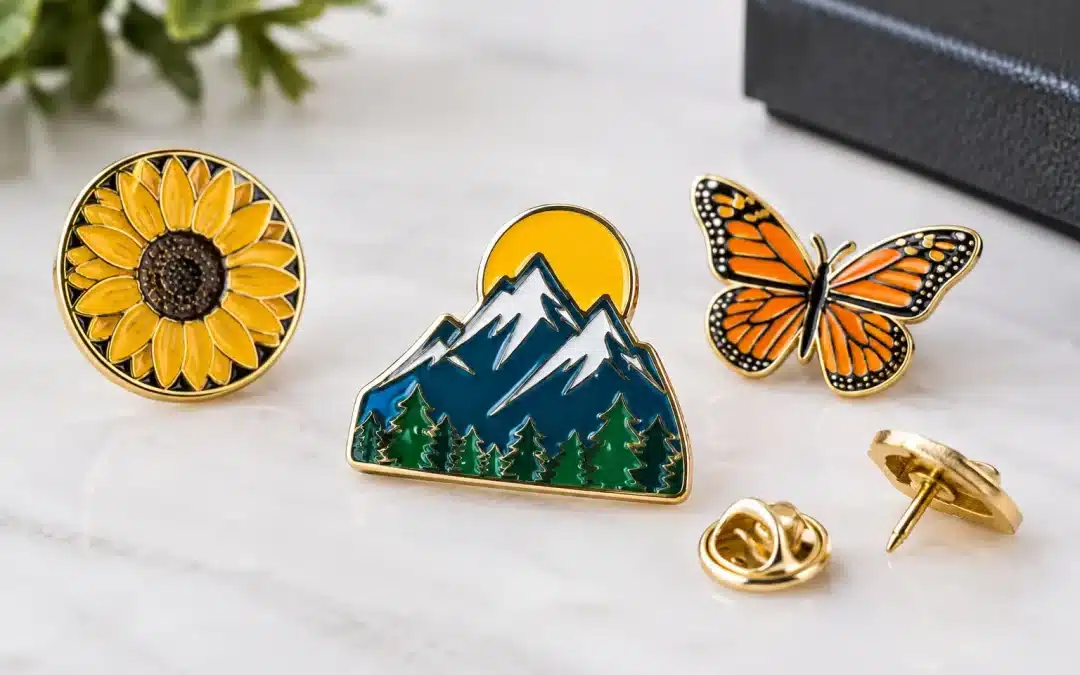
A lapel pin may be small, but people notice when it feels cheap. Soft edges, shallow details and uneven plating can take the polish out of an otherwise great design. Die struck quality is what gives a custom metal pin its crisp shape, satisfying weight and professional finish – whether it is worn by staff, handed out at an event or presented as a recognition award.
For Australian businesses, clubs, schools and community groups, choosing the right production quality is not about chasing unnecessary extras. It is about making sure your badge represents your organisation properly. A well-made die struck pin can be worn for years, making it a practical promotional item with lasting visibility.
What Does Die Struck Quality Mean?
Die striking is a metal-forming process. Your design is engraved into a hardened steel die, then pressed into a sheet of metal under high pressure. This creates the raised and recessed areas that give a pin dimension, texture and definition.
The quality of that result depends on more than the metal itself. It comes down to how accurately the die is made, how clearly the artwork translates into stamped detail, the depth of the strike, the plating finish and the care taken during trimming and assembly. A quality die struck pin should look deliberate from every angle, not merely acceptable at arm’s length.
Die struck pins are particularly effective for logos with strong linework, crests, commemorative designs, service awards and heritage-style badges. They can be left as polished metal with a sandblasted background, or used as the base for soft enamel and other coloured finishes.
The Details That Separate a Great Pin From an Average One
Crisp lines and readable artwork
Fine lines are often where quality shows first. A detailed logo, mascot or emblem needs raised borders that stay clean rather than blending into nearby elements. If lines are too thin for the pin size, they may fill in during production or lose definition once plating is applied.
This is why pin size matters. A design that looks sharp on a computer screen may need slightly thicker borders, simplified text or a larger badge size to work successfully in metal. A free digital proof is valuable here because it shows how the artwork will be adapted before manufacturing begins.
Text deserves special attention. Very small lettering can be difficult to read on a compact lapel pin, especially when a design includes curves, multiple colours or intricate background detail. For names, dates and short messages, clear type and sensible spacing usually create a better result than trying to fit every word from a brochure onto a badge.
Depth you can see and feel
A proper die strike creates contrast between raised and recessed areas. That difference gives a pin its character. On a simple logo, it may be the sharp outline around a letterform. On a commemorative coin-style pin, it can be the sculpted effect that makes the design feel substantial.
Too little depth can make a metal pin appear flat. Too much fine detail in a small area can create the opposite problem, where the design becomes busy and hard to distinguish. The best result balances the level of detail with the finished pin size and intended use.
For example, a staff recognition pin worn daily may benefit from a clean, bold design that holds up to regular handling. A presentation pin for an anniversary dinner can support more detailed artwork, especially if it will be supplied in a gift box rather than used as everyday uniform wear.
Smooth plating and an even finish
Plating does more than set the colour of the metal. It protects the base material and shapes the look of the entire pin. Gold, silver, antique brass, black nickel and copper finishes each create a different impression, from formal and premium to modern and understated.
Good plating should look even across raised surfaces and around small details. It should not obscure the die-struck lines that make the design recognisable. Antique finishes can be especially useful for badges with texture because the darker recessed areas increase contrast and make stamped detail easier to see.
The right finish depends on your artwork. A black nickel background can make bright enamel colours stand out, while polished gold may suit achievement pins, school badges or executive gifts. There is no single best choice – the pin needs to suit your brand colours, audience and budget.
Clean edges and secure attachments
The edge of a pin is easy to overlook until it catches on clothing or feels rough in the hand. Quality trimming and polishing ensure the outline is smooth, including unusual custom shapes. This matters for safety, comfort and presentation.
Attachment choice also affects how the finished pin performs. Butterfly clutches suit many standard lapel pins and keep bulk orders affordable. Rubber clutches can offer a softer grip, while magnets are useful when you want to avoid piercing delicate fabrics or uniforms. Larger pins, heavy designs and pins worn on bags may need a different attachment arrangement for better stability.
Why Material Choice Affects the Final Result
Die struck metal pins are commonly made in iron, brass or zinc alloy, and each has its place. The best material is not always the most expensive one. It depends on the shape, level of detail, finish and quantity required.
Iron is a popular option for clean, flat die-struck designs and provides reliable value for larger promotional runs. Brass is often chosen when a refined finish and fine detail are important. Zinc alloy is useful for designs that need 3D shaping, cut-outs or more complex forms that cannot be achieved as easily with a traditional flat strike.
If your priority is bold full-colour artwork, a printed pin with epoxy coating may be a better fit than a die-struck enamel style. If you need a lightweight giveaway for a school fundraiser, acrylic or PVC pins can also make sense. The strongest choice is the one that matches the job, rather than forcing every design into the same production method.
Getting Better Die Struck Quality From Your Artwork
You do not need to be a designer to achieve a great pin. You do need to provide the clearest artwork available and be open to production advice. Vector files are ideal because they allow clean scaling, but high-resolution logo files and existing brand guidelines can also help build an accurate proof.
Before approving artwork, check four practical points:
- Are the smallest lines and letters still clear at the actual pin size?
- Do the raised metal borders have enough thickness to separate colours and details?
- Does the selected plating suit the logo and the purpose of the pin?
- Is the attachment suitable for how and where people will wear it?
It is also worth considering viewing distance. A conference attendee may only see a staff pin from a metre away, so a bold logo and strong contrast matter more than tiny decorative elements. A collector pin or award piece can invite closer inspection, where fine die-struck texture becomes part of its appeal.
When a Die Struck Pin Is the Right Choice
Die struck quality is most valuable when your pin needs to carry authority, permanence or a sense of achievement. Corporate milestones, employee service awards, association membership badges, sports club crests and commemorative events are all strong applications.
A simple metal-only pin can deliver a classic, premium look without relying on colour. Adding soft enamel brings branded colours into the design while keeping the tactile raised metal borders. For highly detailed illustrations, photographs or colour gradients, printed pins may reproduce the artwork more faithfully. Each option has a different visual strength, and a good supplier will explain the trade-off before production starts.
At Lapel Pins Australia, the aim is to make that choice straightforward. With hands-on advice, a free digital proof and custom options across shapes, sizes, colours, finishes and attachments, you can move from an idea to a pin that looks right in the real world.
The best custom pin is not the one with the most detail. It is the one that makes your logo, message or achievement instantly recognisable, then continues to look good every time someone wears it.