
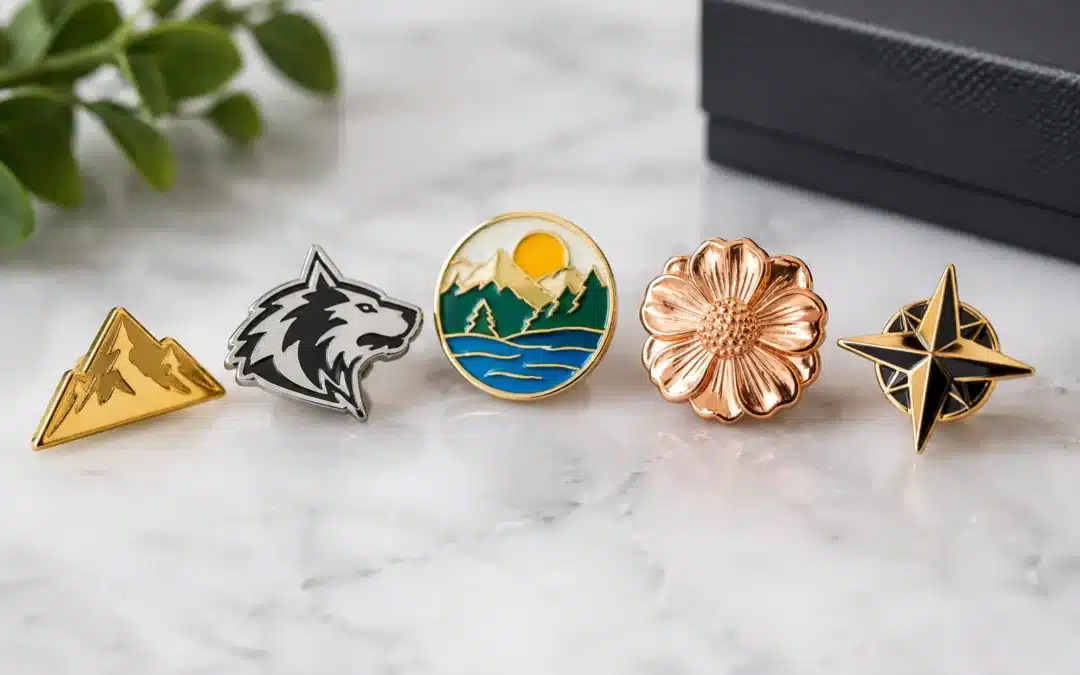
A great lapel pin can be recognised from across a room, but the finish is what makes people want to look closer. Pin plating options affect the colour of metal outlines, the contrast around your logo and the overall impression of quality. For a corporate award, a bright gold finish may feel premium. For a heritage club badge, an antique nickel or antique bronze finish can add character that a shiny surface cannot.
When you are ordering custom pins in bulk, plating is not a minor production detail. It is one of the key choices that determines whether the finished pin feels formal, modern, bold or traditional. The right option also helps your colours, text and small design features stand out clearly.
What does pin plating do?
Plating is the metal finish applied to the raised areas of a die-struck or enamel pin. These raised lines form the borders around coloured enamel sections, lettering, logos and detailed artwork. They are visible on the front of the pin and often influence the backing and edge finish as well.
Think of the plating as the frame around your design. A silver-toned frame can make cool colours look crisp, while gold often complements warm colours such as red, burgundy, orange and dark green. Black finishes create stronger contrast and can give a contemporary logo a more dramatic result.
Plating should be selected early, ideally before the final artwork proof is approved. A free digital proof gives you the chance to see how the metal finish, enamel colours, shape and text work together before manufacturing begins.
Pin plating options and the look they create
There is no single best plating for every project. The best result depends on your brand colours, the purpose of the pins, the level of detail in the artwork and the audience receiving them.
Bright gold plating
Bright gold is a popular choice for recognition pins, executive gifts, anniversary badges and premium membership pins. It has a clean, polished appearance that immediately signals value. Gold pairs especially well with dark blue, black, red, forest green and white enamel.
This finish works well when the pin needs to feel celebratory or prestigious, such as years-of-service awards, achievement pins and sponsor gifts. The trade-off is that bright gold can compete with very pale yellow or metallic-looking artwork. If your design relies on subtle yellow tones, a silver or black nickel outline may create clearer separation.
Bright silver plating
Bright silver offers a polished, versatile look. It suits corporate logos, schools, associations, health organisations and event merchandise because it is clean without being overly formal. Blue, teal, purple, white and cool grey designs often look particularly sharp with silver outlines.
For many organisations, silver is the safest all-round choice. It feels professional, photographs well and allows coloured enamel to take centre stage. It is also ideal where your existing logo uses chrome, grey or white branding elements.
Black nickel plating
Black nickel is a dark, reflective metal finish that gives custom pins a modern, high-impact edge. It is an excellent option for contemporary branding, motorsport clubs, music events, technology businesses and designs with vivid colours.
The dark outlines make bright enamel colours pop. White, lime green, red, electric blue and orange can look particularly effective against black nickel. Fine details may also appear more defined when there is strong contrast between the plating and the colour fill.
Black nickel is not the same as a flat black painted finish. It has a metallic character, so it catches the light while still providing a much darker look than gold or silver. If you want a fully matte or understated result, antique plating may be the better fit.
Antique gold, silver and bronze finishes
Antique finishes are intentionally darker in recessed areas and softer on raised surfaces. They bring out texture, linework and dimensional detail, making them well suited to die-struck pins, 3D pins and designs that do not need bright enamel colours.
Antique gold can give a commemorative or traditional feel, while antique silver works well for heritage organisations, service clubs and detailed emblems. Antique bronze is a strong choice for sporting awards, historical designs, community milestones and pins inspired by medals or coins.
These finishes are especially useful when your artwork includes crests, shields, buildings, mascots or relief-style elements. Rather than relying on colour alone, the design gains depth through the contrast between raised and recessed metal.
Copper and brass-style finishes
Copper and brass-style plating create warmth that bright gold and silver cannot always provide. They can suit artisan businesses, trade associations, fundraising badges, vintage-inspired events and designs with earthy colours.
Copper works nicely with dark teal, navy, cream and black. Brass-style finishes often complement burgundy, green and classic heritage palettes. As with any warm metal, consider the colours in your logo carefully. A close Pantone match for the enamel is helpful, but it still needs to sit comfortably beside the selected metal tone.
Match the plating to your pin style
Not every pin construction uses plating in exactly the same way. Die-struck enamel pins have raised metal borders, so the chosen finish is a prominent feature. Soft enamel pins show textured, recessed colour areas, while hard enamel pins have a smoother, level surface. Both can look excellent with gold, silver or black nickel plating.
Printed pins with an epoxy coating give greater flexibility for gradients, fine colour variation and photographic artwork. In these designs, the metal edge may be less central, but the finish still affects the final presentation. A silver or gold rim can make a printed pin feel more polished, while black nickel can give it a bolder outline.
PVC pins do not use metal plating in the same way. Their appeal comes from soft, moulded rubber-like material, raised layers and vibrant colour. Acrylic pins are another separate option, suited to lightweight, colourful designs where a metal finish is not required. If the look you want depends on metallic outlines, a die-struck or enamel pin is usually the stronger choice.
Consider contrast before choosing a finish
The most common mistake is choosing plating based only on personal preference. A finish may look great on its own but make your logo harder to read once colours and fine lines are added.
Start with the dominant colours in your design. Dark artwork often works well with bright gold or silver. Bright, energetic colours can gain definition from black nickel. Traditional crest artwork may suit antique finishes, particularly if there is plenty of line detail. If your logo includes very small text, a cleaner bright finish can sometimes help keep the result legible.
Also consider where the pin will be worn. Pins used on dark uniforms, blazers or jackets need enough contrast to be seen. A black nickel pin with dark navy enamel can look smart up close but may disappear from a distance. Bright silver outlines or a lighter enamel border could solve the issue.
Plating choices for common pin projects
Corporate branding usually calls for bright silver, bright gold or black nickel, depending on the company identity. Silver remains a reliable choice for client gifts, staff uniforms and conference merchandise. Gold is better suited to awards, VIP packs and recognition programmes.
Schools often choose bright gold or silver for leadership badges, house pins, graduation mementos and fundraising merchandise. Sporting clubs may use antique bronze for medals-inspired designs, bright gold for premiership or volunteer recognition, or black nickel for modern team branding.
Charities and community groups benefit from finishes that reinforce the mood of their campaign. Bright and friendly enamel designs often work with silver, while heritage fundraising projects can feel more meaningful with antique plating. For event pins, the decision may come down to whether the design needs to look celebratory, collectible or highly branded.
Do not overlook the attachment and packaging
The front finish gets the attention, but practical choices matter as well. A butterfly clutch is common for lapel pins and works well for most uses. Rubber clutches, safety pin fittings, magnet attachments and premium backing options may suit particular uniforms, fabrics or presentation needs.
For staff awards, donor gifts or milestone pins, presentation boxes can elevate the experience. A polished gold pin in a gift box feels very different from the same pin supplied loose in a bag. If the pin is intended to reward loyalty, mark achievement or impress event guests, presentation is part of the product.
Get the finish right before production
Pin plating can look different across a digital screen, a physical sample and different lighting conditions. That is why it pays to discuss the intended use, colours and design style before finalising your order. An experienced supplier can recommend a finish that supports the artwork rather than simply following the most common option.
At Lapel Pins Australia, every custom pin order is supported with a free digital proof, so you can review the proposed plating, colour placement and overall layout before production begins. It is a straightforward way to avoid surprises and move ahead with confidence.
A small badge can carry a big message. Choose a plating finish that gives your logo the presence it deserves, then let the finished pin do its job on uniforms, lanyards, blazers and event packs across Australia.