
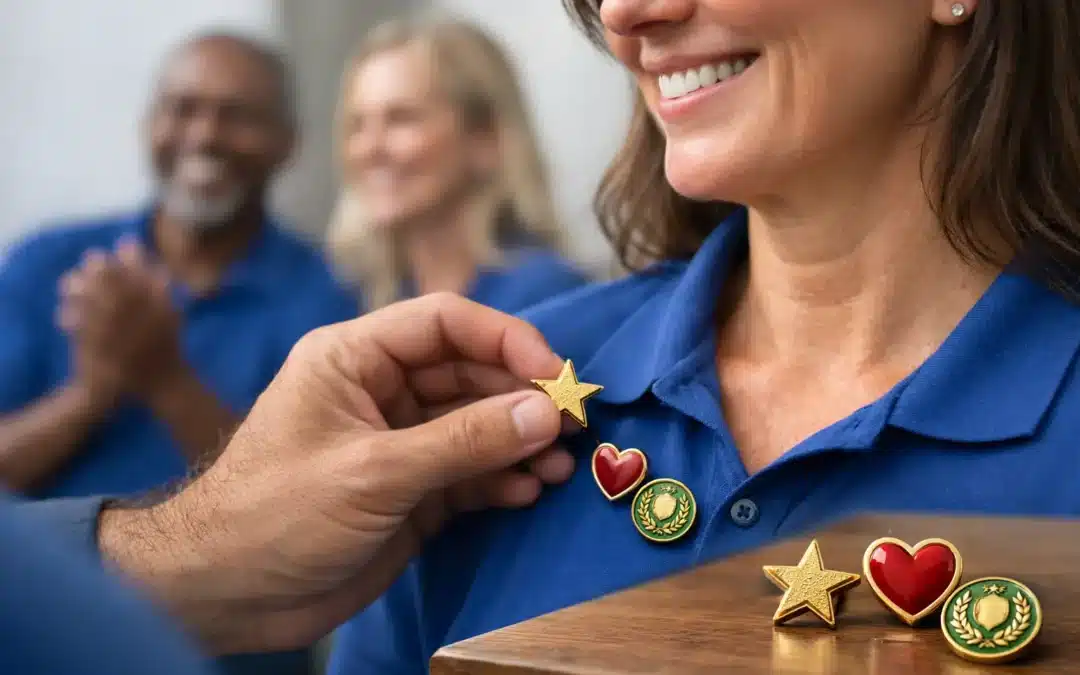
A volunteer who has given up their Saturdays for five years does not need a generic thank-you at the end of a busy presentation. They deserve recognition that is personal, visible and made to last. Volunteer recognition pins give organisations a practical way to acknowledge service, celebrate milestones and make valued people feel part of something bigger.
For schools, charities, sporting clubs, community groups and corporate volunteer programmes, a well-designed pin is a small badge with a big impact. It can mark a first year of service, identify a committee member, celebrate a major fundraising effort or recognise the people who quietly keep an event running.
Why volunteer recognition deserves a visible symbol
Most volunteers do not give their time for applause. They contribute because they care about the cause, the club, the students, the community or the people around them. That does not make recognition less meaningful. In fact, a considered thank-you tells volunteers that their time has been noticed and that their contribution matters.
A custom lapel pin works because it is both personal and public. It can be worn at an AGM, awards night, community event, conference or on a lanyard and uniform. Unlike a printed certificate that may end up in a drawer, a quality pin can become part of someone’s regular event kit or a keepsake they are genuinely proud to hold onto.
Recognition also supports retention. When volunteers feel appreciated, they are more likely to stay connected to an organisation and encourage others to get involved. A pin will not replace good communication, proper support or a well-run programme, but it is a tangible part of showing respect for the people behind the work.
Volunteer recognition pins for milestones and roles
The best pin programme starts with a clear purpose. Before choosing colours or finishes, decide what each pin needs to represent. Some organisations create one consistent volunteer pin for every person who joins the programme. Others build a tiered system around years of service, leadership positions or specific achievements.
A five-year service pin, for example, should look distinct enough to feel like a step up from a first-year badge. This can be achieved with a different metal finish, a coloured enamel detail, an anniversary number or a more premium presentation box. For annual volunteer awards, the organisation’s logo may take centre stage, with the year or award category included around the edge.
Role-based pins are another strong option. Schools may recognise parent helpers, board members and long-serving staff volunteers. Sporting clubs can create pins for coaches, team managers, life members and canteen volunteers. Charities might use separate designs for event crews, ambassadors, fundraising champions and committee members.
There is no single right approach. A large national association may need a simple pin system that is easy to order in volume and use consistently across branches. A local community group may prefer a more detailed design for a once-a-year presentation. The right choice depends on your budget, the number of recipients and how formal the occasion will be.
Choosing a pin style that suits the occasion
The style of pin says something about the level of recognition. A simple, polished badge can be perfect for regular volunteer identification. A more detailed die-struck enamel pin can give a service award a premium finish without creating unnecessary cost.
Hard enamel and soft enamel pins are popular when your design includes bold colours, clean borders and a recognisable logo. They are durable, professional and well suited to clubs, schools and organisations that want a classic lapel-pin look. Die-struck metal pins work especially well for heritage designs, anniversary emblems and awards that rely on texture, raised metal and an antique finish rather than multiple colours.
Printed pins are a practical choice for detailed artwork, fine text, colour gradients or photographic elements. An epoxy coating can add protection and a smooth gloss finish. Acrylic and PVC pins can suit more casual volunteer programmes, youth events or campaigns where bright shapes and a lighter feel are the priority.
Size matters too. A pin that is too small can make text difficult to read, while an oversized design may be less comfortable to wear on a lapel or uniform. For most recognition pins, a compact but noticeable size provides the best balance. Your artwork, logo detail and attachment choice should guide the final dimensions.
Design details that make recognition feel personal
A volunteer pin should look like it belongs to your organisation, not like a stock award with a logo added at the last minute. Start with the elements people already recognise: your logo, key colours, mascot, shield, event icon or a symbol connected to your cause.
Keep the message clear. If the pin is for long service, a number such as 5, 10 or 20 years can be more effective than a long sentence. If it marks an award, a short title such as Volunteer of the Year or Community Champion gives the pin meaning at a glance. Fine text can be difficult to reproduce at smaller sizes, so simplify where needed rather than forcing too much information into the design.
Colour choices should also be practical. Close Pantone colour matching helps keep your brand consistent, particularly where the pins sit alongside uniforms, event signage or other promotional merchandise. Metallic finishes such as gold, silver, antique nickel or black nickel can add contrast and make coloured enamel stand out.
Consider how the pin will be presented. A butterfly clutch is a common option for lapels and fabric, while a magnet attachment can be useful where recipients do not want to pierce clothing. For milestone awards and formal presentations, individual gift boxes add a stronger sense of occasion. The presentation is not an afterthought – it shapes the moment when the volunteer receives their recognition.
Plan for quantities, timing and future awards
Custom pins are usually most cost-effective when ordered in bulk, which makes forward planning worthwhile. If your organisation runs an annual volunteer programme, consider ordering enough pins for the current event plus a small number for new recipients, late additions or replacement stock.
It is also worth thinking beyond this year. A consistent recognition design can become a familiar part of your organisation’s culture. Creating a core pin shape or emblem now makes it easier to add future milestone variations without starting from scratch each time.
Allow time for artwork approval and production, particularly if your pins are needed for a major event, volunteer week, end-of-season presentation or Christmas function. A free digital proof is valuable here. It gives your team the chance to check spelling, colours, dates, logo placement and the overall layout before production begins. It is far easier to adjust artwork at the proof stage than after the pins have been made.
For larger programmes, keep a simple record of who receives which pin and when. This avoids missing long-serving volunteers and helps you plan future quantities. It also gives award presentations more credibility, because recognition is tied to real service milestones rather than last-minute estimates.
Make the presentation part of the thank-you
The pin has more impact when it is presented with intention. Mention the recipient’s contribution by name, share a specific example of what they have done and explain what their work has meant to the group. A short personal acknowledgement often matters as much as the badge itself.
For an awards night, display the pins in gift boxes and invite recipients forward individually. At a smaller club event, a committee member can present pins during a brief thank-you speech. Corporate teams may include pins in volunteer appreciation packs alongside a handwritten note. The format can be simple, but it should never feel rushed.
Lapel Pins Australia helps organisations turn logos, service milestones and volunteer stories into custom pins that are polished, durable and ready for presentation. With guidance on style, size, finish, attachments and artwork, even a rough concept can become a recognition piece people are pleased to wear.
The strongest volunteer programmes make appreciation a habit, not a once-a-year task. Give people a pin that reflects the value of their effort, present it with genuine thanks, and let that small badge remind them that their time has made a real difference.