
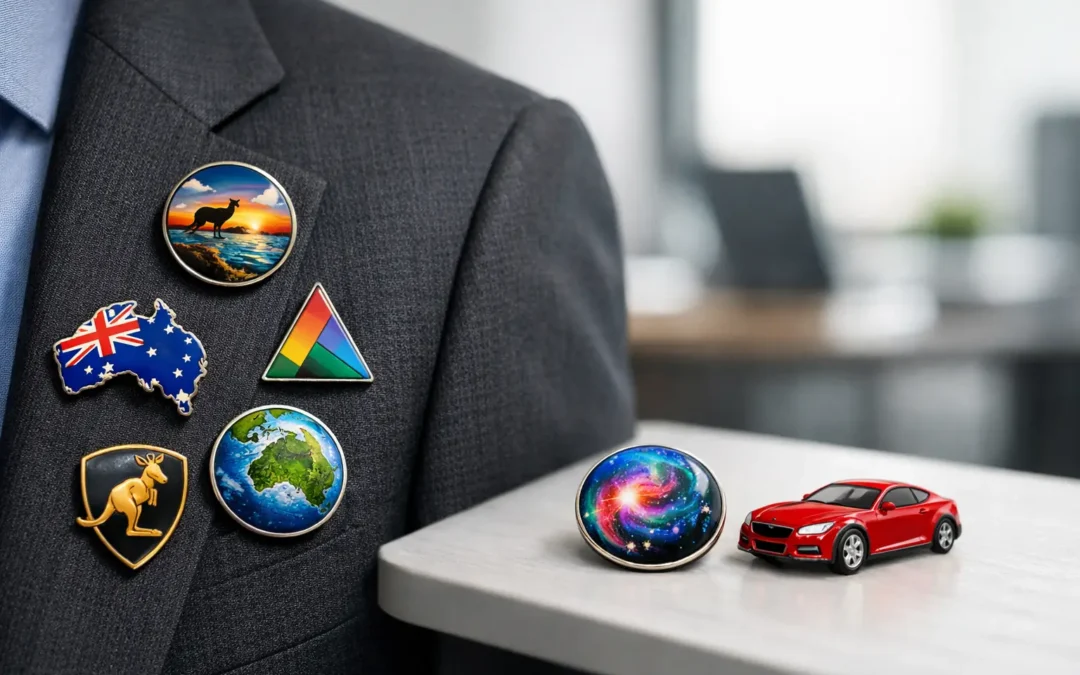
A great lapel pin does more than carry a logo. It gives people a small, visible reason to feel part of the team, the cause or the occasion. Printed lapel pins Australia organisations order for conferences, fundraisers, school programmes and club milestones are built for exactly that job: crisp branding, detailed artwork and a professional finish people are happy to wear.
When your design includes fine text, multiple colours, a gradient or an illustration that needs to stay true to the original, a printed pin can be the most practical choice. It gives your artwork room to perform without forcing it into a simplified moulded design. Small badge, big impact.
Why Printed Lapel Pins Work So Well
Printed lapel pins reproduce artwork directly onto the pin face, making them particularly useful for designs where detail matters. Think corporate logos with delicate lines, event artwork, mascots, commemorative graphics, landscape imagery or campaign badges with several brand colours.
Unlike some traditional enamel styles, printing is not limited by raised metal borders separating every colour area. That opens up more creative freedom. Fine lines can remain fine, text can be more legible at a small size, and shaded artwork can retain its character. Where suitable, an epoxy coating can add a smooth, glossy protective layer over the printed surface.
That does not mean printed pins are automatically the right answer for every job. A simple logo with bold colour blocks may look outstanding as a die-struck enamel pin, where recessed colour and raised metal lines create a more dimensional feel. For a tactile, premium badge with limited colours, enamel may be the better fit. For visual detail, photographic effects or more complex branding, printed is often the smarter option.
When to Choose Printed Lapel Pins in Australia
The best pin style depends on what you want the badge to achieve once it leaves the box. If it needs to act as a polished corporate accessory, a recognition badge or a premium membership item, the finish and attachment deserve as much thought as the artwork. If it is a high-volume giveaway for a one-day event, keeping the design clear and the unit cost efficient may be the priority.
Printed pins are a strong match when your artwork includes gradients, small lettering, detailed crests or several close Pantone colour matches. They are also useful when a design needs a clean, flat presentation rather than the raised-and-recessed appearance of an enamel badge.
Schools can use them for leadership groups, house awards and graduation keepsakes. Sporting clubs can create membership badges, player recognition pins and anniversary merchandise. Charities and community groups can turn a campaign symbol into a wearable fundraising item. Businesses can use them at trade shows, staff celebrations, product launches and conferences, where a coordinated detail helps the whole event look organised.
For bulk orders, it pays to consider the lifespan of the pin. A staff recognition badge expected to be worn for years should be specified differently from a promotional handout intended for a weekend festival. The right material, coating and attachment will depend on how often it will be used and where it will be worn.
Getting the Design Right Before Production
A lapel pin is small, so every design decision carries weight. Artwork that looks impressive on a computer screen can become hard to read when reduced to 25 mm or 30 mm. The aim is not to squeeze every message onto the pin. It is to make the essential elements instantly recognisable.
Keep the Main Message Clear
Start with the logo, symbol, event name or message that people need to notice first. If your design includes text, use a clear font and allow enough space around the letters. Fine text may be achievable with a printed finish, but it still needs to be readable at the finished pin size.
Avoid relying on very pale colours beside a white background, or tiny details that only work when viewed close up. A strong pin design usually has a clear focal point, sensible contrast and enough breathing room to look sharp from across a room.
Choose a Shape That Supports the Artwork
A round, square or rectangular pin is a reliable option for many logos and badges. Custom shapes can add more personality when the outline is part of the design, such as a mascot, product silhouette, state outline or club emblem.
Custom does not have to mean complicated. A clean outline is generally easier to recognise, manufacture and wear. If the artwork has many fine edges, a standard shape with the image printed inside may give a neater result than trying to cut around every detail.
Consider Finish, Coating and Attachment
A glossy epoxy dome can give printed artwork added protection and a polished appearance. A non-domed finish may suit designs that need a flatter look. Your choice should reflect the design, expected wear and budget rather than following a one-size-fits-all rule.
For attachments, a standard butterfly clutch suits many lapel pin orders. A magnet attachment is a useful alternative for uniforms, delicate garments or customers who prefer not to pierce fabric. A safety-pin style fitting can work well for larger badges, while presentation boxes can turn an award or commemorative pin into a more meaningful gift.
A Better Way to Order Custom Printed Pins
The easiest custom pin project starts with a clear brief. Provide the artwork you have, the quantity required, your preferred delivery date and a little context about how the pins will be used. Even a rough idea is enough to begin. An experienced supplier can advise on the most suitable size, shape, material and finish before production begins.
A free digital proof is a valuable part of this process. It lets you check the layout, spelling, colours, dimensions and overall appearance before the order moves ahead. This is the time to flag changes. Once a bulk order is in production, even a minor error can become an expensive one.
When reviewing a proof, check that your logo is current, all dates and names are correct, and the pin size suits the amount of detail in the design. If you are matching an existing brand identity, confirm the closest Pantone colours as well. A good proof gives everyone confidence that the finished pins will reflect the intended design.
Timing matters too. Event deadlines, presentation nights and campaign launches rarely move, so allow enough lead time for proof approval and production. If your date is tight, say so at the beginning. Clear communication helps your supplier recommend the most realistic production path and avoid last-minute pressure.
Make Your Pin Part of the Bigger Picture
Lapel pins work especially well when they are connected to a wider promotional plan. A conference pin can complement branded lanyards, keyrings or bottle openers. A club anniversary design can appear on patches, scarves and beanies. A fundraiser can pair its pin with fridge magnets or other affordable merchandise that gives supporters more ways to contribute.
That consistency matters. When the same colours, icon and message appear across several items, your organisation looks established and considered. The lapel pin may be the smallest item in the range, but it is often the one people keep, wear and show to others.
Lapel Pins Australia brings more than 20 years of experience to custom orders, with practical guidance from artwork through to finished product. Australian-owned service, dependable communication and a free digital proof help make a detailed custom order feel straightforward.
If your next event, campaign or recognition programme needs a memorable finishing touch, begin with the story you want people to wear. A well-designed printed pin can keep that story visible long after the banners come down.