
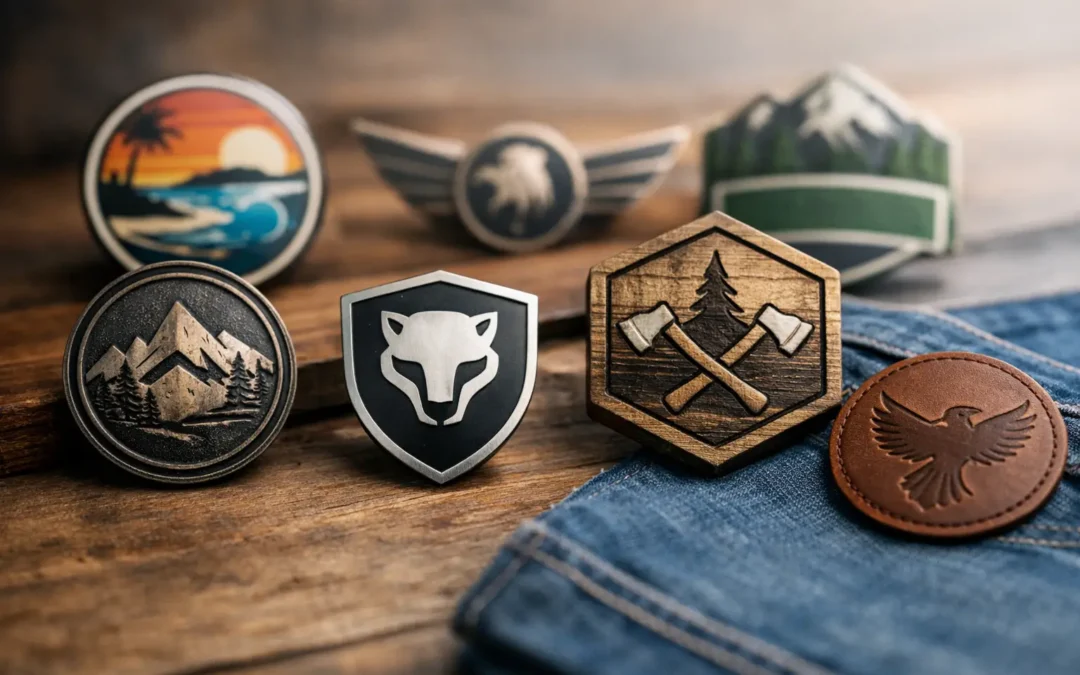
A badge is often the smallest item in an event pack, uniform or welcome kit, yet it can be the piece people keep. The best logo badge examples do more than display a name. They make a team look established, give members a sense of belonging and put your organisation in front of people long after the event has finished.
For Australian businesses, schools, clubs and community groups, custom lapel pins are a cost-effective way to create that lasting connection. The right design depends on where the badge will be worn, how detailed your logo is and what you want it to represent: a brand, achievement, fundraising campaign or shared cause.
12 logo badge examples for brands and groups
1. Corporate logo pins for staff and client gifts
A polished enamel pin with a clean company logo suits uniforms, trade shows, conferences and client thank-you packs. For most business logos, a simple die-struck metal outline with coloured enamel gives a professional result that feels more substantial than a printed handout.
Keep small text to a minimum and allow enough space between design elements. A logo that works on a website header may need simplifying to stay clear on a 25 mm or 30 mm pin. If your brand relies on a particular shade, Pantone colour matching helps maintain consistency across your merchandise.
2. Membership badges for associations
Membership pins give associations, professional groups and alumni networks a visible marker of affiliation. They can be issued to new members, worn at meetings or included with renewal packs. A traditional round or shield-shaped badge often works well because it has the authority of a crest without looking dated.
For long-standing organisations, consider a metal finish that supports the heritage of the brand. Antique gold, antique silver and polished nickel each create a different impression. The logo should remain the hero, but an establishment year or member title can add meaning where space allows.
3. Sporting club trading pins
Club pins are practical fundraisers and popular collector items, especially for junior sport, representative teams and anniversary seasons. A bold mascot, club colours and the year of competition make the design feel specific enough to collect rather than generic enough to forget.
Soft enamel is a strong choice for many sporting designs because the raised metal lines protect the coloured areas and give the badge texture. If the artwork includes a detailed animal mascot or a player illustration, a printed badge with an epoxy coating may reproduce finer detail more accurately.
4. School house and leadership pins
Schools use logo badges to recognise school captains, prefects, house leaders, academic achievement and attendance milestones. These pins need to look polished, but they also need to suit busy uniform days. A compact shape, secure clutch and durable finish are usually more useful than an overly complex design.
House badges can use each house colour with a consistent school crest, creating a coordinated series. Leadership pins may use gold-toned metal to stand apart from standard achievement awards. Small Badge, Big Impact! Recognition works best when students are proud to wear it.
5. Charity campaign badges
A campaign pin turns support into something visible. Charities and community organisations can use an awareness ribbon, event icon, campaign slogan or heart-shaped logo badge to help volunteers, donors and participants show they are involved.
The strongest charity badges are easy to understand at a glance. They do not try to explain the entire cause in tiny lettering. A clear symbol, memorable colour and short campaign name are usually enough. For large fundraising runs or community days, an affordable printed or PVC option may suit higher quantities and wider distribution.
6. Conference and event identity badges
Event badges work particularly well when they are designed as a keepsake rather than merely a name tag. A conference logo pin can be added to delegate bags, sponsor packs, speaker gifts or VIP welcome boxes. It gives the event a more premium feel and provides a physical reminder after the final session.
For a one-off event, include the event name and year. For an annual conference, retain a recognisable core design and change one feature each year, such as the colourway, location icon or metal finish. This encourages repeat attendees to collect the series.
7. Anniversary logo badges
Celebrating 10, 25, 50 or 100 years is an ideal reason to create a custom badge. Anniversary logo badge examples often combine the main brand mark with a prominent milestone number, making the item useful for staff, customers, volunteers and commemorative merchandise.
There is a balance to strike. The anniversary number should be visible, but it should not overwhelm the logo to the point that people cannot identify the organisation. A two-level design can help, with the main logo in colour and the anniversary detail in raised metal.
8. Retail and hospitality staff pins
Name pins, service milestone pins and branded lapel badges help customer-facing teams look consistent and approachable. Cafes, hotels, retailers and visitor attractions can use them as part of a uniform system, particularly when staff do not wear formal branded clothing.
For regular daily wear, choose a design with smooth edges and a reliable attachment. Magnetic fittings avoid pinholes in some garments, although they may not suit every workplace or be appropriate around medical devices. A standard butterfly clutch is a dependable choice for most lapel pins.
9. Safety and training recognition pins
Recognition badges can reinforce workplace behaviours that matter. Businesses may award pins for first aid training, safety milestones, years of service, quality achievements or team leadership. Unlike a certificate filed in a drawer, a badge can start a conversation on the workshop floor, at a site meeting or during a client visit.
Use a clear icon, such as a shield, star, hard hat or tick, alongside a brief achievement label. Avoid overcrowding the face of the badge with internal programme details. If the recognition system has several levels, vary the metal finish or enamel colour so progress is obvious.
10. Tourism and destination pins
Tourism operators, councils, museums and attractions can turn local identity into a collectible item. A landmark, native animal, regional food icon or illustrated map shape gives visitors a small, packable souvenir that is easier to carry than many traditional gift-shop products.
This is one category where unusual shapes can be especially effective. A die-cut pin shaped like a surfboard, mountain, ferry or wildlife silhouette has instant shelf appeal. Detailed scenic artwork may be better suited to printed pins with an epoxy dome, while simple graphic icons look excellent in enamel.
11. Product launch and brand campaign pins
A limited-run badge gives a product launch a sense of occasion. It can be used for internal staff excitement, media packs, influencer mail-outs, retail promotions or customer competitions. The key is to create a design that feels connected to the campaign without relying on every piece of campaign copy.
A recognisable product outline, slogan fragment or campaign character can work better than a full logo reproduction. Limited-edition numbering can add collectability, though it depends on your quantity and budget. For broad promotional distribution, keep the production approach simple and focus on a strong visual idea.
12. Custom-shaped mascot pins
Mascots are made for pins. Whether it is a school animal, sporting character, brand figure or event personality, a custom-shaped pin helps the design feel lively and instantly recognisable. These are popular with younger audiences, but they can also give a corporate campaign a more human side.
For a mascot badge, think carefully about scale. Thin arms, fine whiskers and tiny facial features may not translate cleanly at small sizes. An experienced supplier can advise where to thicken lines, adjust colours or simplify the shape before production. A Free Digital Proof is the practical checkpoint that lets you see how the artwork will work as a finished badge.
Choosing the right style for your logo badge
The most suitable production method comes back to the artwork and purpose. Die-struck enamel pins are ideal for bold logos, clean lines and a premium metal feel. Printed pins allow gradients, photographs and fine details. Acrylic pins are lightweight and colourful, while PVC suits flexible, playful designs with strong dimension.
Shape also changes the result. Round badges are efficient and classic, but a custom outline can make a logo more noticeable. Consider where the badge will live: on a blazer lapel, school uniform, lanyard, hat, retail display or presentation box. A design that is brilliant at 80 mm may need a different approach when reduced to a lapel-pin size.
Attachment matters too. Butterfly clutches suit most standard applications, magnets can protect delicate garments, and safety pins may suit badges intended for occasional wear. If the pin is part of an award or VIP gift, a presentation box adds perceived value without changing the badge design itself.
Make a small badge earn its place
The best badge is not necessarily the most detailed one. It is the one people can recognise from a few steps away, feel good about wearing and remember after the occasion. Start with the purpose, choose the finish that supports it, and ask for guidance before finalising artwork.
With more than 20 years of experience, Lapel Pins Australia can help turn a logo, sketch or campaign concept into a badge built for your audience. A well-made pin does not need a large footprint to leave a lasting impression.