
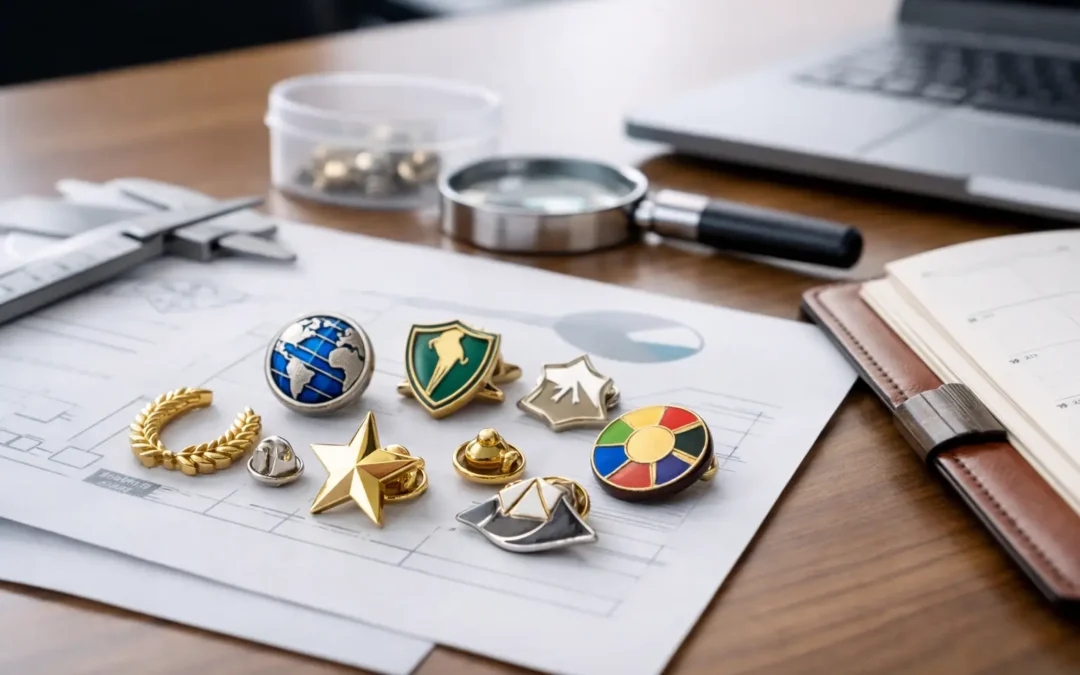
A lapel pin may be small, but it is often the detail people keep. It sits on a blazer at an awards night, identifies volunteers at a community event, celebrates a school milestone or puts your brand into everyday conversations. Knowing how to order lapel pins means getting that small detail right – without overspending, missing a deadline or ending up with a design that does not translate well in production.
For Australian businesses, clubs, schools and event organisers, the best approach is to make a few clear decisions early: what the pin needs to achieve, who will wear it, how many you need and when you need them. A good custom pin supplier can guide the technical choices, but a strong brief will make the process faster and the finished result more effective.
Start with the purpose, not the pin style
Before choosing enamel colours or metal finishes, decide what the pin is for. A corporate recognition pin needs a polished, durable look that staff will be proud to wear. A charity fundraising pin may need a bold message and a price point that works for large-scale distribution. A sporting club pin might need to reflect team colours accurately, while an event pin may need a fast turnaround and a design that is easy to recognise from a distance.
Purpose also affects quantity. If pins are for a one-day conference, allow for attendees, speakers, staff and a small number of spares. For a membership program or ongoing staff recognition scheme, it can make sense to order enough for future use, particularly as larger quantities usually reduce the per-unit cost.
Think about where the pin will be worn, too. Fine detail can look excellent on a presentation pin viewed up close, but a simple logo with strong colour contrast generally works better for busy events and promotional giveaways.
Prepare artwork that can be produced cleanly
Your logo, illustration or message is the foundation of the order. Vector artwork is ideal because it can be scaled without losing sharpness. Common file types include AI, EPS, PDF and SVG. A high-resolution PNG or JPEG can still be useful as a starting point, especially for a school crest, hand-drawn concept or older club logo.
Do not worry if your artwork is not production-ready. A supplier should assess it and provide a free digital proof before manufacturing begins. This proof is where you check the layout, spelling, colours, dimensions and finish. It is much easier to adjust a thin line, a tiny word or an awkward shape at this stage than after the pins have been made.
Keep the design practical. Very small text, subtle gradients and intricate photographic detail may not suit every pin method. If your design includes a slogan, consider whether it can be read at the selected size. If it cannot, increasing the pin size or simplifying the artwork will usually deliver a better result.
Match colours carefully
Brand colours matter, particularly for corporate logos, schools and established organisations. Supply Pantone references where available so the production team can achieve a close colour match. Screens, printed brochures and old merchandise can all make the same colour appear different, so a Pantone reference is the clearest starting point.
For simple designs, two or three strong colours often create the best visual impact. More colours are possible, but they can affect cost and may make a small pin look crowded. A free digital proof gives you the chance to see how the colour areas work together before approving the design.
Choose the right type of custom lapel pin
There is no single best pin style. The right choice depends on the artwork, budget, desired finish and how the pins will be used.
Die-struck enamel pins are a popular option for logos, commemorative designs and professional recognition pins. They have a metal base with recessed coloured areas, giving the design a quality, tactile finish. Soft enamel retains raised metal edges that can add definition, while hard enamel has a smoother, more polished surface. Both are durable choices for regular wear.
Printed pins suit artwork with detailed logos, colour blends or fine text that may be difficult to reproduce in enamel. An epoxy coating can be added for protection and a glossy finish. This option is often a practical choice for promotional campaigns, schools and events where artwork accuracy is the priority.
Acrylic pins are lightweight, colourful and well suited to modern graphic designs, campaigns and higher-volume giveaways. PVC pins offer flexibility and can work well for bold, playful shapes or designs needing a raised 3D effect. For a more premium look, 3D metal pins add depth and sculptural detail, making them a strong option for awards, anniversaries and special releases.
The metal plating also changes the overall feel. Gold, silver, antique brass, black nickel and copper finishes can each complement a different brand personality. A modern technology business may prefer black nickel, while an anniversary or achievement pin may look more special in gold or antique brass.
Set a size that works in the real world
Most lapel pins are small enough to wear comfortably on a shirt, jacket or lanyard, but size should be chosen around the design rather than an arbitrary measurement. A simple icon can be effective at a compact size. A detailed crest or logo with text may need more room to remain legible.
As a general rule, ask to see the digital proof at actual size before giving approval. It helps to compare it with familiar objects or print it on paper. The most detailed design is not always the most memorable. Clear shapes, readable lettering and appropriate spacing will make a stronger impression than trying to fit every element into a small badge.
Custom shapes can add instant recognition. A pin shaped like your logo, mascot, product outline or event symbol is more likely to stand out than a standard circle or rectangle. However, highly complex outlines can add manufacturing complexity. Your supplier can recommend where to simplify the edge while retaining the personality of the design.
Select an attachment and presentation option
The standard butterfly clutch is a reliable and cost-effective choice for most lapel pins. Rubber clutches provide a softer feel and can be useful for active environments. A magnet attachment avoids piercing fabric, making it a practical option for uniforms, delicate clothing and customers who prefer not to use a pin clasp.
For pins that will be presented as awards, gifts or formal recognition, packaging deserves some thought. A presentation gift box, backing card or customised card can make a modest pin feel far more considered. It also protects the item during distribution and gives your organisation space to include a message, event name or sponsor acknowledgement.
If the pin is part of a wider campaign, consider coordinating it with related merchandise such as keyrings, patches, fridge magnets, beanies or scarves. Matching items can extend the campaign beyond a single event while keeping the branding consistent.
How to order lapel pins on time and on budget
Timing is where many otherwise well-planned orders become stressful. Start by working backwards from your event date or distribution deadline. Allow time for artwork preparation, proof review, manufacturing and delivery. If you need pins for a major conference, school presentation or sporting final, do not leave approval until the final week.
When requesting a quote, include the quantity, preferred pin style if known, approximate size, number of colours, attachment choice, required delivery date and artwork. If you are unsure about any of these details, state the purpose and budget range instead. An experienced team can recommend the most suitable production method rather than pushing you into a one-size-fits-all option.
Be clear about the delivered quantity you require. Ordering a few extras is sensible for late registrations, replacement stock and future staff members. It is also worth checking whether a design will be reused. Keeping approved artwork and specifications on file makes repeat orders simpler and helps maintain consistency across future campaigns.
Price should not be the only comparison point. A very low quote may not include design support, a proof process, quality checks or a realistic delivery timeframe. Look for clear communication, confirmed specifications and confidence that the supplier understands your deadline. Australian-owned service can be particularly valuable when you need straightforward advice and quick answers.
Approve the proof with care
The digital proof is your final checkpoint. Review every part of it, including spelling, phone numbers, dates, logo placement, colour call-outs, pin size, plating, clasp and packaging. Ask a second person to check it as well, especially where names, event dates or sponsor logos are involved.
Once approved, production begins based on that artwork. Changes after approval can delay the order or create extra costs, so take the extra few minutes to make sure it reflects exactly what you want. Lapel Pins Australia provides a free digital proof to help customers make that decision with confidence.
A well-made pin carries a message long after an event has finished. Give the design a clear purpose, allow enough lead time and use the proof process properly, and your pins will be ready to recognise, promote and be remembered.