
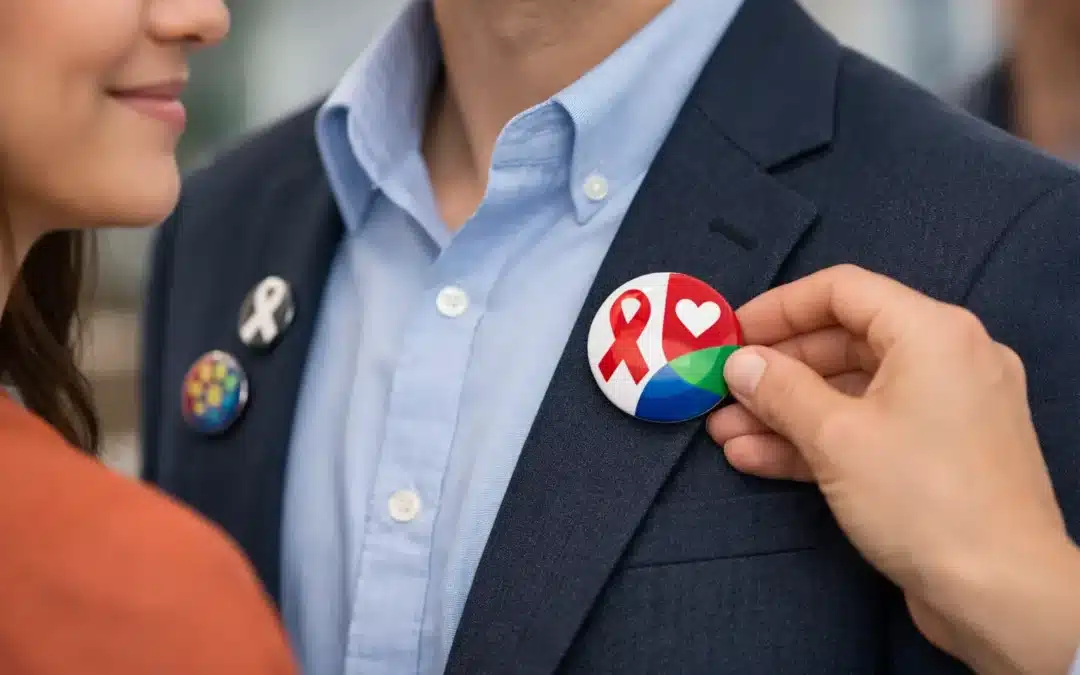
A fundraiser pin has a job to do in a very small space. It needs to represent your cause, look worth wearing and leave enough room between cost and selling price to generate meaningful funds. Knowing how to create fundraiser pins starts with treating the pin as more than a token. It is a visible show of support that can keep promoting your campaign long after the donation tin has been packed away.
For schools, sporting clubs, charities, community groups and workplace campaigns, custom pins are practical because they are affordable in bulk, easy to distribute and suited to almost any cause. The best results come from making a few clear decisions before artwork goes into production.
Start with the fundraising goal
Decide what the pins need to achieve before choosing colours or shapes. Are you raising money for one family, funding new equipment for a junior club, supporting a health awareness month or selling merchandise at a large annual event? The answer affects your quantity, timeline and retail price.
A limited campaign with a strong local story may suit a more detailed commemorative pin sold at a higher price. An awareness drive or school event may need a simple, lower-cost design that hundreds of people can wear. Neither approach is better. It depends on how many supporters you expect, how much they are likely to spend and whether the pin will be part of a larger fundraising pack.
Set a realistic target early. Work backwards from the amount you want to raise, your expected sales volume and the production cost per pin. Allow for a small number of complimentary pins for volunteers, sponsors, speakers or prize packs. This avoids the common problem of ordering too few pins just as interest builds.
Create a design people recognise at a glance
The strongest fundraiser pins are instantly clear from arm’s length. A simple campaign name, recognisable symbol or bold colour combination will usually outperform a design crammed with copy. Pins are small, so every line and detail must earn its place.
Start with one focal element. It could be a ribbon, club mascot, school crest, heart, animal, flower or a simple graphic connected to the cause. Then add only the wording people need to see, such as the campaign name, year or a short call to action. If your organisation already has branding, use its approved logo and colours so the pin feels connected to the wider campaign.
Keep text brief and large enough to read. Fine type, long web addresses and detailed photographs can lose impact at pin size. A supplier can advise on minimum line thickness, lettering and colour separation, but a good rule is simple: if the message cannot be understood in a few seconds, reduce it.
Choose colours with purpose
Colour often carries the emotional recognition for a cause. Pink, yellow, blue and green ribbons may be associated with particular awareness campaigns, while your school or club colours can create instant ownership. Choose two to four main colours where possible. This keeps the design clean and can help manage costs depending on the pin style.
Pantone colour matching is useful when your brand colours need to be consistent across pins, banners, uniforms and other promotional merchandise. For a one-off community fundraiser, a close visual match may be all you need. The key is to ask for a digital proof before production, then check spelling, colours, dates and logo placement carefully.
Pick the right pin style for your budget and design
The material and finish should support the design rather than compete with it. Fundraiser pins do not all need the same production method.
Die-struck enamel pins are a popular choice when you want a premium, durable result. Raised metal outlines separate each colour and give logos, crests and bold illustrations a polished feel. Soft enamel has textured recessed colour areas, while hard enamel creates a smoother, flatter finish. Both work well for repeat events, achievement pins and campaigns where presentation matters.
Printed pins with an epoxy coating are ideal for artwork that includes fine detail, gradients, small text or full-colour imagery. The clear coating protects the print and gives the surface a glossy finish. They can be a practical option for detailed charity logos or event artwork that would be difficult to reproduce in enamel.
Acrylic pins offer bright full-colour printing and a lightweight feel, often making them suitable for large school events, youth programmes and high-volume campaigns. PVC pins are flexible and tactile, which can suit playful mascots or designs aimed at younger supporters. A 3D pin can create added impact for a special anniversary or premium donor gift, although it is generally better suited to a higher retail price point.
For most fundraising campaigns, a standard butterfly clutch attachment is secure and cost-effective. A magnet attachment is useful when supporters may not want to pierce uniforms, shirts or delicate fabrics. Consider your audience before deciding. Hospital staff, corporate teams and school communities may particularly appreciate a magnet option.
Order the quantity that protects your margin
Bulk ordering usually reduces the per-unit cost, but ordering more than you can sell ties up campaign funds. Aim for a quantity based on confirmed interest, likely foot traffic and the length of the campaign.
If your pin will be sold at a gala, match day or school fete, estimate sales conservatively and use pre-orders where possible. Pre-orders are particularly valuable for clubs and associations because they confirm demand before you commit to a larger run. They also create anticipation and give you an early indication of which design or price point supporters prefer.
Price the pin so the donation value is easy to understand. A simple rounded price works best at a stall or checkout counter. If the pin costs $3 to produce and sells for $10, supporters can quickly see that their purchase is helping the cause. You may also offer a suggested donation above the sale price for people who want to contribute more.
Do not forget packaging and presentation. A backing card can tell the story of the cause, thank supporters and make the pin feel more giftable. Presentation boxes may suit sponsor recognition, major donors or a limited-edition launch. For everyday sales, a branded backing card is often the best balance of professionalism and cost.
Make the proof process work for you
A free digital proof is where your idea becomes a production-ready pin. This is the point to make changes, not after manufacturing begins. Supply the clearest artwork you have, ideally a vector logo or high-resolution file, along with your preferred size, quantity, colours and attachment type.
Review the proof with more than one person, especially if the pin includes a charity name, event date or campaign slogan. Check that colours are identifiable, text is readable and the final shape suits the artwork. A custom-shaped pin can be memorable, but a classic round, square or shield shape may offer better value for a simple design.
Also confirm your delivery deadline honestly. Allow time for artwork approval, production and freight, particularly around busy event periods. Fast turnaround can be available, but an early enquiry gives you more choices and reduces unnecessary pressure.
Plan how the pins will be seen and sold
A great pin cannot fundraise if it stays in a carton. Give supporters a reason to wear it straight away. Launch it alongside a campaign announcement, community event, match day, school assembly or morning tea. Ask committee members, teachers, captains and local business partners to wear theirs first. Visibility creates social proof and prompts the question every fundraiser wants to hear: “Where can I get one?”
Use the same pin design across your posters, social graphics and donation materials so people connect the symbol with the cause. If you are running a larger campaign, pins can also sit alongside matching keyrings, fridge magnets, patches, scarves or beanies. This gives supporters options at different price points without losing the campaign identity.
For corporate fundraising, consider using pins as a participation marker. Staff who donate, complete a challenge or volunteer can receive a pin to wear during the campaign. That small recognition can make participation more visible across the office and encourage others to join in.
Give supporters something worth keeping
The most successful fundraiser pins do not feel disposable. They become a reminder of a team, a cause, a person or a shared local effort. Keep the design clear, choose a finish that fits your audience and build enough margin into the price to make every sale count.
With more than 20 years of custom pin experience, Lapel Pins Australia can help turn your artwork or initial idea into a polished bulk order, with practical guidance and a free digital proof before production. Small badge, big impact – especially when every pin gives your supporters a visible reason to stand behind the cause.