
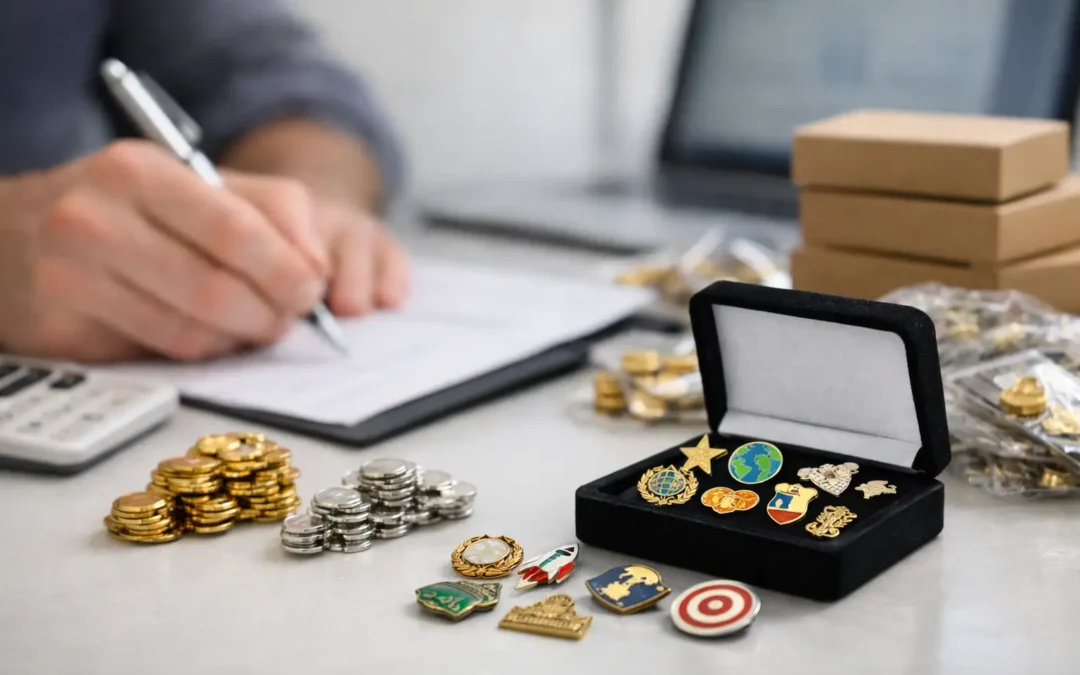
A lapel pin order can look simple on paper, right up until you are short on the day. If you are asking how many lapel pins should I order, start with the number of people who genuinely need one, then allow for the real-world extras: late registrations, volunteers, lost pins, VIPs and future use. The right quantity is not always the lowest number. It is the number that gives your organisation a polished result without spending on cartons that sit in storage for years.
Custom pins are a small badge with big impact. Whether you are recognising staff, building club pride, raising funds or preparing for a conference, a well-planned order helps every recipient feel included.
Start with your core recipient number
Your core number is the easiest place to begin. For an event, this is the confirmed attendee count. For a school, it may be the students receiving awards, plus teachers and support staff. For a business, it could be every employee, customer or delegate who will receive a pin.
Do not rely on an early estimate if registrations are still moving. Use the latest confirmed figure where possible, then decide how much buffer your situation needs. A 50-person boardroom event has different risks to a 2,000-person public festival.
For example, if your association has 180 paid members and every member receives a commemorative pin, 180 is your starting point. It is not necessarily your final order quantity.
Add a sensible buffer for lapel pin orders
Most bulk lapel pin orders benefit from extra units. The buffer protects you from common surprises without dramatically changing the budget. It also means your team is not deciding, on the morning of an event, who misses out.
As a practical guide, add:
- 5 to 10 per cent for a closed corporate event, staff recognition program or pre-registered function.
- 10 to 15 per cent for schools, sporting clubs, membership programs and charity events.
- 15 to 20 per cent for public events, open days, campaigns and fundraising where attendance or sales are harder to predict.
- A separate allocation for organisers, sponsors, speakers, media, volunteers and replacement stock.
If you need 200 pins for confirmed delegates, a 10 per cent buffer brings the order to 220. That is usually enough to cover last-minute additions and a handful of replacements. For 1,000 pins at a public event, a 15 per cent buffer would mean 1,150 pins, especially if the pin is being handed out rather than sold.
The best buffer depends on how difficult it would be to place a second order. If your launch date is fixed, your design has a dated event logo, or freight deadlines are tight, it makes sense to order a little more upfront.
Consider minimum quantities and price breaks
Custom manufacturing is generally more cost-effective in volume. Setting the order at exactly 97 pieces may meet your immediate headcount, but moving to 100, 150 or 200 can provide a better per-unit price and leave useful spare stock.
This is where quantity planning becomes a value decision, not just a counting exercise. Ask two questions: will the extras have a purpose, and does the larger quantity materially improve the unit cost? If the answer is yes, ordering above your immediate requirement can be the smarter buy.
A club that needs 280 pins for a season may choose 300 so it has stock for new members. A business ordering 480 logo pins for a conference may move to 500, reserving the remainder for recruitment packs, client meetings or staff onboarding. On the other hand, ordering 1,000 pins for a one-off event with a date printed on the design, when you only expect 300 guests, can create avoidable waste.
How many lapel pins should I order for your purpose?
The intended use changes the calculation. A pin distributed once at a ticketed dinner should be planned differently from a branded pin used over several years.
Corporate events and conferences
Order for all attendees, then add pins for speakers, hosts, event staff, sponsors and a small reserve. For a 120-person conference, an order of 140 to 150 pins is often sensible. If the pin also forms part of a welcome pack, count every package rather than relying only on expected attendance.
Staff recognition and service awards
For awards programs, accuracy matters because each pin represents recognition. Order one per recipient, plus a modest number for HR, managers and future replacements. If the same design will be used for ongoing service milestones, it can be worth buying enough for the next six to 12 months, provided the branding and award criteria are unlikely to change.
Schools and community groups
School leadership badges, house pins and volunteer recognition pins need room for enrolment changes and new committee members. A 10 to 15 per cent buffer is usually practical. For annual pins with a year marked on them, stay closer to your confirmed number. For timeless logo pins, extra stock is more useful.
Sporting clubs and associations
Clubs often need pins for players, coaches, committee members, life members and supporters. Separate these groups before ordering, particularly where different pin designs indicate different achievements. Keep a small reserve for replacement presentation pins, as they are often needed at short notice.
Fundraising and retail sales
Sales forecasts matter more than attendance. Start with previous event results, member numbers and the price point. If this is your first fundraiser, a conservative opening run can reduce risk, especially for a highly specific design. Choose a quantity that still makes commercial sense, then reorder proven designs when demand is clear.
Think beyond the event day
Before finalising your quantity, decide what happens to unsold or unused pins. If the design features your organisation logo, colours and a message that will remain relevant, extra pins can support future promotion. They work well in welcome packs, prize bundles, supporter merchandise, sponsor gifts and staff uniforms.
Pins with a specific date, venue, election, campaign slogan or event name are less flexible. In that case, your buffer should cover operational needs rather than future marketing. A dated anniversary pin may be a wonderful keepsake, but it has a shorter shelf life than a classic branded enamel pin.
Storage is also worth considering. Pins are compact, but you still need a clean, dry place to keep cartons organised. Label remaining stock clearly by design, attachment type and year so your team does not accidentally issue the wrong badge next season.
Get the design and quantity right together
Quantity affects which pin style makes the most sense. A premium die-struck enamel pin may suit a smaller executive award run, while printed or acrylic pins can be a practical choice for larger promotional giveaways. The design, finish, attachment and packaging should match the job the pin needs to do.
If recipients will wear the pin all day, a secure butterfly clutch, rubber clutch or magnet attachment may be worth discussing. If it is being presented as an award or gift, presentation packaging can lift the perceived value. These choices influence the budget, so settle your approximate quantity early when requesting a quote.
A free digital proof is the right time to check logo placement, wording, colours and sizing. It is also the time to make sure the quantity is realistic. A great-looking pin only delivers its full value when enough people can wear it.
A quick ordering formula
Use this simple calculation before requesting pricing:
Confirmed recipients + support group + contingency stock + future-use stock = order quantity
For instance, a 250-person charity lunch might have 250 guests, 20 volunteers and organisers, 30 contingency pins and 50 pins for future donor packs. The order quantity would be 350. If the budget is tight, remove the future-use component first rather than cutting the contingency so far that event-day shortages become likely.
Lapel Pins Australia can help you match the quantity to your design, deadline and budget, with hands-on guidance from proof to production. Bring your best headcount estimate, explain how the pins will be used, and allow enough time to review the artwork properly. A few thoughtful extras can turn a good promotional order into one that keeps working long after the first pin is handed out.