
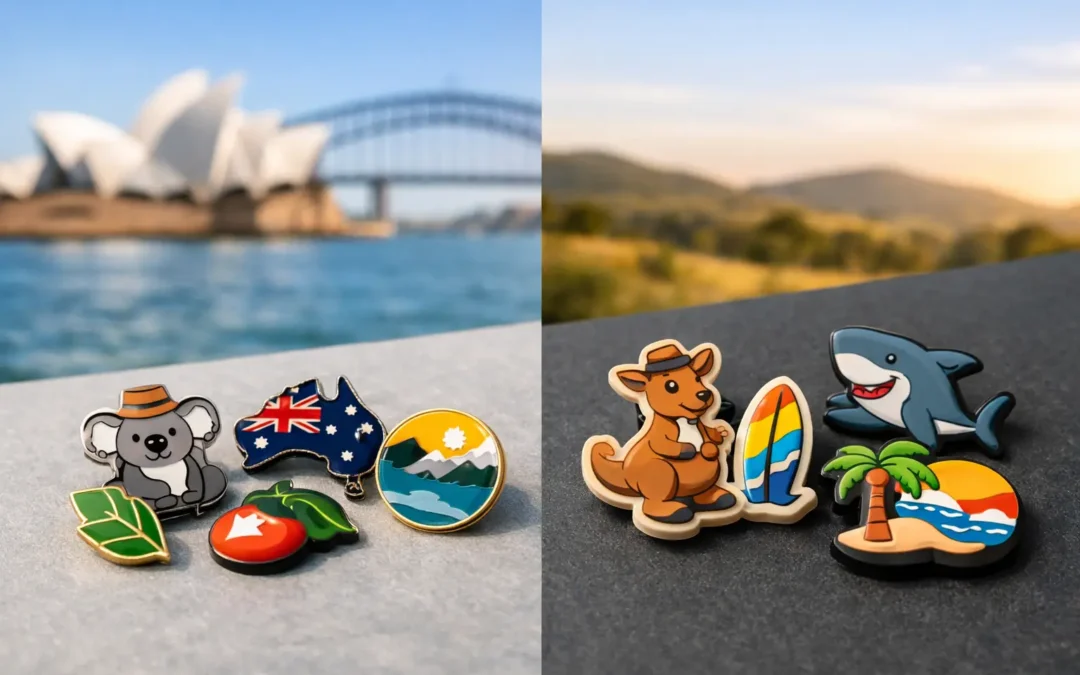
A pin can look polished and corporate, or bright, playful and built for the school bag. That is the real choice behind enamel pins vs pvc pins. Both can carry your logo, mascot, campaign message or event artwork, but they create a very different first impression once they are in someone’s hand.
For businesses, clubs, schools and community organisations ordering in volume, the right material is not simply a design preference. It affects how fine details reproduce, how the pin wears over time, who is likely to wear it and where it delivers the most value. Small Badge, Big Impact! starts with choosing a pin style that suits the job.
Enamel Pins vs PVC Pins: The Key Difference
Enamel pins are metal-based pins with coloured enamel filling recessed areas of a stamped design. They have a firm, weighty feel and use raised metal lines to separate colours and define the artwork. PVC pins are made from flexible moulded plastic, often called soft rubber. Their colours and layers are built into a moulded surface rather than set into metal.
In practical terms, enamel creates a refined, lasting look. PVC creates a more tactile, colourful and casual look. Neither option is automatically better. The best choice depends on your audience, artwork and how the pin will be used.
An employee recognition pin worn on a blazer, a commemorative association badge or a corporate conference gift usually benefits from enamel. A junior sports club mascot, school reward badge, charity giveaway or youth-focused campaign may get more attention in PVC. The material helps signal the personality of your organisation before anyone reads the design.
When Enamel Pins Are the Better Choice
Custom enamel pins are the go-to option when presentation, detail and a premium finish matter. The metal base gives the design crisp outlines, while the enamel colours sit neatly within each section. They look at home on uniforms, lanyards, lapels, hats, backpacks and presentation cards.
A polished finish for formal use
Enamel pins work particularly well for corporate branding, staff service awards, membership programs, fundraising pins and commemorative events. A gold, silver, black nickel or antique metal finish can add contrast and make a simple logo feel more considered. They are also a strong choice for clubs and associations that want a badge members will keep and wear for years.
Hard enamel is polished smooth across the face, creating a clean jewellery-style finish. Soft enamel has slightly recessed colour areas, giving more texture and definition. Both offer a professional result, although the right finish depends on the artwork and budget.
Fine lines and small artwork hold up well
If your logo includes small type, narrow outlines or precise geometric elements, enamel is usually the safer direction. Raised metal borders separate colours clearly and help retain the structure of a detailed design. This matters when the badge is small, as fine elements have less room to breathe.
That does not mean every complex logo should be forced into an enamel pin. Very small text, subtle gradients and photographic artwork may need to be simplified or produced as a printed pin with an epoxy coating. A free digital proof is valuable here because it shows what will actually work at your chosen size before production begins.
Strong perceived value
Metal enamel pins feel substantial. That physical weight can make a difference for award programs, donor recognition, executive gifts and retail-style merchandise. People often see enamel as collectable, especially when the design is limited edition, numbered or connected to a memorable event.
The trade-off is that enamel pins are rigid. They are durable for normal wear, but they can scratch against keys or hard surfaces, and thin protruding shapes need sensible design support. A well-planned shape and appropriate backing attachment help prevent avoidable wear.
Where PVC Pins Make More Sense
PVC pins are designed to be noticed. They can be moulded into bold custom shapes, layered for a raised 2D effect and produced in vivid colours. Their flexible finish makes them especially suitable for energetic branding, children’s programs and outdoor or hands-on uses.
Fun shapes, bold colours and tactile detail
PVC is ideal when your artwork includes a mascot, character, product shape, animal, vehicle or playful illustration. Rather than being limited to a traditional badge profile, you can create a pin shaped like a football boot, a coffee cup, a school emblem or a charity campaign icon. Raised sections add dimension without the hard edges of metal.
For sports clubs, holiday programs, youth events and community giveaways, that tactile quality can be a real advantage. A PVC pin feels less formal and more approachable, which can encourage people to wear it on a bag or cap rather than file it away.
Flexible and practical for active audiences
PVC has some give, so it is less likely to feel sharp or rigid when attached to a backpack, jacket or event lanyard. It handles everyday movement well and is a sensible option for merchandise that will be used by children or in active environments.
However, PVC is not the best choice for every detail-heavy design. Fine text and very narrow gaps can soften in the moulding process. It also does not deliver the metallic shine that makes enamel pins look premium. If your brand relies on elegant typography, heritage styling or a restrained colour palette, enamel will generally represent it better.
Comparing Cost, Quantity and Production
Pin pricing is driven by more than material. Size, shape, number of colours, metal finish, backing option, artwork complexity and order quantity all affect the final quote. Custom manufacturing has setup costs, so the per-unit price generally becomes more competitive as quantities increase.
Enamel and PVC pins can both be cost-effective for bulk orders, but it is worth comparing like for like. A simple enamel badge in a standard shape may be excellent value at volume. A PVC design with multiple raised layers, a complex outline and several colours can cost more than expected because the mould is more involved. Conversely, a bright, simple PVC character can be a smart choice where visual impact matters more than a premium metal finish.
Lead times also depend on the approval process and production requirements. Artwork that is clear, supplied early and approved promptly gives your order the best chance of meeting an event date. If you need pins for a conference, reunion, awards night or season launch, build in time for the proof, any design adjustments and delivery rather than leaving the decision to the last minute.
Match the Pin to Its Purpose
The most useful question is not, “Which pin is best?” It is, “What do we want this pin to do?” Enamel is often the stronger option for recognition, credibility and collectability. PVC is often the stronger option for fun, visibility and broad appeal.
Consider who will wear it. Staff, sponsors, committee members and long-serving volunteers may appreciate a metal enamel badge with a quality finish. Primary school students, junior players and festival attendees may respond better to a colourful PVC mascot. If the pin is part of a fundraising pack, the perceived value of enamel can support a higher donation level. If it is a high-volume giveaway, PVC may help stretch the budget while still giving supporters something memorable.
Also consider where it will be seen. A small enamel logo can look sharp on a business shirt or suit lapel. A larger PVC shape stands out on a backpack, jacket or showbag. The same artwork can sometimes work in both materials, but it should not be treated as a direct copy-and-paste exercise. Each process has strengths that should guide the final design.
Design Details That Make Either Pin Work Harder
Keep the design focused. Pins are small, so a strong central icon, readable lettering and clear colour separation will usually outperform a crowded layout. Choose colours that align closely with your brand palette, but allow enough contrast for the artwork to remain clear from a short distance.
The attachment matters too. A standard butterfly clutch suits many lapel pins, while rubber clutches can be comfortable for regular wear. Magnet attachments avoid piercing clothing and work well for corporate or hospitality settings, although they may not suit all situations. Larger or wider pins may need two attachment points to prevent spinning.
At Lapel Pins Australia, the free digital proof process helps turn an idea, logo or rough sketch into a design that is practical to manufacture. It is the point to check pin size, line thickness, colour placement, finish and attachment before the order moves ahead.
A great custom pin earns its place because people want to wear it. Choose enamel when you want a lasting badge of pride, choose PVC when you want a bright conversation starter, and let the purpose of the pin guide the material from the very first proof.