
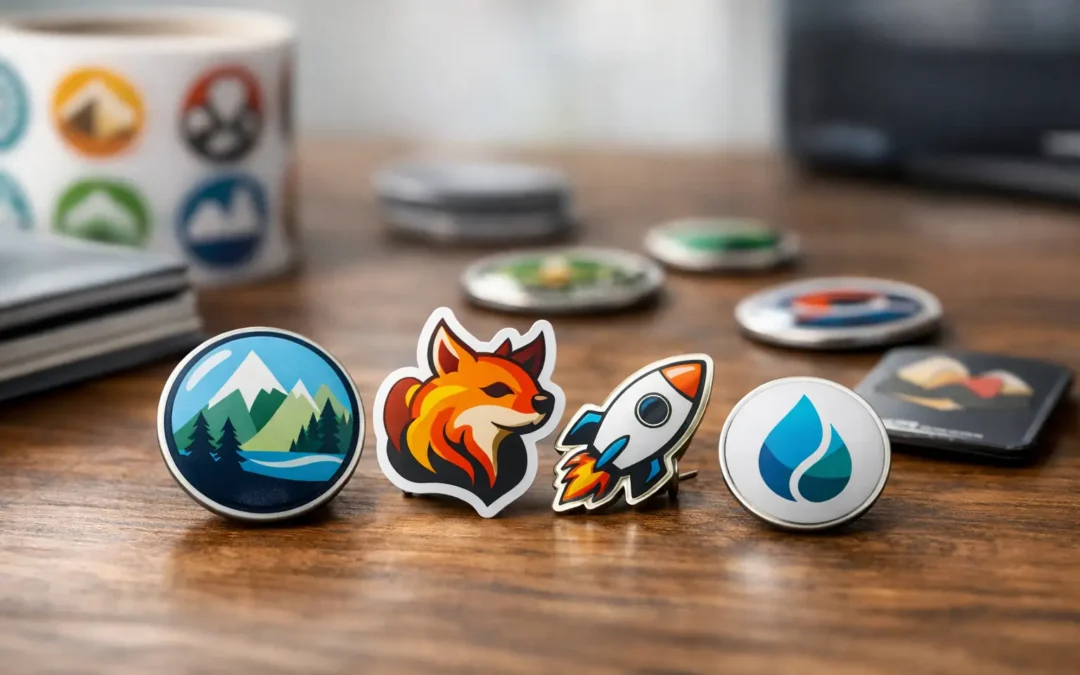
A well-made badge does more than display a logo. Custom badges give people something they can wear, collect, trade or keep long after an event wraps up. For a business, school, club or charity, that small item can signal belonging, recognise effort and put your name in front of the right people again and again.
The best results start with a clear purpose. A pin designed for staff recognition needs a different finish from a fundraising badge, while a high-volume conference giveaway may call for a different material again. Getting those choices right early helps you control cost, protect your brand colours and create a badge people are genuinely happy to wear.
Why custom badges still make an impact
Digital advertising disappears with the next scroll. A badge stays on a blazer, lanyard, cap, tote bag or display board. It is visible in meetings, at sporting fixtures, at school assemblies and around the community. That repeat exposure is why badges continue to be one of the most cost-effective promotional products for bulk orders.
They also carry meaning in a way many giveaways do not. A lapel pin can mark five years of service. A school badge can reward leadership. A club pin can identify members on tour. A charity badge can give supporters a visible way to stand behind a cause. The object may be small, but the recognition feels personal.
For event organisers, badges help build a consistent look without requiring a large production budget. Match them to event signage, uniforms, sponsor colours or merchandise packs, and the whole experience feels more considered. A polished badge is especially useful when you want attendees, volunteers or VIPs to feel part of one team.
Start with the job your badge needs to do
Before choosing a material or shape, decide what success looks like. Is the badge intended to raise funds, promote a campaign, reward achievement or support brand awareness? Will people wear it once, every week or keep it as a commemorative item? The answer affects the design, quantity and finish.
A simple branded pin for a trade show needs to be clear from a short distance. A collector-style anniversary pin can carry more detail because it will be examined up close. If the item is for staff uniforms, durability and secure fastening are likely to matter more than a highly intricate shape.
It also helps to consider who will receive it. Corporate audiences often respond well to refined metal finishes and restrained colours. Schools and junior sporting clubs may favour bright enamel, friendly shapes and a larger design. Community fundraisers often benefit from an instantly recognisable symbol that is easy to explain at a stall or event.
Choose a badge style that suits the artwork
There is no single best badge type. The right option depends on your artwork, intended use, budget and timeline. A supplier should guide you through the practical differences before production begins.
Die-struck enamel badges
Die-struck enamel pins are a popular choice when you want a professional, lasting result. The metal outlines create definition between colours and give the badge a premium feel. They suit logos, service awards, membership pins, corporate gifts and commemorative designs particularly well.
Hard enamel gives a smooth, polished surface, while soft enamel leaves the coloured areas slightly recessed beneath the metal lines. Hard enamel generally has a more formal finish and may suit executive recognition or retail-quality merchandise. Soft enamel provides strong colour and texture at an accessible price point. Neither is automatically better – it depends on the look you want and how the badge will be used.
Printed and epoxy-coated badges
Printed pins are often the practical answer for artwork with gradients, photographic elements, fine text or detailed illustrations. Rather than simplifying the design to fit metal outlines, printing allows more of the original artwork to be retained. An epoxy coating can add protection and a glossy finish.
This option is useful for campaign artwork, event logos and designs where close colour matching matters. Keep in mind that tiny text may still be difficult to read on a small badge. A good artwork review will identify that issue before it becomes a production problem.
Acrylic, PVC and 3D options
Acrylic badges can be bright, lightweight and budget-friendly, making them a strong choice for promotions, schools and larger giveaways. PVC offers a flexible, tactile option that works well for bold logos, mascots and playful designs. Both can be effective when colour and shape are the main priorities.
3D metal pins are ideal when you want depth and detail to do the talking. They can bring crests, buildings, animals and sculpted elements to life, making them especially suited to anniversary pieces, premium gifts and collector items. Because this style requires more complex tooling, it is worth allowing enough lead time and budget for the finish.
Make your design work at badge size
The strongest badge designs are often the simplest. A logo that works beautifully across a website banner may need adjustment when reduced to 25 or 30 millimetres. Fine lines can disappear, close colours can blur and long wording can become unreadable.
Start by identifying the one element people need to notice first. It may be your logo, mascot, campaign icon or event year. Give that element room. If you need text, keep it short and use a clear typeface. High contrast between the background and lettering will make a bigger difference than adding extra detail.
Shape is another chance to add character. Circular and shield-shaped badges are classic choices for schools, associations and service awards. A custom outline can make a logo or mascot more memorable, but it should still be practical to manufacture and comfortable to wear. An experienced supplier can advise when a complex edge needs to be simplified.
Pantone colour matching is valuable for established brands, especially where the badge will sit alongside uniforms, signage and other merchandise. Colour can vary slightly across materials and finishes, so ask for advice if an exact brand shade is critical. A free digital proof is the right point to check layout, spelling, colours and size before approval.
Do not overlook attachments and presentation
The attachment changes how useful a badge is. Butterfly clutches are common for lapel pins and work well for most everyday applications. Rubber clutches can offer a softer feel and are often preferred for casual wear. Magnet attachments avoid piercing fabric, which makes them a smart option for uniforms, name badges and delicate clothing.
For larger or heavier designs, a second attachment point can stop the badge from twisting. This is a small specification that makes a noticeable difference once the product is in use. If your badge will be handed out as an award or executive gift, a presentation card or gift box can lift the perceived value immediately.
Think about distribution too. Individually bagged badges are easier to pack into event kits, post to members or hand out at a busy registration desk. Backing cards can include a campaign message, sponsor acknowledgement or QR code if required, turning the badge into a more complete promotional piece.
Plan quantities, timing and budget early
Custom manufacturing rewards early planning. Ordering in bulk usually lowers the unit price, but only if you choose a quantity you can realistically use. For annual events and ongoing staff programs, it can make sense to order enough for the year. For a first-time campaign, a smaller run may be safer while you test demand.
Allow time for artwork review, the digital proof, production and delivery. If your deadline is fixed, such as a conference, awards night or charity launch, raise it at the quote stage. This allows the supplier to recommend a badge style and production method that fit the schedule rather than forcing a compromise later.
Price should be assessed alongside finish, service and expected lifespan. The cheapest option is not always the best value if colours are off, attachments fail or the badge does not reflect the quality of your organisation. On the other hand, a premium metal finish may be unnecessary for a one-day promotional giveaway. Match the product to the purpose.
Get support before production begins
A good badge supplier should make the process straightforward, even if you have never ordered custom merchandise before. Share your logo, estimated quantity, required date and any ideas about size, shape or finish. From there, you can refine the details with practical guidance rather than trying to become a badge-production expert overnight.
Lapel Pins Australia combines more than 20 years of experience with Australian-owned service, free digital proofs and a wide range of custom options. Whether you need polished corporate lapel pins, colourful school badges or memorable merchandise for a club event, the aim is the same: a quality item that represents your organisation properly.
Small Badge, Big Impact! Choose a design people will want to wear, give it a finish that suits the occasion and allow enough time to get every detail right. The result can stay visible long after the event, campaign or presentation is over.