
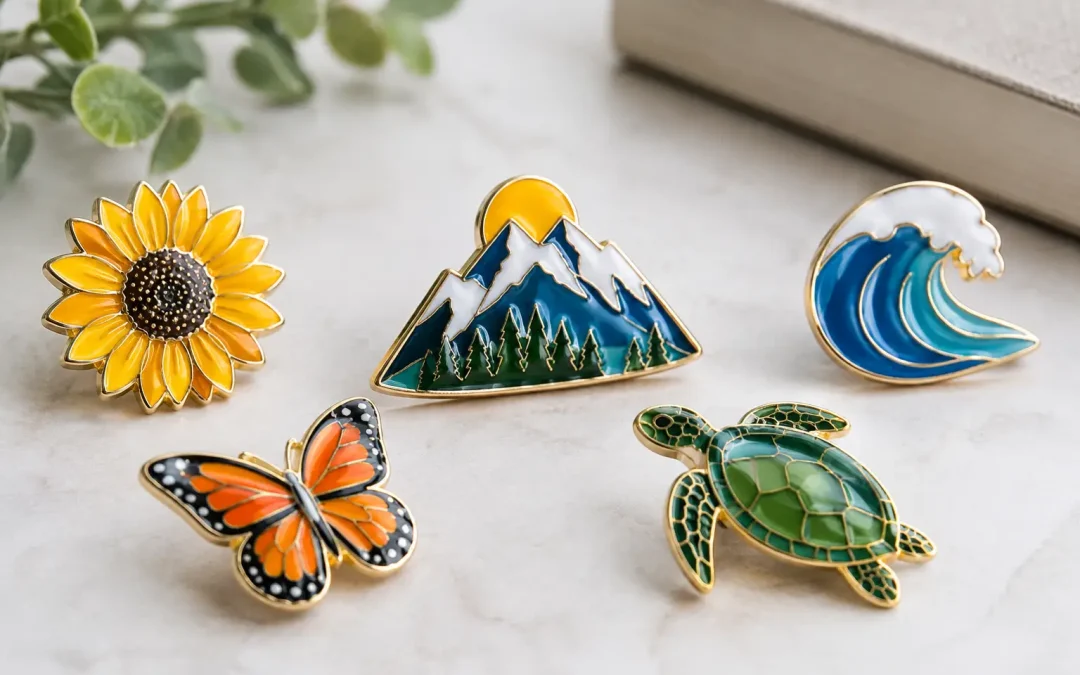
A pin can carry a logo, a fundraising message or a club identity in a very small space. That is exactly why choose epoxy pin coating is a practical question for organisations that want their custom pins to look polished, stay readable and offer excellent value in bulk. The clear epoxy layer gives printed artwork a smooth, glossy finish while helping protect it from the scuffs and handling that come with everyday wear.
For businesses, schools, sporting clubs and event organisers, epoxy-coated pins are often the smart middle ground between a budget-friendly promotional product and a finished piece that looks considered and professional. They are particularly effective when your design includes fine text, detailed illustrations, gradients or several colours.
What Is Epoxy Pin Coating?
An epoxy-coated pin usually starts with a printed design on a metal base. A clear epoxy resin is then applied over the artwork, creating a slightly raised, glass-like surface. The result is a bright, smooth pin that protects the printed face without hiding the detail beneath it.
Unlike enamel, which uses coloured fills separated by metal lines, epoxy coating sits over a full-colour printed image. This gives designers much more freedom with photographs, tonal shading, fine lines and small lettering. If your artwork cannot be simplified without losing its impact, epoxy is often the better fit.
The coating is clear, so your brand colours remain front and centre. With a close Pantone colour match in the artwork, it is a strong option for branded campaigns where visual consistency matters.
Why Choose Epoxy Pin Coating for Detailed Artwork?
The biggest reason to choose epoxy pin coating is design flexibility. Printed pins can reproduce artwork that traditional enamel pin styles may struggle to capture cleanly. Think of a school crest with intricate linework, a charity logo with a gradient, an event badge featuring a mascot, or a corporate design that uses tiny wording around the edge.
Epoxy creates a neat protective layer over these details. It helps prevent the printed surface from being scratched during packing, handing out and regular use, while the glossy finish makes colours appear crisp and lively. This is especially valuable for pins that will be displayed on uniforms, lanyards, hats, bags or presentation cards.
For an event organiser, that means the sponsor logo remains clear in attendee photos. For a club, it means a membership pin looks worthy of the achievement it represents. For a business, it means a small giveaway still feels like a well-made piece of branded merchandise.
A Polished Finish Without the Premium Price
Custom lapel pins need to work hard for the budget. They might be used as trade show giveaways, staff recognition awards, volunteer thank-yous, fundraising rewards or retail merchandise. In each case, the pin needs to look appealing enough that people keep it rather than leaving it at the bottom of a drawer.
Epoxy-coated pins offer an attractive balance of price and presentation. Their printed production method can be more cost-effective than enamel for artwork with lots of colours or complex detail. You can achieve an eye-catching finish without paying for a production process that is not suited to your design.
That does not mean epoxy is automatically the cheapest choice for every project. A simple one- or two-colour logo with bold metal outlines may be better suited to a die-struck or enamel pin. The best value comes from selecting the production style that matches your artwork, order quantity and intended use. A free digital proof is useful here because it lets you see how the artwork will translate before production begins.
Where Epoxy-Coated Pins Work Best
Epoxy pins are highly versatile, but they shine in projects where colour and detail are doing most of the work. They suit promotional campaigns, conference badges, school house pins, festival merchandise, visitor souvenirs and charity awareness designs. They also work well for company logos that include shading, photographic elements or small type that needs a clean printed finish.
They are a popular choice for short-term and high-visibility campaigns because they can be produced in custom shapes and sizes without losing the visual impact of the artwork. A round pin may suit a simple logo, while a custom outline can follow a mascot, product silhouette or campaign icon.
The right attachment matters as much as the face of the pin. A standard butterfly clutch is a reliable all-round option for lapels and uniforms. A magnet backing can suit garments where you want to avoid piercing fabric, while a brooch-style pin may be better for larger badges. Your intended wearer and where the pin will be displayed should guide that decision.
Durability That Suits Everyday Handling
No promotional item is indestructible, and it is better to be clear about what epoxy coating is designed to do. The clear layer provides useful protection against everyday rubbing and light scratches, helping the printed image hold up well through normal handling. It also gives the pin a smooth feel that is pleasant to touch and easy to wipe clean.
However, epoxy-coated pins are not the first choice for extremely hard-wearing applications where the pin may be knocked, scraped or exposed to demanding outdoor conditions every day. For long-service awards, premium collector pins or designs that rely on a textured metal feel, enamel or die-struck metal may be the stronger option.
For most promotional, event and recognition uses, epoxy provides more than enough durability. The key is being realistic about the job the pin needs to perform. A conference giveaway has different requirements from a commemorative pin intended to be treasured for decades.
Better Colour Reproduction for Brand-Led Designs
Branding is rarely limited to a single flat colour. Many organisations use multiple tones, gradients, photographic imagery and detailed logos that need to look consistent across every item they hand out. Epoxy-coated printed pins give you the freedom to reproduce those visuals without turning a recognisable brand mark into an oversimplified version.
This is particularly useful for Australian businesses running campaigns across several promotional products. Your pins can echo the same colours and imagery used on keyrings, magnets, patches, bottle openers or event merchandise. That consistency helps a campaign feel planned and professional, even when each item has a different material and purpose.
Keep the final viewing size in mind. A tiny pin cannot carry a full brochure’s worth of information. Strong contrast, readable text and a clear focal point will always produce the best result. If a message is essential, consider placing it on a backing card rather than trying to fit every word onto the pin face.
Choosing Between Epoxy, Enamel and Other Pin Styles
There is no single best pin finish for every order. Epoxy-coated pins are the right choice when you need detailed, full-colour printed artwork with a glossy protective surface and an affordable bulk solution. They are less suited to designs where raised metal borders, tactile texture or a traditional jewellery-like look are the priority.
Soft enamel is often chosen for bold artwork with separate colour areas and visible metal outlines. Hard enamel offers a smoother, premium finish for formal recognition or retail-quality designs. Die-struck pins create an understated metal-on-metal appearance, while acrylic and PVC pins can suit bright, playful concepts or specific campaign budgets.
The artwork should lead the decision, not just the finish you have seen on another pin. A supplier with hands-on experience can assess your logo, recommend a suitable size and explain whether epoxy will preserve the details that matter most.
Getting Your Epoxy Pin Design Ready
Start with the clearest version of your logo or artwork available. Vector files are ideal, but high-resolution artwork can also be assessed for suitability. Include any required brand colours, wording and preferred pin size, then consider where the pin will be worn and how many you need.
It also helps to think about the wider purpose. Is the pin a low-cost handout at a large event, a reward for volunteers, a fundraiser item or a staff uniform badge? That context affects the finish, backing, packaging and budget. Lapel Pins Australia can provide a free digital proof so you can check the layout, colour placement and overall appearance before approving production.
A well-designed epoxy pin is more than a small badge. It is a portable reminder of your organisation, event or cause. Choose artwork that reads clearly at a glance, select a finish that suits how it will be used, and your next bulk order can make a lasting impression long after the day it is handed out.