
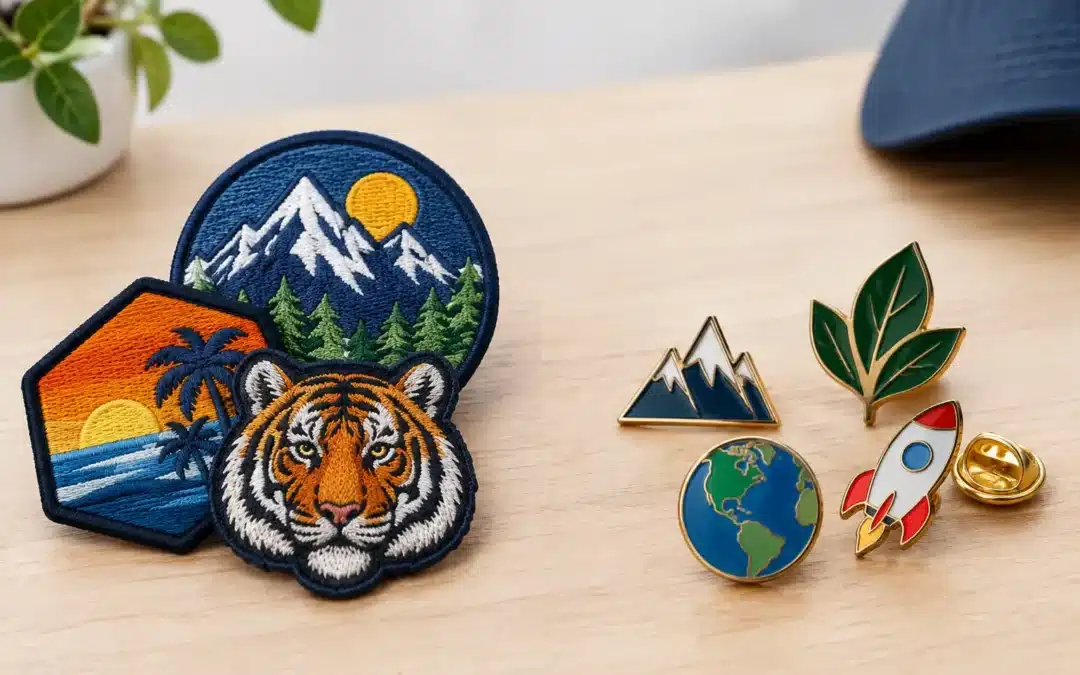
A club jacket, staff uniform or event bag has limited room for branding. The item you choose needs to look polished, hold up to regular use and make people want to wear it. When comparing embroidered patches vs pins, the better choice comes down to where it will be used, what message it needs to carry and how long you want it to stay visible.
Both products create strong recognition in a small format. Patches bring texture and a classic uniform feel, while custom lapel pins deliver a sharper, more compact finish for formal wear, campaigns and collectable merchandise. For Australian businesses, schools, sporting clubs and community groups ordering in bulk, knowing the practical differences helps you spend your promotional budget well.
Embroidered Patches vs Pins: The Core Difference
An embroidered patch is a fabric badge made by stitching coloured threads onto a backing material. It is usually sewn, ironed or heat-pressed onto clothing, caps, bags or other textiles. The raised thread finish feels tactile and familiar, making patches a natural fit for teamwear, workwear and membership apparel.
A pin is a small custom badge, commonly made from metal, enamel, PVC or acrylic, with a pin, magnet or other attachment on the back. It is designed to fasten to a lapel, shirt, hat, lanyard or bag without permanently changing the item. Pins can be highly detailed, shaped to suit a logo and finished in close Pantone colour matches.
The decision is not simply fabric versus metal. It is about permanence versus flexibility, texture versus fine detail, and casual utility versus a presentation-ready branded keepsake.
Choose Patches When Apparel Is the Main Event
Patches work hardest when the garment is the promotion. Think volunteer polos, scout uniforms, sports jackets, hospitality aprons, work shirts and club beanies. Once applied, a patch becomes part of the item rather than an add-on that may be removed after the event.
That permanence is useful for organisations that need consistent identification across a team. A large embroidered crest on a sleeve or chest gives members a clear shared look. It can also handle regular wear well when the patch is properly made and attached using the right method for the fabric.
Embroidery has a particular visual character. Thread creates depth, and that texture suits bold logos, mascots, shields and traditional designs. A school house badge or local footy club emblem often looks right in embroidery because the medium feels established and durable.
There are trade-offs. Tiny type, gradients and intricate photographic artwork are difficult to reproduce in thread. Very fine lines can become less clear, particularly on smaller patches. If your design relies on detailed illustration, precise colour transitions or small text, a printed or enamel pin will usually represent it more accurately.
Attachment also needs planning. Sew-on patches are dependable but take time to apply. Iron-on and heat-seal options are convenient for some fabrics, though results depend on the garment material and washing conditions. For a large staff uniform rollout, factor application time into the overall cost, not just the unit price.
Choose Pins for Events, Recognition and Everyday Visibility
Pins are built for moments where presentation matters. They are ideal for conference delegates, employee recognition, charity campaigns, anniversary celebrations, school leaders, club members and product launches. A well-made pin feels like a small award, not just another giveaway.
Because pins can be attached and removed easily, recipients can wear them on different garments or keep them as a memento. That makes them particularly effective for one-off events and fundraising campaigns. A limited-edition design can create a sense of belonging and encourage people to collect, trade or display it.
Metal enamel pins offer clean outlines, crisp colour blocks and a premium finish in a compact size. Die-struck designs suit logos with a refined, professional look, while printed and epoxy-coated pins are a smart option for complex artwork or full-colour imagery. PVC pins bring a softer, more playful look for youth programs, sport, tourism and family events. Acrylic pins can be a cost-effective choice where bright, detailed printing is the priority.
Pins also offer more flexibility in attachment. A standard butterfly clutch is popular for lapels and caps, while magnet attachments protect delicate clothing from pinholes. This can matter for corporate uniforms, formal event wear and customers who prefer not to pierce a jacket or blouse.
The limitation is that a pin is not designed to replace a permanent uniform badge. It can be misplaced, and it may not suit work environments where loose accessories are impractical. For a warehouse crew, kitchen team or junior sports squad, a patch may be the more sensible day-to-day option.
Compare Cost Beyond the Unit Price
For bulk orders, both patches and pins can be affordable promotional tools. The final price depends on size, quantity, artwork complexity, colours, attachments and packaging. It also depends on how the item will be distributed and used after delivery.
Patches may appear straightforward, but application can add a separate labour cost if they need to be sewn or pressed onto hundreds of garments. If you are supplying apparel already fitted with badges, that extra step needs to be organised early.
Pins can be handed out immediately at registration desks, packed into welcome kits or presented in gift boxes. That can reduce handling for event organisers. On the other hand, a premium metal pin with custom plating, multiple colours and individual presentation packaging will cost more than a simple patch. The right question is not which product is cheapest. It is which product delivers the strongest value for the purpose.
For a charity, a collectable pin may justify a higher perceived value and support a donation campaign. For a large sporting club ordering uniform identifiers, an embroidered patch may give better long-term value because it stays with the garment season after season.
Match the Product to Your Artwork
Your logo should guide the material choice. Designs with bold shapes, limited colours and a heritage feel usually translate beautifully into embroidery. A patch works especially well when the artwork can be simplified without losing recognition.
Pins handle complexity differently depending on the style. Enamel pins are excellent for clean linework, strong colour areas and polished branding. Printed pins are better for fine text, gradients, photographs and detailed illustrations that thread or raised metal cannot reproduce clearly. A larger pin size may also be worthwhile if legibility is essential.
Before production, request a free digital proof. It gives you the chance to check colour placement, spelling, sizing, attachment choice and the way small details will appear in the selected material. This step is particularly valuable when multiple stakeholders need approval, such as a school committee, marketing team or event sponsor.
When Using Both Makes Better Sense
Some campaigns do not need an either-or answer. A club can use embroidered patches for player and volunteer uniforms, then create commemorative pins for life members, sponsors and supporters. A business may add patches to staff apparel while giving enamel pins to delegates at a product launch.
Using both products creates clear levels of recognition. The patch handles practical identification, while the pin becomes the portable, giftable piece that travels beyond the venue. It also lets you keep the core design consistent across different audiences without forcing one item to do every job.
Plan Early for a Better Result
Whether you choose patches or pins, begin with the use case: where will it be worn, who will receive it and what should it communicate at a glance? Then consider the artwork, desired finish, quantity and event date. These details make it easier to select a practical option and avoid last-minute compromises.
Lapel Pins Australia can guide you through pin styles, finishes, shapes and attachments, with a free digital proof before production. If your project also needs patches, uniforms or other branded merchandise, planning the range together can help keep colours and messaging consistent.
A small badge can carry a big message. Choose the item people will be proud to wear, and your branding keeps working long after the event pack has been opened.