
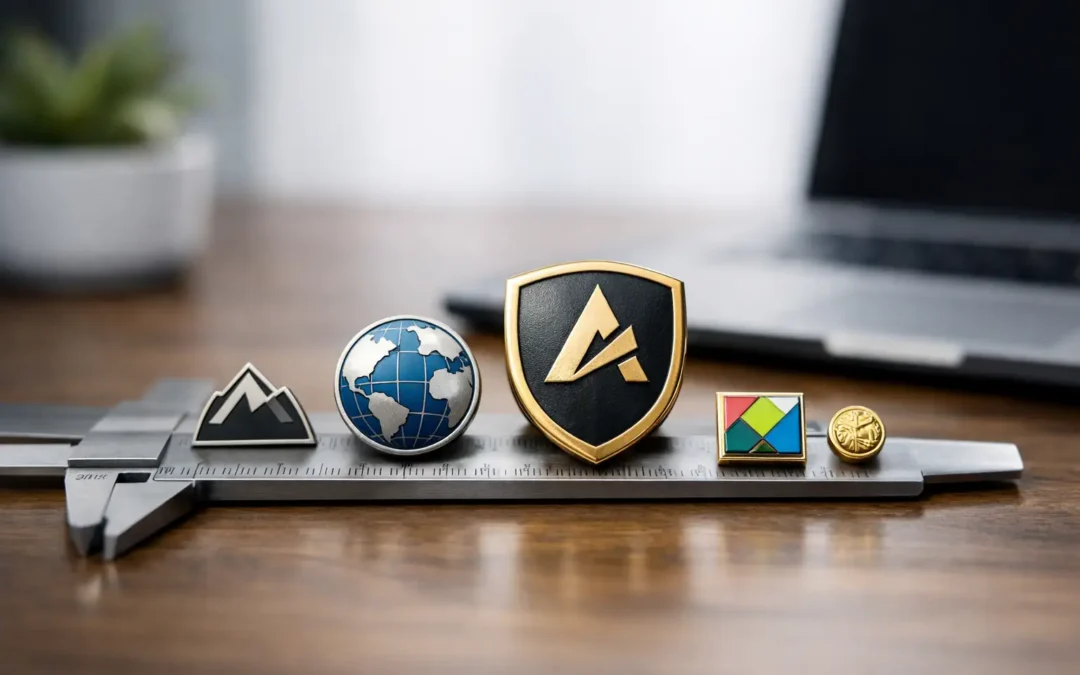
A lapel pin can be only a few centimetres wide, but the wrong size is obvious the moment someone puts it on. When customers ask, “what size should lapel pins be?”, the most useful answer is not one standard measurement. It is the size that lets your design look sharp, feel comfortable and deliver the right level of presence for the occasion.
For most custom lapel pin orders, 25 mm to 32 mm is the practical sweet spot. It is large enough to show a logo, club emblem or event message clearly, yet compact enough for a blazer lapel, uniform, lanyard or cap. But a small recognition pin, a detailed anniversary design and a bold charity campaign can all need different dimensions.
What size should lapel pins be for most orders?
Most businesses, schools, clubs and community organisations choose pins between 20 mm and 35 mm. These sizes offer the best balance of visibility, production value and wearability.
A 20 mm pin is neat, understated and cost-effective for simple logos or corporate branding. It works well for staff uniforms, membership pins and designs with one or two strong colours. The trade-off is detail: small text, fine lines and intricate artwork can become difficult to read at this scale.
At 25 mm, often described as one inch, a pin becomes much more versatile. It suits most company logos, sporting crests, school badges and fundraising artwork without feeling oversized. If you need a safe starting point for a first order, 25 mm is usually it.
Pins around 30 mm to 32 mm create more impact. They are popular for event merchandise, commemorative designs, achievement awards and branded giveaways where the pin needs to be noticed from a short distance. This extra room can make a major difference to facial features in a mascot, layers in a crest or a multi-colour design.
At 35 mm and above, a lapel pin becomes a statement piece. These larger sizes suit bold shapes, limited-edition pins, detailed illustrations and retail-style merchandise. They are less subtle on formal businesswear, though, and their larger metal area can increase unit cost.
Start with where the pin will be worn
The intended use should guide the size before you settle on the artwork. A small pin worn every day on a corporate uniform has different demands from a commemorative pin handed out at a national conference.
For business uniforms and professional networking, a 20 mm to 25 mm design looks polished without competing with the wearer’s name badge or clothing. A simple die-struck metal logo, enamel emblem or discreet service recognition pin sits comfortably in this range.
Sporting clubs and schools often benefit from 25 mm to 32 mm. A club crest needs enough space for its colours and recognisable features, while students and members still need a pin that feels comfortable on a polo shirt, blazer or bag. If the design includes a motto around the edge, moving up a size can prevent the lettering from becoming cramped.
For charity walks, awareness campaigns, festivals and public events, 30 mm to 40 mm can work particularly well. A larger pin gives your campaign colour and iconography more visual impact in photos, at registration desks and on event-day apparel. It can also feel more like a keepsake, rather than a standard promotional giveaway.
Match the size to the artwork detail
Size cannot be considered separately from design. A clean logo with bold colour blocks may look excellent at 20 mm. A design featuring fine text, a detailed map, multiple characters or narrow outlines may need 30 mm or more to reproduce well.
As a rule, avoid relying on tiny wording. A lapel pin is viewed at arm’s length, not read like a brochure. If a slogan is essential, make it short and give it enough room. Sometimes enlarging the pin helps; other times, simplifying the message is the stronger design decision.
Die-struck enamel pins are ideal for defined shapes, raised metal lines and strong colour sections. However, the metal borders need sufficient width to hold enamel cleanly. Printed pins can carry finer artwork, colour gradients and photographic-style detail, particularly when finished with an epoxy coating. That does not mean a highly detailed print should always be tiny. The viewer still needs to recognise the image quickly.
Shape also changes how big a pin feels. A 30 mm circular pin has a compact, classic look. A 30 mm-wide horizontal logo may appear slimmer, while a tall custom shape can seem more prominent on a lapel. For irregular designs, dimensions are generally measured at the widest points, so it is worth looking at the full outline rather than only one measurement.
Consider budget without shrinking the impact
Larger pins generally use more material and can cost more per unit, especially in premium metal styles, thick 3D designs or complex custom shapes. For bulk promotional orders, moving from 30 mm down to 25 mm may create worthwhile savings without losing the overall effect.
But choosing the smallest possible size is not always the economical choice. If your logo becomes difficult to recognise, your pin loses the branding value that justified the order. A slightly larger, clearer pin can make a better impression and be more likely to be worn after the event.
The most cost-effective approach is to prioritise the elements people will see first: your logo, a key symbol, core colours and a concise message. A simple 25 mm pin with a crisp design often delivers more impact than an overcrowded 35 mm pin.
Quantity matters too. Larger runs usually reduce the unit price, which can make a 30 mm design more achievable for clubs, schools and event organisers ordering in volume. Your final quote will also depend on finish, attachment, number of colours, shape and packaging, not only the dimensions.
Choose a backing that supports the size
The pin attachment should be appropriate for the pin’s size and weight. A butterfly clutch is a reliable option for many standard 20 mm to 30 mm pins. For larger, heavier or unusually shaped designs, two attachment points can stop the pin rotating or drooping on fabric.
A magnet backing is a popular choice when you want to avoid piercing clothing, especially for corporate settings or reusable name-style badges. Magnets should be selected carefully for larger pins because the weight and shape of the design affect how securely it sits. Safety-pin and brooch-style attachments can also suit larger commemorative pieces.
This is one of the details that is easy to overlook when ordering online from a picture alone. A well-designed pin should look good in the proof and work properly once it is worn. That is why supplier guidance matters just as much as choosing a measurement.
A practical size guide for common pin uses
If you need a straightforward starting point, use the purpose of the pin to narrow your options:
- 15 mm to 20 mm: Minimal corporate logos, simple membership pins and subtle uniform badges.
- 25 mm: The all-round choice for business branding, schools, clubs, associations and standard event pins.
- 30 mm to 32 mm: Detailed crests, multi-colour event designs, fundraising pins and recognition awards.
- 35 mm to 40 mm: Bold promotional artwork, anniversary pins, collector-style designs and pins intended as keepsakes.
These are guides, not hard rules. A 20 mm round logo may be perfect for an executive jacket, while a 40 mm custom-shaped mascot can be exactly right for a junior sports club fundraiser. The goal is to make the size feel intentional for the wearer and the message.
Use a digital proof to test the real-world result
Before production, ask to see your pin artwork at its proposed size. A free digital proof is the best opportunity to check whether fine text is readable, colour areas are balanced and the overall shape has enough impact. It also lets you compare two sizes before committing, which is particularly useful if the design is close to the limit for detail.
When reviewing the proof, do not judge it only on a large computer screen. Think about how it will appear on a shirt or blazer from one to two metres away. Can someone identify the brand or cause immediately? Does the design still feel clean? Is the pin substantial enough for the occasion without being awkward to wear?
Lapel Pins Australia can guide you through size, material, finish and backing options, then provide a digital proof before your bulk order moves ahead. With more than 20 years of experience, the team can flag details that may not translate cleanly and suggest a practical alternative.
The best lapel pin size is the one that makes your design easy to recognise and enjoyable to wear. Start with 25 mm if you need a dependable all-round option, then go larger when your artwork, audience or occasion calls for a bigger impression.