
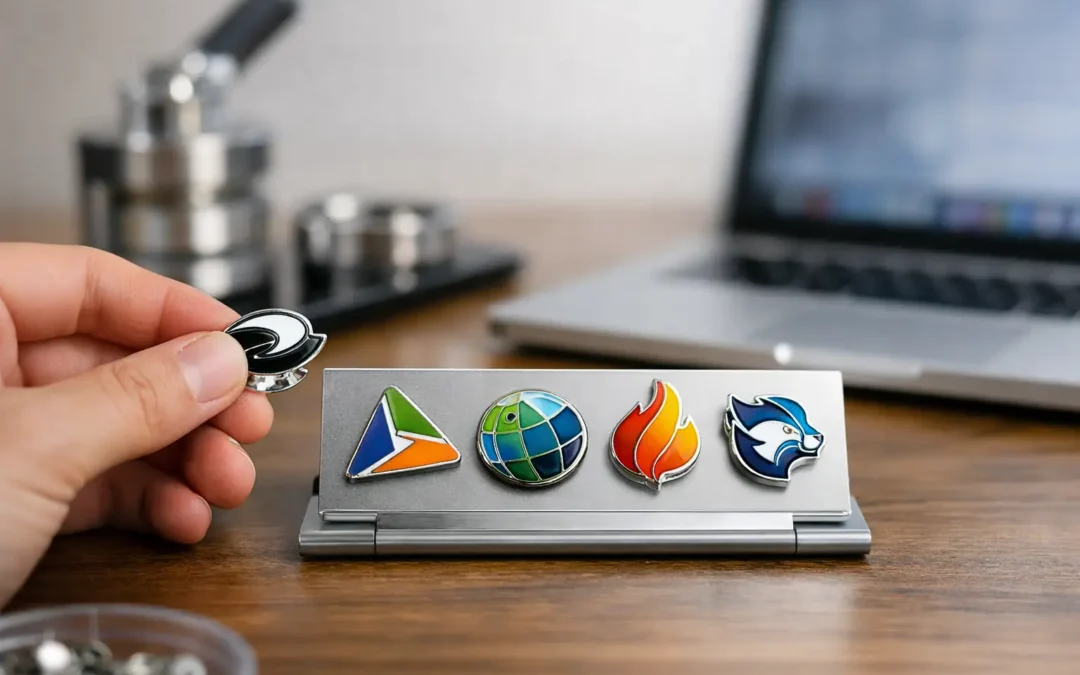
A logo on a screen has seconds to make an impression. A well-made lapel pin can stay on a jacket, lanyard, uniform or presentation board for years. When you turn logos into pins, you create a small, wearable brand asset that gives staff, members, customers and supporters something tangible to recognise and keep.
For Australian businesses, schools, sporting clubs and community organisations, pins work because they are compact, practical and highly visible without feeling like a hard-sell giveaway. The result depends on more than simply uploading a logo. Pin style, line detail, colour, size and attachment all affect how professional the finished piece looks.
Start with a logo that will read at pin size
Most logos are designed to work across websites, signage and print. A lapel pin is a much smaller canvas, usually viewed from arm’s length. Fine text, intricate gradients and tiny decorative marks can lose clarity when reduced to a 25 mm or 30 mm pin.
The best starting point is a clean, high-resolution version of your logo. Vector artwork is ideal because it can be scaled without losing sharpness. If all you have is a PNG, JPG or a rough image from an old document, that does not necessarily stop the project. It may simply need artwork clean-up before production.
Think about what absolutely needs to stay. A club crest may require its shield shape, founding year and key colours. A corporate identity might work better with the icon and name simplified into bold, readable sections. Removing a tiny tagline is often the right call when it improves the overall result.
A free digital proof is the useful checkpoint here. It shows how the artwork will be interpreted as a pin before manufacturing begins, so you can check spacing, wording, outlines and colour placement with confidence.
Choose the right way to turn logos into pins
There is no single best pin type. The right option depends on your artwork, budget, quantity and how the pins will be used. A polished executive recognition pin calls for a different finish to a bright fundraising giveaway for a school fete.
Die-struck enamel pins for a premium finish
Die-struck enamel pins are a popular choice for logos with solid colours and defined sections. Metal outlines separate each colour area, creating a crisp, structured look. They are ideal for corporate branding, service awards, association memberships, commemorative events and sporting clubs that want a durable, traditional lapel pin.
Soft enamel gives the pin a textured feel, with coloured enamel sitting slightly below the raised metal lines. Hard enamel has a smoother, flatter surface and a refined finish. Both are strong options, but hard enamel is generally chosen when the presentation needs to feel especially polished.
Printed pins for detailed artwork
If your logo includes gradients, photographic elements, tiny colour changes or highly detailed illustration, printed pins may be the better fit. The design is printed onto a metal base and can be protected with a clear epoxy coating.
This approach allows for greater artwork freedom, especially where enamel boundaries would make the design look crowded. The trade-off is that printed pins do not have the same raised metal definition as enamel. For many event, campaign and promotional designs, that is not a drawback at all. It is simply the most accurate way to reproduce the original artwork.
Acrylic and PVC pins for bright promotions
Acrylic pins are lightweight, colourful and well suited to modern graphics, short-run promotions and bold event branding. They can be cut to custom shapes, making them a practical option for logos with an unusual outline.
PVC pins bring a softer, flexible feel and work particularly well for playful characters, layered designs and youth-focused campaigns. Schools, charities, community events and sports programs often choose PVC when they want a more casual, eye-catching item. They are not usually the first choice for formal corporate recognition, where metal creates a stronger premium impression.
3D pins when the shape tells the story
A 3D pin adds sculpted depth to a logo, mascot, product or emblem. Raised contours can make a heritage crest, animal, building or iconic local feature more memorable. This style is best used selectively. If the logo is mainly text and flat shapes, a classic enamel or printed pin will often communicate more clearly and cost-effectively.
Get the size and shape working for your design
Size is one of the most important choices when turning a logo into a pin. Too small, and detail becomes difficult to read. Too large, and the pin can feel heavy or awkward on a lapel. For many logo pins, 25 mm to 35 mm is a practical range, though larger designs can suit events, presentation pieces and bold promotional use.
Custom shapes create instant recognition. A circular pin is timeless and economical, while a shield, badge, letterform or logo silhouette can make the design feel more ownable. A complex outline may add manufacturing cost, but it can be worthwhile when the shape is central to your identity.
Metal plating also changes the personality of the pin. Gold suits achievement, anniversaries and premium brands. Silver and nickel feel modern and clean. Antique finishes bring depth to heritage logos, RSL-style commemoratives and classic club emblems. Black metal can give bright logo colours strong contrast.
Pantone colour matching is particularly valuable for organisations with established brand standards. Small variations in a familiar blue, green or red can stand out quickly when pins sit beside uniforms, printed collateral or event signage. Close Pantone matching helps maintain a consistent brand look across the campaign.
Choose an attachment that matches the job
The back of the pin deserves as much thought as the front. A standard butterfly clutch is a familiar, affordable choice for most lapel pins and uniforms. A rubber clutch is comfortable and secure, particularly for everyday wear.
For heavier or larger pins, a double-post backing helps stop the piece from spinning. Magnet attachments are useful when you want to avoid piercing delicate clothing, such as business shirts, blouses or event attire. They are also a practical choice for name badges and temporary event identification, although they are not suitable for people with certain medical devices.
If the pin is being presented as an award, consider a custom backing card or presentation gift box. This simple addition can turn a small badge into a meaningful recognition item for long service, volunteer appreciation, graduation or donor acknowledgement.
Plan for the audience, not just the artwork
The most successful custom pins have a clear purpose. A staff pin may need to look subtle and credible on a uniform. A membership pin should make people feel part of a group. A fundraising pin needs enough visual appeal that supporters want to wear it after the event. A conference pin can reinforce a theme, celebrate a destination or help delegates identify one another.
Before approving a design, ask where it will be worn, who will receive it and what you want it to communicate. That answer should guide the finish and the budget. Ordering a larger quantity usually improves unit pricing, but there is little value in choosing the cheapest style if it cannot reproduce your logo properly.
It also pays to consider the wider merchandise plan. The same artwork can often carry across keyrings, fridge magnets, patches, bottle openers, scarves or beanies. Pins may be the hero item for recognition, while complementary products extend your brand through a campaign, retail range or event pack.
Make production easier with a clear brief
A good supplier can guide the technical details, but a clear brief avoids delays. Provide your logo file, preferred dimensions, approximate quantity, intended use and any deadline. Mention whether exact brand colours matter, whether the pin needs a magnet or standard clasp, and whether it will be handed out loose, on a card or in a gift box.
Allow time for the digital proof and approvals, especially if several people need to sign off. This is where small details are caught: an incorrect founding date, a colour that needs adjustment, a line that is too thin or a word that needs more space. Careful approval upfront protects the finished result.
Lapel Pins Australia brings more than 20 years of experience to helping customers choose a practical, polished option for bulk custom orders. The aim is straightforward: a pin that looks right, arrives ready for its purpose and represents your organisation well.
A small badge can carry a big message. Start with the clearest version of your logo, choose a style that suits the occasion, and let the proof process do its job. The right pin will not just display your brand – it will give people a reason to wear it.