
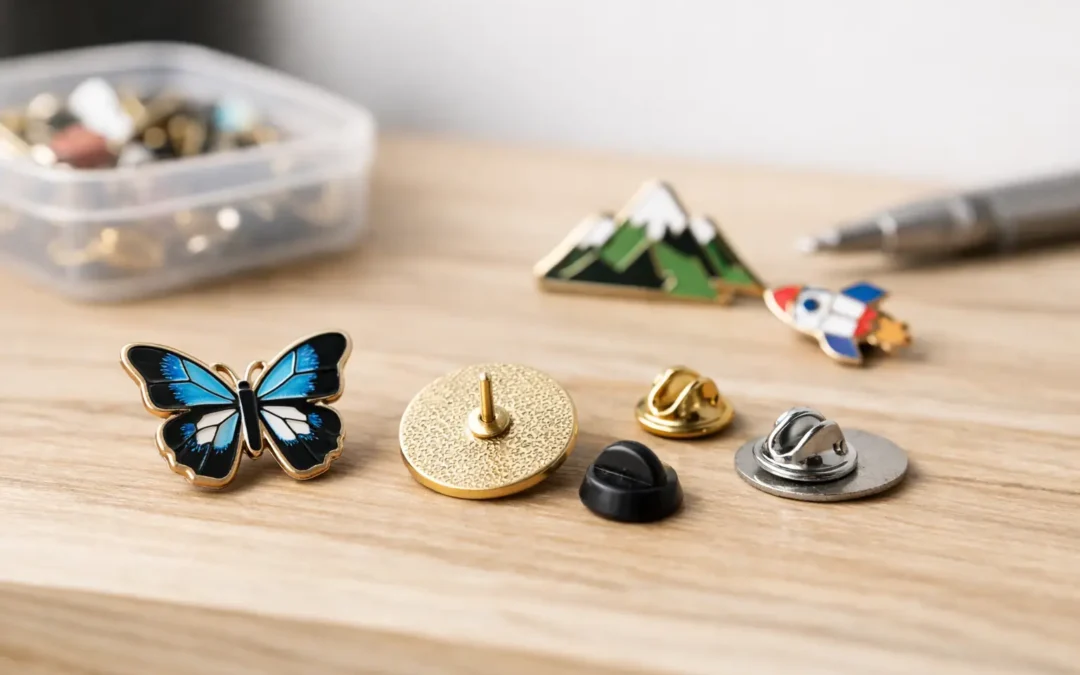
A good enamel pin looks simple on the surface – a clean design, sharp metal lines, solid colour and a secure fitting on the back. But if you have ever priced custom pins for a school, club, business or event, you have probably asked the practical question: how do enamel pins work, exactly? The short answer is that they combine a metal base, coloured enamel areas and a fastening to create a small branded item that is durable, wearable and designed to leave a strong impression.
For organisations ordering in volume, that matters. You are not just choosing a badge. You are choosing how your logo, campaign, award or membership symbol will be reproduced in a format people actually keep.
How do enamel pins work in production?
Enamel pins start with artwork. That design is then separated into metal outlines and recessed areas where the enamel colour will sit. Think of the metal as the framework of the pin. It creates the borders that hold each colour in place and gives the finished piece its shape and definition.
Once the design is approved, the pin is manufactured using a metal mould or die. The base metal is stamped or formed into shape, then plated in the chosen finish such as gold, silver, black nickel or antique metal. After that, the recessed sections are filled with enamel colours matched as closely as possible to your branding requirements.
The final stage depends on the pin style. Some enamel pins are polished flat, while others keep a slightly textured feel where the raised metal lines sit above the enamel. A post is attached to the back, and that works with a butterfly clutch, rubber clutch, safety pin fitting or magnet attachment to secure the pin to clothing, bags or lanyards.
That is the basic answer to how do enamel pins work – metal forms the structure, enamel adds the colour, and the backing makes the pin wearable.
The role of metal lines and enamel fill
The metal lines are doing more work than most people realise. They separate each coloured section, stop colours from visually running together and help simplify fine details into something that can be manufactured cleanly at a small size. If your artwork has tiny text, gradients or very intricate details, those elements usually need to be adjusted before production.
This is where experienced supplier guidance makes a difference. A pin design may look excellent on a screen, but pins are physical products with size limits. A free digital proof is valuable because it shows how the design will translate into real production, not just how it appears in a logo file.
Enamel itself is the colour fill placed into the recessed areas of the metal pin. Depending on the style, it can be cured and left slightly lower than the metal lines, or polished so the whole face feels smooth. Both approaches work well, but they create a different look and price point.
Soft enamel vs hard enamel
If you are comparing options, this is usually the first distinction that matters.
Soft enamel pins
Soft enamel pins have raised metal lines with enamel sitting in the recessed areas below them. You can feel the texture when you run a finger across the surface. This style is popular because it offers strong visual contrast, clear detail and good value for bulk orders. It is often the go-to choice for clubs, schools, charities, promotions and events where budget and impact need to balance well.
Soft enamel can also be paired with an epoxy coating if extra surface protection is needed. That coating adds a clear layer over the top, which can help reduce scratching and create a glossier appearance.
Hard enamel pins
Hard enamel pins are filled and then polished flat, so the metal and colour sit on an even surface. The result is a smoother, more refined look. They are often chosen for premium corporate badges, long-service awards, commemorative pieces and formal branding where a polished finish matters.
Hard enamel usually costs more than soft enamel, and some very fine design details may need a little more simplification. The trade-off is a durable, higher-end presentation.
What makes enamel pins durable?
Pins are small, but they are built to be used. The metal base gives them structure, the plating protects the finish, and the enamel is designed to hold colour over time. Durability also depends on how the pin will be worn and who will use it.
A lapel pin for a conference or staff recognition program may only be worn occasionally, so a standard clutch fitting will usually do the job well. A pin for a sporting club, school blazer or community organisation that gets regular wear may benefit from a more secure backing or an epoxy finish if the design suits it.
There is always a practical balance between appearance, budget and application. If the pin is meant as a collectible or presentation piece, you might put more into plating, packaging and finish. If it is part of a larger promotional rollout, cost per unit and production speed may be the bigger priorities.
How attachment options work
The back of the pin is just as important as the front. Most enamel pins use a metal post with a clutch to hold the pin in place through fabric. For lightweight and standard-sized pins, a butterfly clutch is common and cost-effective. Rubber clutches are also popular, especially where comfort or ease of use matters.
For larger pins, multiple posts may be added to prevent spinning. That is helpful for badges with wider shapes or heavier designs. Magnet attachments are another option when you want to avoid piercing clothing, though magnets are not always the best choice for every garment thickness or active use setting.
If a buyer asks how enamel pins work on uniforms, jackets or bags, the answer is usually this: the fitting should match the way the pin will actually be worn. A good-looking design can still underperform if the attachment is not practical for the job.
Design choices that affect the final result
Not every logo becomes a perfect enamel pin without adjustment. Pins work best when the design is bold, legible and built for small-scale reproduction. Strong outlines, separated colours and limited text usually deliver the clearest results.
Shape also matters. Standard round, square and shield styles are easy to produce, but custom shapes often create more impact. If your organisation wants something memorable for a launch, fundraiser or membership badge, a custom outline can make the piece feel far more distinctive.
Plating finish changes the overall character as well. Bright gold can feel premium and celebratory. Silver gives a clean corporate look. Black nickel can suit modern branding and stronger contrast. Antique finishes work well for commemorative or heritage-style designs. There is no single best option – it depends on your audience and how formal or promotional you want the piece to feel.
Why enamel pins still work for branding
A lot of promotional products are useful for a short period and then forgotten. Enamel pins tend to stick around. People attach them to uniforms, hats, backpacks, lanyards and display boards. They are small enough to hand out easily but polished enough to feel worth keeping.
That is why they work across so many sectors in Australia. Schools use them for leadership roles and achievement awards. Sporting clubs use them for membership, milestones and tours. Businesses use them at conferences, product launches and internal recognition programs. Charities and community groups use them for fundraising, volunteer appreciation and awareness campaigns.
The appeal is straightforward. Small badge, big impact. A well-made pin gives your logo or message a sense of permanence that paper handouts and throwaway merch often cannot match.
Choosing the right pin for your order
The best pin is not always the most expensive one. It is the one that suits the purpose, the audience and the timeframe. If you need volume at a competitive unit price, soft enamel or printed pins may be the better fit. If presentation is everything, hard enamel, premium plating or gift box packaging may be worth the extra spend.
This is also where supplier support matters. For most buyers, the process is not about knowing every technical detail. It is about getting clear advice, a fast quote, a free digital proof and confidence that the finished pins will look right. That is exactly why many organisations work with experienced suppliers such as Lapel Pins Australia rather than trying to sort through every production option on their own.
If you are planning a custom pin order, start with the outcome you want. Do you need brand visibility, a commemorative keepsake, an award item or a practical membership badge? Once that is clear, the right style, finish and fitting usually follow quickly. A small product can carry a lot of meaning when it is made properly.