
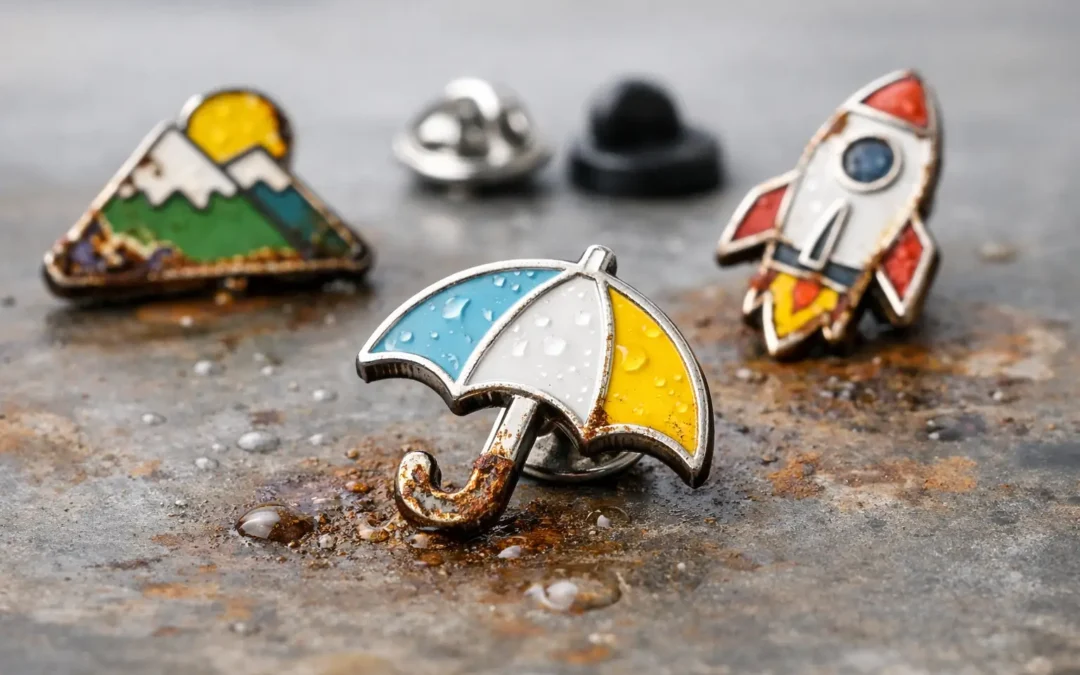
A pin that looks perfect on day one but starts discolouring after a few months is a fair concern, especially if you’re ordering for staff recognition, club members, school events or resale. So, do enamel pins rust? The short answer is not usually – but some metal parts can corrode over time if the pin is made with lower-grade materials, exposed to moisture, or stored badly.
For most buyers, the better question is not simply whether enamel pins rust, but what parts of the pin are most at risk, how long they will hold their finish, and what choices improve durability. If you’re investing in custom pins in volume, those details matter.
Do enamel pins rust or just tarnish?
In many cases, people use rust as a catch-all term for any change in the metal finish. Technically, rust refers to iron or steel oxidising. Most enamel pins are not solid iron. They are commonly made from metal alloys and then finished with plating such as gold, silver, black nickel or antique finishes. That means a quality enamel pin is less likely to develop true rust across the front face in normal use.
What you may see instead is tarnishing, dulling, dark spots, or wear on the plating. The clutch on the back, the pin post, or any exposed base metal can be more vulnerable than the enamelled front. If moisture gets in and the plating is thin or damaged, corrosion can appear on those areas first.
This is why two pins that look similar in a photo can perform very differently over time. Build quality matters.
What actually causes corrosion on enamel pins?
Moisture is the obvious one, but it’s not the only factor. Humid conditions, salt in the air, sweat, frequent handling and poor storage all speed things up. A pin worn on a jacket at outdoor events along the coast will generally face harsher conditions than one kept in a presentation box indoors.
The finish also plays a big role. A well-plated hard enamel or soft enamel pin with proper production standards will usually hold up well for regular promotional or commemorative use. By contrast, a cheaply made pin with inconsistent plating can start showing wear much sooner, particularly on sharp edges and the fastening components.
Another factor is friction. Pins that rub against bags, lanyards, workwear or other badges can gradually lose their protective surface. Once the outer finish wears down, the metal underneath has less protection.
Which parts of a pin are most likely to rust?
The front design area is usually the most protected part of the pin, especially when enamel and plating are properly applied. The more common trouble spots are the pin post, butterfly clutch, safety pin fitting or magnetic fitting hardware. These are functional parts, and they often take more handling and more exposure to air and moisture.
If a pin is stored while damp, kept loose in a drawer, or used in environments like hospitality, construction, sport or outdoor events, the hardware on the back tends to age faster than the decorative face. That doesn’t always mean the whole pin is ruined, but it can affect appearance and wearability.
For bulk orders, this matters because durability is not just about how the front looks in a proof. It is also about how the attachment performs after repeated use.
Do soft enamel and hard enamel pins rust differently?
They can, but not because enamel type alone determines rust. The real difference comes down to how the pin is manufactured, plated and used.
Soft enamel pins have recessed enamel areas with raised metal lines. They are popular because they deliver strong visual contrast and excellent value for clubs, schools, promotions and event branding. Hard enamel pins have a smoother, more polished surface and are often chosen when buyers want a premium feel. Neither is automatically rust-proof forever.
A well-made soft enamel pin can outlast a poorly made hard enamel pin. Likewise, a hard enamel pin with good plating and careful handling will usually stay looking sharp for a long time. For most organisations, the smarter approach is to choose the right specification for the job rather than assume one style solves every durability issue.
How to reduce the risk when ordering custom pins
If you’re buying pins for a campaign, awards program or member pack, prevention starts before production. Material choice, finish and use case should all be discussed upfront.
Good plating is one of the biggest factors. Gold, silver, black nickel and antique finishes all create a different look, but they also need to be applied properly to protect the metal. If the pins will be handled often, posted out, or worn outdoors, it’s worth saying so during the quoting stage.
Attachment choice matters too. A standard butterfly clutch is common and cost-effective, but some projects benefit from rubber clutches, deluxe clutches or magnetic backs depending on use. A school badge worn daily has different needs from a presentation pin that stays in a box most of the year.
Packaging can help as well. Individually bagged pins or boxed presentation sets reduce scratching, moisture exposure and rubbing during transport and storage. That is especially useful for corporate awards, fundraising packs and official event merchandise.
Storage and care after delivery
Even a well-made pin benefits from basic care. Keep pins dry and store them in a cool place rather than in damp storerooms, gloveboxes or bathroom cabinets. If they get wet, dry them before packing them away again.
For organisations holding stock, it is best to keep cartons off concrete floors and away from areas with heavy humidity. If pins are being handed out over time, leaving them sealed until use can help preserve the finish.
For individual wearers, a quick wipe with a soft dry cloth is usually enough if a pin has picked up fingerprints or moisture. Harsh cleaners are not a good idea because they can damage plating or enamel.
When rust is a genuine warning sign
If a new pin shows rust quickly, it can point to issues with the underlying materials, plating quality or storage conditions during transit. A little wear over years of regular use is one thing. Fast corrosion on arrival or shortly after distribution is another.
For buyer groups ordering in volume, that distinction matters. You want pins that represent your brand, school or organisation properly, not badges that start looking tired before the event season is over. Reliable production standards, clear digital proofs and good supplier guidance reduce that risk from the start.
This is one reason many Australian buyers prefer working with an experienced supplier rather than choosing on price alone. The cheapest unit cost can become expensive if the finish does not last, the backs fail, or the overall presentation feels underdone.
What should you ask before placing an order?
If durability is high on your list, ask what base material and plating are recommended for your design and intended use. Ask whether the pins are likely to be worn daily, displayed indoors, packed for resale or used at outdoor events. Those details help shape the right product specification.
It also helps to ask about packaging, attachment options and the finish that best suits your budget. There is always a balance. If you need a large run for a short-term promotion, one specification may be ideal. If you’re creating an anniversary pin, executive gift, service award or collector piece, a more premium finish may be worth it.
At Lapel Pins Australia, that kind of guidance is part of the process. A small badge can make a big impact, but only if it arrives looking polished and stays that way.
The practical answer for most buyers
So, do enamel pins rust? Quality enamel pins are not highly prone to rust in normal conditions, but they are not immune to corrosion if exposed to moisture, damaged plating or poor storage. The front of the pin is usually well protected, while the post and clutch are more likely to show wear first.
For businesses, clubs, schools and event organisers, the takeaway is simple. If you want pins that look good beyond the handout moment, focus on production quality, the right finish and realistic use conditions. A dependable pin is not just about artwork – it is about how well the product is made to match the job. If you’re unsure what will wear best, ask before you order and get the specification right from the start.