
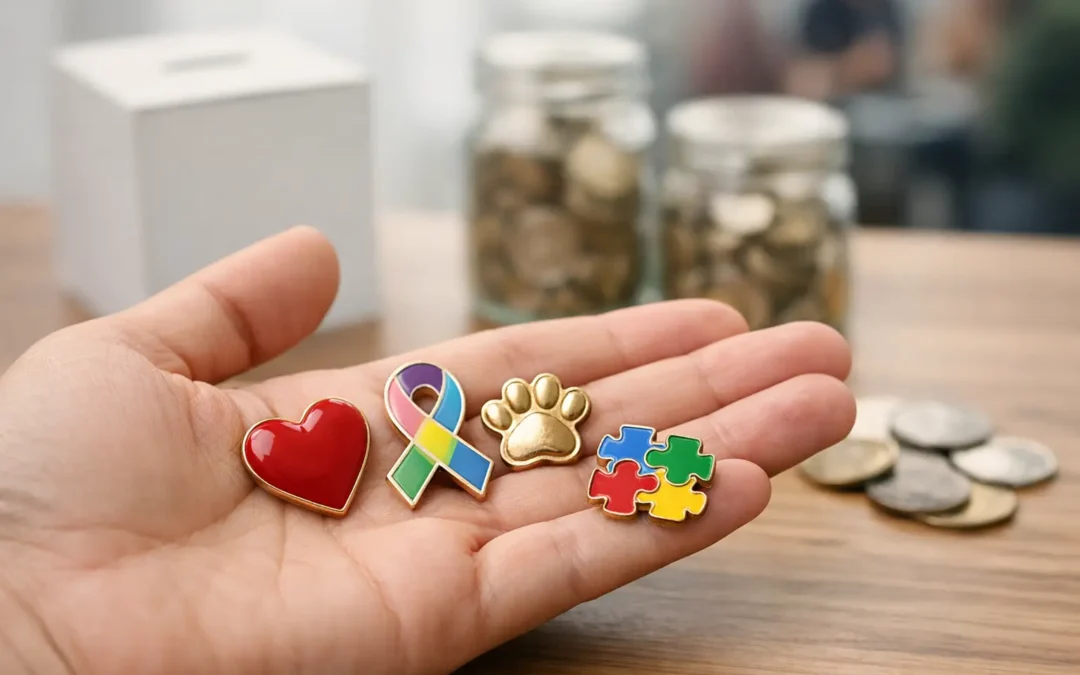
A gold coin donation gets noticed for a moment. A well-made pin stays on a jacket, lanyard or school bag for months. That is why fundraising pins for charities continue to work so well – they turn support into something visible, wearable and easy to share.
For charities, community groups and not-for-profits, the appeal is simple. Pins are affordable in volume, easy to customise and suited to everything from awareness campaigns to gala nights, school drives and volunteer recognition. Small badge, big impact. When the design is right and the order is planned properly, a pin can do more than raise funds. It can help people feel part of the cause.
Why fundraising pins for charities still work
A lot of fundraising products ask too much of the buyer. They are expensive, bulky, or useful only once. Pins are different. They are low-cost, easy to distribute and simple for supporters to wear straight away.
That matters because fundraising success often comes down to friction. If a donor can give, receive something polished and show their support in the same moment, conversion tends to be stronger. At a charity walk, school fundraiser or awareness event, a pin offers an immediate thank you without stretching the budget.
Pins also carry social proof. When staff, volunteers, students or event guests wear the same design, the campaign starts to look established and credible. That visibility can lead to more conversations, more donations and better recognition for sponsors or partners involved in the event.
There is also a practical advantage. Unlike many throwaway promo items, lapel pins are compact and durable. They are easy to post, simple to hand out at counters and straightforward to include in supporter packs. For charities working with lean teams, that efficiency matters.
What makes a pin successful at fundraising
Not every custom pin performs the same way. Some become collectables. Others sit in a box after the event. The difference usually comes down to design, positioning and price.
A good fundraising pin needs a clear idea behind it. That might be an awareness ribbon, a campaign symbol, a mascot, a school crest or a limited-edition event design. If the pin means something to the audience, it is far easier to sell. People are not only buying metal and enamel. They are buying a visible connection to a cause.
Presentation plays a part as well. A polished finish, close Pantone colour match and clean logo reproduction all affect perceived value. If the pin looks cheap, supporters will treat it like a cheap giveaway. If it looks sharp, it feels worth wearing and worth paying for.
Pricing needs balance. A very low selling price can move volume, but it may also leave money on the table. A higher price can work if the design feels premium or ties into a strong campaign. In many cases, the best result comes from building in healthy margin while keeping the ask easy and accessible.
Choosing the right style for your charity campaign
Different campaigns suit different pin styles. There is no single best option, only the best fit for your audience, artwork and budget.
Die-struck enamel pins are often the strongest choice when you want a premium feel. They have weight, good detail and a professional finish that suits charities, associations and corporate-backed fundraising events. If the design includes bold shapes and solid colours, enamel tends to present very well.
Printed pins with epoxy coating are useful when the artwork is more detailed, includes gradients or needs precise logo reproduction. They can be a smart option for schools, community organisations and awareness campaigns where visual accuracy matters more than a raised metal finish.
Acrylic and PVC styles can work well for younger audiences, fun runs, school events and mascot-led campaigns. They offer a more playful look and can be ideal when you want bright colour and a less formal finish. The trade-off is that they do not always carry the same perceived value as metal pins, so the right choice depends on who you are selling to.
Attachment type matters too. Standard butterfly clutches are popular for general wear, while magnets can be better for corporate settings where people do not want to pin through clothing. That said, magnets are not always the cheapest route, so it depends on the event and the audience.
Design tips that help pins sell faster
The strongest fundraising pins are usually simple. A design that reads clearly from a short distance tends to perform better than one overloaded with text and tiny detail.
If your charity already has strong visual assets, use them. A recognisable symbol, campaign line or established colour palette builds trust quickly. If the design is being created from scratch, aim for one central idea and keep the shape purposeful. Custom shapes can lift impact, but only when they support the concept rather than complicate it.
Text should be used carefully. Names, short dates and brief campaign messages can work, but long wording often becomes hard to read on a small badge. If the goal is awareness, the symbol usually does more of the work than a sentence ever will.
Backing cards can also improve results. A pin mounted on a printed card instantly looks more complete and giftable, and it gives you room to add a short message about the cause. For charities selling at events or sending supporter packs by post, this can make a real difference to presentation.
Where charities use fundraising pins best
Pins are flexible enough to suit a wide range of fundraising settings. That flexibility is one reason they remain so popular.
They work well at gala dinners, charity golf days and sponsored events where guests want a polished keepsake. They also suit schools, sporting clubs and local community drives where affordability and easy distribution matter more than formal presentation.
Awareness campaigns are another strong fit. A pin can become a unifying symbol across volunteers, staff, donors and participants. When everyone is wearing the same piece, the campaign feels visible and coordinated.
Pins can also support tiered fundraising. For example, a standard pin might be included with every donation over a certain amount, while a premium version or boxed set is reserved for major donors, sponsors or committee members. That approach can lift perceived value without making the campaign complicated.
Planning your order properly
The best fundraising result often starts well before production. Quantities, event timing and artwork approval all affect whether the campaign runs smoothly.
Ordering too few pins can limit fundraising upside, especially if the design catches on. Ordering too many can leave excess stock after the campaign. A good supplier will help you weigh expected attendance, target sell-through and budget before locking in quantities.
Timing matters just as much. Custom production takes planning, especially if you want specific finishes, presentation boxes or multiple versions. Leaving the job too late narrows your options. If you have an event date, reverse-plan from that point and allow time for proofs, revisions and delivery.
Artwork support is another area where experience helps. Not every charity has a designer on hand, and not every logo file arrives in perfect shape. Clear guidance and a free digital proof can save a lot of back-and-forth and help you feel confident before production begins.
For organisations ordering in bulk, local service also matters. When you are coordinating deadlines, approvals and stakeholders, quick communication is not a bonus. It is part of getting the job done properly.
Getting the most value from custom fundraising pins
Pins work best when they are treated as part of the campaign, not just an add-on product. The more visible and integrated they are, the better the return tends to be.
If you are launching a fundraiser, think about where the pin appears. On volunteer uniforms, in registration packs, at the donation table and in post-event thank-you packs, each placement gives the design another chance to reinforce the cause. A small item can carry a lot of promotional weight when it is used consistently.
There is also room to think beyond one product. In some campaigns, pins work alongside keyrings, patches, bottle openers or other custom merchandise to create broader fundraising options. That does not suit every charity, but for larger events or annual campaigns, it can increase average spend per supporter.
The key is to keep the pin itself strong. If the design is appealing, the quality is solid and the order process is handled properly, supporters are far more likely to wear it with pride. That is the sweet spot for any fundraiser – an item that raises money now and keeps promoting the cause long after the event is over.
If your next campaign needs something affordable, polished and easy to sell, a custom pin is still one of the smartest choices on the table. Done well, it gives your supporters something simple to buy, easy to wear and worth remembering.