
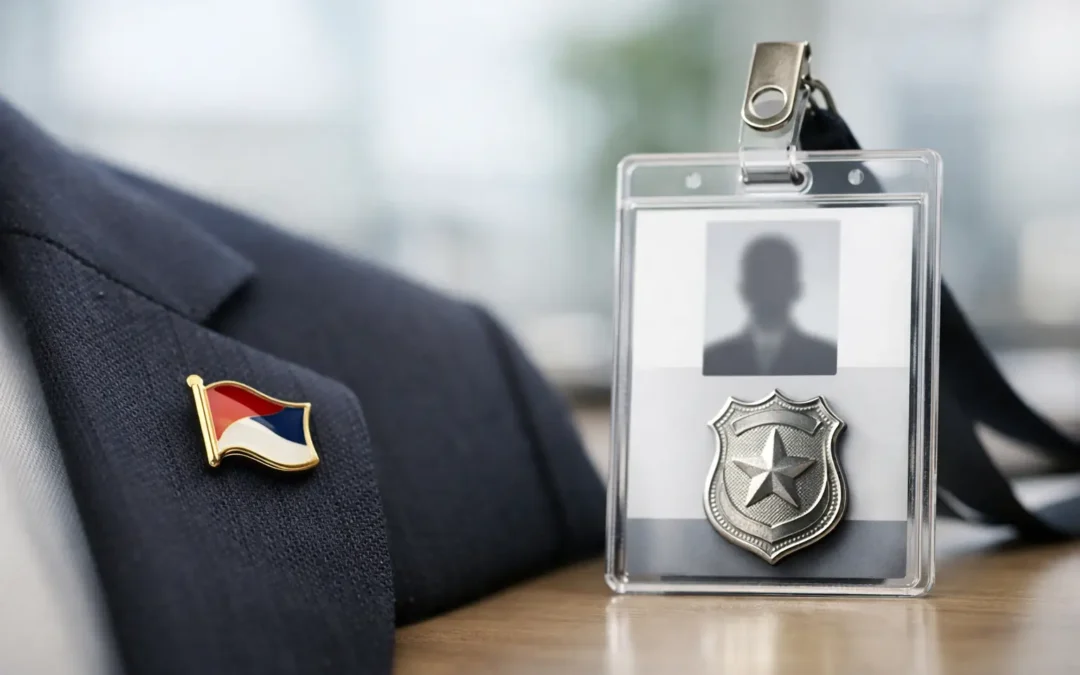
If you are ordering branded merchandise for a school, club, charity, business or event, the difference between lapel pin and badge matters more than most people expect. The right choice affects how polished your design looks, how long it lasts, how it is worn and how people respond to it. Small item, big impact – but only if you pick the format that suits the job.
A lot of customers use the words interchangeably, and that is fair enough. In everyday conversation, both can mean a wearable piece that shows identity, support, recognition or promotion. But in custom merchandise, lapel pins and badges often point to different product styles, finishes and use cases.
What is the difference between lapel pin and badge?
In simple terms, a lapel pin is usually a smaller, more refined metal item designed to be worn on clothing for a polished look. A badge is a broader category and often refers to a larger or more casual item, commonly made for identification, promotions, campaigns or events.
That means every lapel pin can be seen as a type of badge in the general sense, but not every badge is a lapel pin.
The distinction comes down to presentation, material, intended use and perceived value. If you are recognising years of service, acknowledging membership or creating something premium for corporate wear, a lapel pin is often the stronger option. If you need a practical item for visitor identification, fundraising, school houses or event access, a badge may be the better fit.
Lapel pin vs badge: the main differences
A lapel pin usually has a cleaner, more premium finish. These are commonly made from metal and can include soft enamel, hard enamel, die-struck, printed or even 3D detailing. They are designed to feel durable and look sharp on jackets, shirts, blazers, uniforms and presentation packs.
A badge can cover more ground. It might be metal, but it can also be acrylic, PVC, plastic or printed with an epoxy dome. Some badges are made for short-term use, some for promotions, and some for everyday identification. They are often more flexible in size and purpose, but they do not always carry the same premium feel as a well-made enamel lapel pin.
Attachment style can also differ. Lapel pins commonly use butterfly clutches, deluxe clutches, safety pin backs or magnet fittings. Badges may use those as well, but they are also more likely to include simple pin backs or name badge fittings depending on function.
Then there is the visual effect. Lapel pins tend to be neater, with finer lines and stronger edge definition. Badges can be bolder, larger or more straightforward, especially when readability is more important than detail.
When a lapel pin is the better choice
If appearance matters, lapel pins usually win.
For corporate branding, staff recognition, association memberships, commemorative events and official presentations, lapel pins look more considered. They feel like a proper keepsake rather than a temporary promotional item. That matters when you want the product to reflect the value of your brand or organisation.
They are also a strong option when your logo or artwork benefits from metal outlines and close Pantone colour matching. A custom enamel lapel pin can make a simple design look crisp and professional, especially in smaller sizes.
Schools and clubs often choose lapel pins for leadership roles, honour awards, graduation recognition and milestone achievements. Businesses use them for sales awards, conference merchandise and polished staff wear. Community groups and charities use them when they want supporters to wear something with a little more permanence.
If you are presenting the item in a gift box or handing it over at a formal event, a lapel pin generally has the edge.
When a badge makes more sense
A badge is often the practical choice when visibility, flexibility or budget is driving the project.
For example, if you need larger text, full-colour photos, role labels or easy-to-read names, a badge can be more suitable than a small enamel pin. Event badges, visitor badges, campaign badges and promotional badges are often chosen because they are quick to understand at a glance.
Badges can also work well when you need different versions of the same design, such as committee roles, house colours, volunteer titles or sponsor categories. Depending on the material and style, they can be very cost-effective for bulk orders.
This is especially useful for schools, sporting clubs and community events where quantity matters and the item needs to do a job first and look premium second. There is no problem with that. The best product is the one that suits the purpose.
Material and finish change the result
One reason customers get stuck on the lapel pin versus badge question is that the final look depends heavily on materials and finish.
A die-struck metal pin gives a classic, understated result. Soft enamel adds colour and texture. Hard enamel creates a smooth, premium surface. Printed pins are useful when artwork has gradients or complex detail. Acrylic and PVC options allow for brighter, more playful shapes and are popular for certain promotional uses.
So the real question is not only whether you want a lapel pin or a badge. It is also how you want it to feel in the hand, how it should look on clothing and how long it needs to last.
If the item is meant to become part of a uniform or serve as a long-term keepsake, durable metal construction is usually worth it. If it is tied to a short campaign, one-off event or large-scale giveaway, a simpler badge style may be the smarter spend.
The difference between lapel pin and badge for branding
From a branding point of view, lapel pins tend to say prestige, belonging and quality. Badges tend to say identification, support, participation or promotion.
That does not mean one is better. It means they send slightly different signals.
A law firm, university, corporate team or national association may lean towards lapel pins because they support a sharper brand image. A fun run, school fundraiser, local council event or sporting carnival may lean towards badges because they need broader visibility, lower unit costs or larger design space.
This is where custom advice helps. Two products can carry the same logo but create very different impressions depending on size, edge finish, backing and presentation.
Cost, quantity and wearability
Budget always matters, especially for bulk orders.
Lapel pins often cost more than simple badges because of the manufacturing process, metalwork and finishing. That said, they can deliver better long-term value when durability and presentation are important. People are more likely to keep them, wear them again and associate them with quality.
Badges can be more economical for high-volume projects, particularly when the goal is awareness, access control or campaign distribution. They are often easier to scale across multiple names, departments or event roles as well.
Wearability is another factor. A small lapel pin sits neatly on a collar, blazer or polo without overpowering the garment. A badge may be more noticeable, which is useful in public-facing settings, but it can feel less formal depending on the style.
If you are unsure, think about where it will be worn. Boardroom, awards night and executive conference usually point one way. School fete, volunteer day and registration desk often point the other.
How to choose the right option for your project
Start with the purpose. Is this about recognition, identity, promotion or access?
Then think about the audience. Are you creating something for staff, students, members, supporters, guests or the public? A premium membership pin and a high-visibility event badge solve different problems.
After that, look at your artwork. Fine logos, crests and formal designs often suit metal lapel pins. Bold messages, names and practical information may work better on a badge format with more room to read.
Finally, consider your timeline and quantity. Bulk custom orders need the right production method from the start. Getting the sizing, backing and finish sorted early saves time and helps avoid costly changes later.
That is why many customers prefer to work with an experienced supplier rather than trying to guess the product type from a photo. A free digital proof, clear guidance and a fast turnaround make the process much easier, especially when you are ordering for a team, event or organisation.
At Lapel Pins Australia, we regularly help customers narrow this down based on design, budget and use. Sometimes the answer is a classic enamel lapel pin. Sometimes a badge style is the smarter fit. Sometimes a magnet attachment changes the decision entirely.
The good news is you do not need to know every manufacturing term before you ask for a quote. You just need to know what the item needs to achieve. Once that is clear, the best product choice usually follows.
If you are weighing up the difference between lapel pin and badge, the simplest rule is this: choose a lapel pin when you want a polished, durable and premium result, and choose a badge when function, visibility or budget comes first. Get that call right, and your small branded item does a much bigger job.