
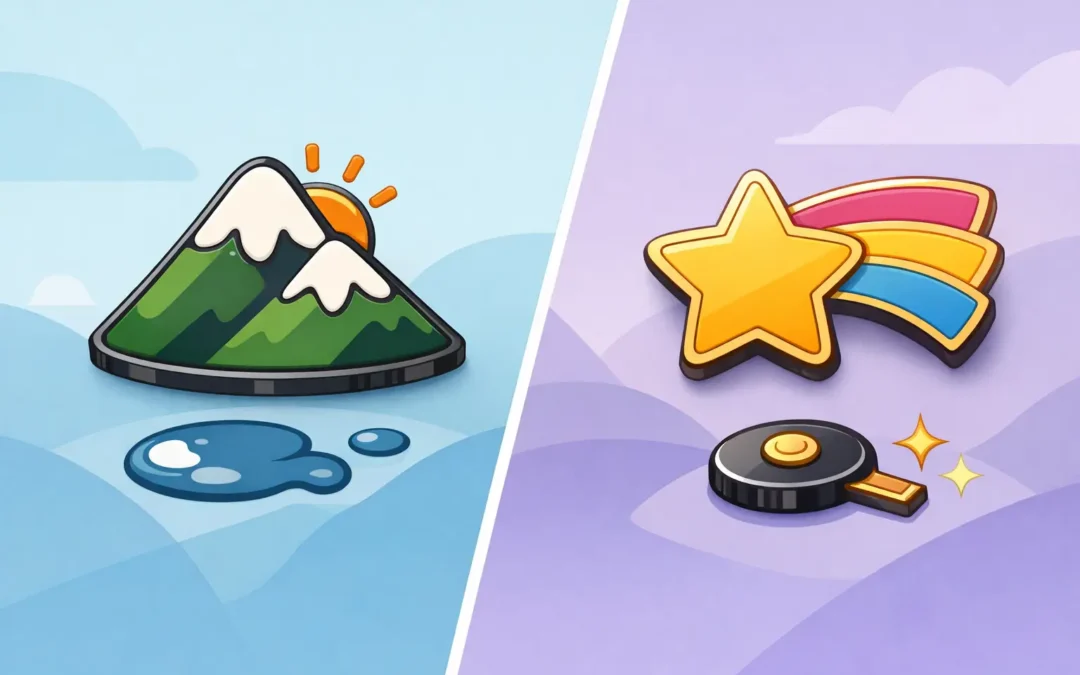
If you are weighing up soft enamel vs hard enamel pins, the right choice usually comes down to one simple question – do you want texture and bold contrast, or a smoother, more refined finish? Both styles can look excellent in bulk, both work well for branding, and both can be customised to suit clubs, schools, businesses, charities and events. The difference is how they look in the hand, how they wear over time, and where your budget needs to land.
For many customers, the decision is less about which pin is better and more about which pin is better for the job. A membership pin worn every week has different demands to a fundraising pin, a corporate recognition piece or an event giveaway. That is why it helps to understand the production style before you request a quote.
Soft enamel vs hard enamel pins: the visual difference
The fastest way to tell these two styles apart is the surface.
Soft enamel pins have raised metal outlines with recessed enamel colour sitting below the lines. When you run your finger across the pin, you can feel the texture. That raised-and-recessed finish gives the design a more dimensional look. Colours often appear bold and the metal lines stand out clearly, which is a big reason soft enamel remains one of the most popular options for promotional and club pins.
Hard enamel pins are filled and polished until the enamel sits level with the metal lines. The result is a smooth, flat surface with a cleaner, more formal appearance. If you want a premium presentation piece or a pin that feels sleek and polished, hard enamel usually has the edge.
Neither look is automatically right for every project. A textured finish can feel more energetic and eye-catching, while a smooth finish can feel more prestigious and understated. It depends on your brand, your audience and how the pin will be used.
When soft enamel pins make more sense
Soft enamel is often the practical choice for organisations that want strong visual impact at a sharper price point. Because the raised plating lines create definition, this style suits logos, mascots, school emblems and event designs that need to be recognised quickly.
It is also a very flexible option for bulk custom orders. If you are producing pins for staff, volunteers, students, sporting teams or conference attendees, soft enamel can give you a polished result without pushing the budget too far. For many customers, that balance between affordability and presentation is exactly what makes it such a reliable all-rounder.
Soft enamel also works well when you want the metal finish to play a bigger role in the design. Gold, silver, black nickel and antique finishes can really stand out against recessed enamel colours. That contrast gives the pin a more traditional lapel pin look.
The trade-off is surface feel. Because the enamel sits lower than the metal borders, soft enamel does not have the same smooth finish as hard enamel. That is not a flaw – it is simply part of the style.
Best uses for soft enamel
Soft enamel is a strong fit for promotional campaigns, branded merchandise, club badges, school pins, fundraising items and event handouts. It is especially effective when you need a design to pop from a distance or when you want to produce larger quantities cost-effectively.
If speed, value and standout branding are high on your list, soft enamel is often the first option worth considering.
When hard enamel pins are worth the upgrade
Hard enamel pins are usually chosen when the finish itself is part of the message. They feel smooth, solid and more formal, which makes them popular for corporate recognition, premium commemorative pieces, long-service awards and higher-end retail style pins.
Because the surface is polished flat, hard enamel pins can also offer a little more protection against everyday scuffing. They are built to last and can maintain their neat appearance with regular wear. For organisations that want a pin to feel permanent and prestigious, that matters.
That said, hard enamel is not always the best value choice for every order. It generally costs more than soft enamel due to the extra finishing involved, and not every design needs that smoother presentation. If the pin is for a one-day event, a promotional giveaway or a broad community rollout, the added cost may not deliver much extra benefit.
Best uses for hard enamel
Hard enamel is ideal for award pins, executive gifts, anniversary pieces, formal association badges and any custom pin where a premium finish is the priority. If the goal is to impress from close range and create a more refined feel, hard enamel is usually the stronger option.
Soft enamel vs hard enamel pins: durability and wear
Both pin types are durable when made properly, but they wear a little differently.
Soft enamel pins are sturdy and well suited to everyday promotional use. The metal outlines help protect the design, but the recessed enamel can still collect dust or show wear over a long period if the pins are used heavily. For normal business, club and event use, that is rarely a major issue.
Hard enamel pins tend to hold up especially well because the smooth polished surface is easier to wipe clean and less likely to catch on things. If you are ordering pins for ongoing uniform wear, formal presentation or collectors, that extra durability can be worthwhile.
Still, durability should be judged in context. A school achievement pin worn at assemblies has different demands to a corporate service award kept in a presentation box. The pin that lasts longest on paper is not always the one that makes the most commercial sense.
Design limitations and what to watch for
Not every logo or artwork behaves the same way in enamel.
Soft enamel is often forgiving for bold artwork with clear sections of colour and strong linework. It can handle a wide range of shapes and styles and tends to give excellent contrast. If your artwork has punchy branding colours and distinct borders, soft enamel usually translates very well.
Hard enamel can look exceptional, but it often benefits from simpler, cleaner designs. Fine details can still be achieved, although the overall effect is usually strongest when the artwork is not overcrowded. If a design is very intricate, another style such as printed pins with epoxy may sometimes be a better fit than either enamel option.
This is where a free digital proof is valuable. It helps you see how the design will translate before production starts, and it can save time by identifying any areas that need adjustment.
Which option is more affordable?
In most cases, soft enamel is the more budget-friendly option. That makes it attractive for larger runs, fundraising campaigns, school groups and event organisers working to a set spend. You still get a custom metal pin with quality presentation, just without the added cost of a polished flush surface.
Hard enamel usually sits at a higher price point. The extra finishing adds labour and production time, but for the right project, the upgraded look can justify the spend. If the pin is being used as a recognition item or premium branded piece, the difference in feel can be noticeable.
For bulk buyers, the real question is not only unit cost. It is value. A cheaper pin that fits the brief perfectly is better buying than a premium pin that does more than you need.
How to choose the right pin for your order
If you want a pin that is bright, textured, cost-effective and highly versatile, soft enamel is usually the smart pick. If you want a pin that feels smoother, more formal and more premium in the hand, hard enamel is worth serious consideration.
Think about who will receive the pin, how often it will be worn, and what you want people to notice first. Is this about brand visibility, member recognition, fundraising, presentation or long-term keepsake value? Once that is clear, the right style tends to become obvious.
At Lapel Pins Australia, this is where practical guidance makes a difference. You do not need to know all the manufacturing details before asking for a quote. A clear idea of your logo, quantity, use case and preferred finish is usually enough to point the project in the right direction.
A small badge can do a lot of work. It can promote a brand, reward loyalty, mark an achievement or give an event a more professional identity. Choose the pin style that matches the purpose, and the final result will feel right from the first proof to the last delivery.